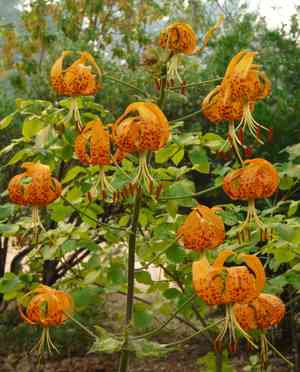
Humboldt's lily (Lilium humboldtii)
Also known as: Ocellated humboldt lily
Humboldt's lily (Lilium humboldtii), named after the explorer Alexander von Humboldt, features striking golden-orange flowers adorned with maroon spots and wavy, glossy leaves. While it can grow in clay, it truly flourishes in well-drained loamy soil. This native Californian plant is relatively easy to care for and performs best in fertile, organically rich soils.
In This Article
Attributes of Humboldt's lily
Lifespan
Perennial
Plant Type
Herb
Plant Height
91 cm to 2 m
Spread
30 cm
Leaf Color
Green Blue
Flower Size
10 cm to 13 cm
Flower Color
Red Orange Purple Burgundy
Images of Humboldt's lily

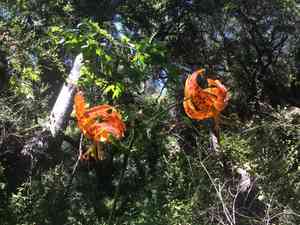
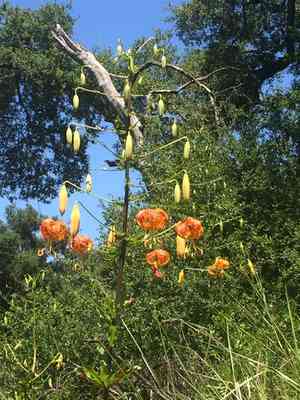
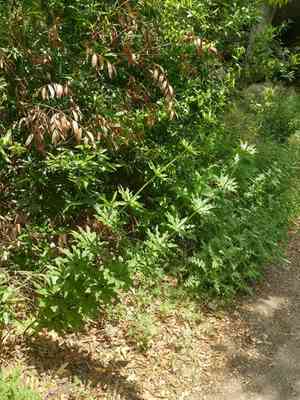
Quickly Identify Humboldt's lily
1
Humboldt\'s lily can be identified by its large, orange flowers with maroon spots, pendulous flower shape, and whorled leaf arrangement along the stem. It flowers in late spring to early summer.
Scientific Classification of Humboldt's lily
Phylum
Vascular plants
Class
Monocotyledons
Order
Liliales
Family
Lily
Genus
Lilies
Species
Humboldt's lily
Planting and Growing of Humboldt's lily
Care Difficulty
Hard
Watering Schedule
Every 2 days
Sunlight Requirements
Full sun
Sunshine Duration
4-8 hours
Ideal Temperature
60-75℉
Soil Type
Potting Mix, Peat Mix
Soil pH
6.5-7.5
Fertilizer Type
Balanced
Pruning Season
Spring, Summer
Pruning Area
Branches, Leaves
Pruning Frequency
2 times a year
Repotting Season
Spring
Pot Type
Plastic, Ceramic
 How to Water Humboldt's lily?
Lilium humboldtii requires watering until the topsoil feels moist, ensuring the water reaches the root zone without leaving the soil waterlogged. Typically, about 500ml per watering is adequate depending on the soil and pot size.
What are the symptoms of an underwatered Humboldt's lily?
›
What should I do if my Humboldt's lily is not getting enough water?
›
What are the symptoms of an overwatered Humboldt's lily?
›
How to save an overwatered Humboldt's lily?
›
 What Are the Sunlight Requirements for Humboldt's lily?
Ideal lighting falls between full sun to partial sun, aiding in photosynthesis and enabling strong flower production. The balanced light conditions support plant vitality and ensure extended blooming periods.
More About Sunlight Requirements Techniques→
What is the ideal lighting condition for Lilium humboldtii?
›
How can you achieve ideal lighting for this plant?
›
What benefits does ideal lighting offer Lilium humboldtii?
›
 What Is the Ideal Temperature Range for Humboldt's lily?
The ideal temperature range for Lilium humboldtii is between 60°F and 75°F. This range helps ensure optimal growth and flowering. Within this range, the metabolic processes of the plant function efficiently, leading to healthy blooms and strong foliage. Therefore, maintaining these temperatures is crucial for the plant's vitro-culture success.
 What Soil is Best for Humboldt's lily?
Lilium humboldtii thrives in well-draining soil, reducing the risk of root rot and ensuring adequate aeration. This drainage prevents water logging and supports healthy root development. Loam or sandy loam soils provide a balanced nutrient composition essential for the robust growth of Lilium humboldtii. These nutrients enhance the blooming potential and overall vigor of the plant. The soil should retain sufficient moisture without staying soggy. Balanced moisture levels are crucial for continuous nutrient uptake and preventing dehydration during hot periods.
 How to Fertilize Humboldt's lily?
When fertilizing Lilium humboldtii, it's essential to use a balanced fertilizer, ideally with an NPK ratio of 10-10-10. For liquid fertilizer, mix 1 tablespoon in a gallon of water. This concentration ensures that the plant receives adequate nutrients without overburdening its delicate root system.
 How to Prune Humboldt's lily?
For Lilium humboldtii, you should focus on cleaning up dead or damaged foliage after the plant has bloomed. This typically occurs in late autumn. Removing dead foliage helps the plant conserve energy and reduces the risk of disease. Use clean, sharp scissors or pruning shears to cut back the dead leaves to the base of the plant.
More About Pruning Techniques→
 How to Propagate Humboldt's lily plant?
1
Choose mature and healthy bulbs for division in early spring. Make sure the bulbs are free from any signs of disease or pests, ensuring a high chance of successful propagation and robust growth.
2
Prepare a well-draining growing medium, ideally a mix of loamy soil and perlite or sand. This provides good aeration and drainage, essential for the healthy growth of Lilium humboldtii seedlings or divisions.
3
Place the seeds or bulb sections in the prepared medium. Water immediately to encourage initial root development, ensuring not to overwater, which can lead to rot. Maintain consistent moisture for optimal growth.
 How to Repot Humboldt's lily plant?
1
Lilium humboldtii shows it's time for repotting when you notice the growth of roots through drainage holes, stunted growth, or when the soil loses its fertility. Spring and Autumn are optimal due to moderate temperatures that reduce transplant shock.
2
Select a pot that is 2-3 inches larger in diameter than the current one. A pot with several drainage holes is essential, preventing waterlogging, which can lead to root rot. A slightly heavier pot can help prevent the top-heavy plant from tipping over.
3
Opt for a well-draining loamy soil mixture, enriched with organic matter. This ensures not only proper aeration and drainage but also provides essential nutrients that support healthier, vigorous growth for Lilium humboldtii.
Toxicity
Ingestion
WARNING
The judgment on toxicity and danger is for reference only. We DO NOT GUARANTEE any accuracy of such judgment. Therefore, you SHALL NOT rely on such judgment. It is IMPORTANT TO SEEK PROFESSIONAL ADVICE in advance when necessary.
Learn More About Humboldt's lily Diseases
Anthracnose
Bacterial Leaf Spot
Bacterial Soft Rot
Bacterial Wilt
Black Spot
Chemical Injury
Crown Gall
Cyst Nematode
Damping-off
Downy Mildew
Drought Stress
Fusarium Wilt
Gray Mold
Leaf Spot
Mosaic
Nutrient Deficiency
Nutrient Toxicity
Powdery Mildew
Root Rot
Root-knot Nematode
Rusts
Sooty Mold
Spider Mites
Temperature Stress
Thrips Damage
White Mold



