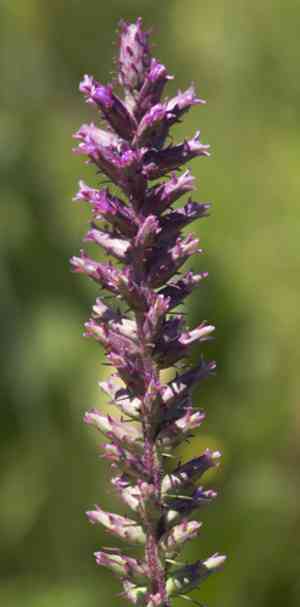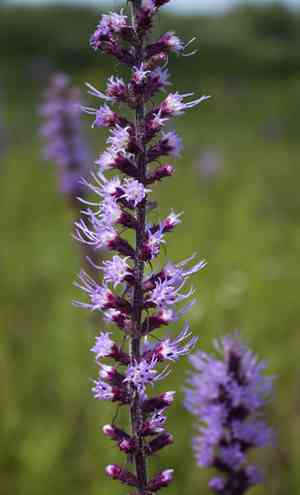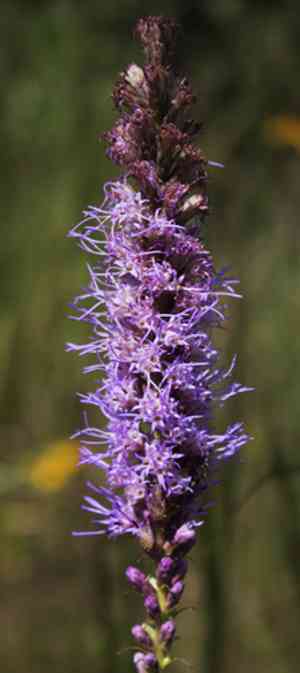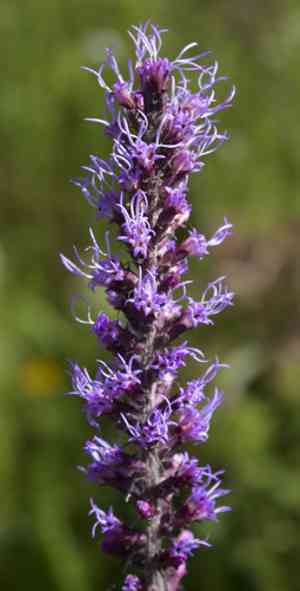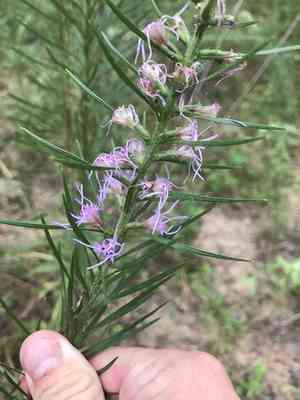
Prairie blazing star(Liatris pycnostachya)

Prairie blazing star (Liatris pycnostachya)

Also known as: Kansas gayfeather, Prairie liatris, Kansas liatris, Cat-tail liatris

The prairie blazing star (Liatris pycnostachya) is a striking perennial wildflower known for its tall spikes of dense, purple flowers that bloom in late summer and early fall. The plant's narrow, grass-like leaves and fuzzy flower spikes make it a unique addition to gardens. It's valued for its drought tolerance and ability to attract butterflies and other pollinators.

For successful seed germination, prairie blazing star seeds require a process called cold stratification:

1. **Prepare Seeds**: Mix the seeds with a moist medium like sand or vermiculite.
2. **Cold Treatment**: Place the mixture in a sealed plastic bag and refrigerate it (not freeze) for 30-60 days.
3. **Planting**: After stratification, sow the seeds on the surface of the soil, pressing them lightly without covering them, as they need light to germinate.
4. **Moisture**: Ensure the soil remains consistently moist until seedlings become established.

These steps help break seed dormancy, facilitating successful germination and growth.

Attributes of Prairie blazing star

Lifespan
Perennial
Plant Type
Herb
Plant Height
91 cm to 1.8 m
Spread
60 cm
Leaf Color
Green
Flower Size
2.5 cm
Flower Color
Purple Pink

ForwardPlant - Identify plants with a snap

Identify and diagnose plants, get toxicity alerts, and explore safety guides for all types of fungi.

Try for Free

Images of Prairie blazing star

Prairie blazing star(Liatris pycnostachya)

Quickly Identify Prairie blazing star

1
Robust perennial reaching 2-5 feet (60-150 cm) in height with purple, tightly clustered flowers.
2
Distinctive pointed purplish bracts underpinning each flower head set it apart from relatives.
3
Basal leaves up to 12 inches (30 cm) long, sword-shaped, vibrant green with parallel veins.
4
Stout, textured stem with scattered white hairs, 0.5-1 inch (1.3-2.5 cm) in diameter.
5
Fruit with small, dry achenes equipped with light brown, tufted hairs for wind dispersal.

Scientific Classification of Prairie blazing star

Phylum
Vascular plants
Class
Dicotyledons
Order
Asterales
Family
Daisy
Genus
Gay feathers
Species
Prairie blazing star

Planting and Growing of Prairie blazing star

Care Difficulty
Easy
Watering Schedule
Every 4 days
Sunlight Requirements
Full sun
Sunshine Duration
4-6 hours
Ideal Temperature
60-75℉
Soil Type
Potting Mix, Peat Mix
Soil pH
6.5-7.5
Fertilizer Type
Balanced
Pruning Season
Spring, Summer
Pruning Area
Branches, Leaves
Pruning Frequency
2 times a year
Repotting Season
Spring
Pot Type
Plastic, Ceramic

water icon How to Water Prairie blazing star?

Liatris pycnostachya, also known as the Prairie Blazing Star, thrives best when watering follows the principle of deep, infrequent soakings rather than light, frequent watering. Aim for 500 milliliters per session to ensure the soil is adequately moistened, but not waterlogged. This promotes deep root growth and robust flowering.
What are the symptoms of an underwatered Prairie blazing star? ›
What should I do if my Prairie blazing star is not getting enough water? ›
What are the symptoms of an overwatered Prairie blazing star? ›
How to save an overwatered Prairie blazing star? ›

sunlight icon What Are the Sunlight Requirements for Prairie blazing star?

Sunlight Requirements: Full sun
Duration of light: 6-8 hours daily
Full sun exposure ensures optimal photosynthesis and growth, resulting in robust development, disease resistance, and vibrant purple blooms for Liatris pycnostachya.
What is the ideal light for Liatris pycnostachya? ›
How to achieve ideal lighting for Liatris pycnostachya? ›
Benefits of ideal light for Liatris pycnostachya? ›
More About Sunlight Requirements Techniques→

temperature icon What Is the Ideal Temperature Range for Prairie blazing star?

Ideal Temperature: 60 ~ 75℉
Liatris pycnostachya thrives best in temperatures ranging from 60°F to 75°F. This range provides optimal conditions for growth and flowering, allowing the plant to develop strong stems and vibrant blooms. Consistent temperatures within this range support healthy metabolic processes that contribute to its robustness.

soil icon What Soil is Best for Prairie blazing star?

Soil type: Loam, Sandy soil, Sandy loam
Soil PH: 6.5 ~ 7.5
Liatris pycnostachya benefits greatly from well-draining soil as it prevents waterlogging that can lead to root rot. The plant thrives when excess water can easily percolate through the soil, maintaining optimal moisture levels. This plant flourishes in soil enriched with organic matter, which provides essential nutrients necessary for robust growth and vibrant blooms. Organic matter also contributes to improved soil structure and moisture retention. Liatris pycnostachya requires soil that retains moderate moisture without becoming soggy. This balance ensures that the roots remain hydrated during dry periods, promoting consistent growth.

fertilize icon How to Fertilize Prairie blazing star?

Fertilizer type: Balanced
When applying fertilizer to Liatris pycnostachya, it's advisable to use a balanced formula like 10-10-10. Apply liquid fertilizer at half the recommended strength every two weeks during the growing season. For slow-release granules, scatter about 1 tablespoon per square foot once in early spring and again in mid-summer.

prune icon How to Prune Prairie blazing star?

Pruning Time: Spring, Summer, Autumn, Winter
Start pruning Liatris pycnostachya by using clean and sharp pruning shears. Focus on removing any dead or damaged stems first, cutting them back to the ground level. For healthier growth, trim the plant back by about one-third of its height after the blooming cycle is complete. This encourages the plant to produce more blooms and maintain a compact form. Always make cuts just above a set of leaves to promote branching. More About Pruning Techniques→

propagate icon How to Propagate Prairie blazing star plant?

Propagate Time: Spring, Early spring
1
Fill seed trays with a well-draining seed-starting mix. Sow the seeds onto the surface and lightly cover them with soil. Maintain moisture by misting regularly and place trays in a warm, well-lit area.
2
Using a sharp garden knife, divide the mature Liatris pycnostachya plant into smaller sections, ensuring each section has roots. Replant the divisions immediately in well-prepared soil, and water thoroughly.
3
Select healthy root cuttings from a mature plant. Cut sections about 2-3 inches long, and plant them horizontally in a container filled with soil. Keep the soil consistently moist to promote root growth.
More About Propagating Techniques→

repot icon How to Repot Prairie blazing star plant?

Repotting frequency: Every 2-3 years
1
Liatris pycnostachya needs repotting when you observe its roots beginning to circle or protrude from drainage holes. Another key indication is any stunted growth or reduced flowering which hints at a cramped root system. Repotting should ideally be carried out during early spring or fall when the plant is poised for growth, ensuring minimal stress during this crucial adjustment period.
2
Select a pot that is one size larger than the current one, ensuring it has adequate drainage holes. The gradual increase in pot size prevents water retention which could lead to root rot. Choose terracotta or clay pots that allow air circulation, fostering healthier root development while maintaining the plant's overall vigor.
3
Opt for a well-draining loamy mix enriched with organic matter. This type of soil promotes proper aeration and prevents compaction, ensuring roots expand healthily. By retaining the right amount of moisture and nutrients, it supports robust growth and enhances your Liatris's ability to thrive throughout the growing season.

ForwardPlant - Identify plants with a snap

Find the best spots for them to optimize their health, simply using your phone.

Try for Free