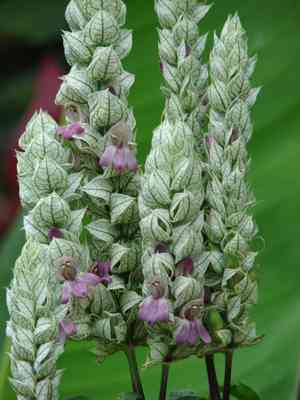
Squirrel's tail (Justicia betonica)
Also known as: Shrimp tail
Koster's curse (*Clidemia hirta*) is a shrubby herb originally from tropical regions of Asia and Africa. Invasive in Australia and Hawaii, it creates dense thickets along water bodies, such as ponds, rivers, and streams, displacing native plant species.
In This Article
Attributes of Squirrel's tail
Lifespan
Perennial
Plant Type
Herb
Plant Height
61 cm to 91 cm
Spread
60 cm to 90 cm
Leaf Color
Green
Flower Size
2.5 cm
Flower Color
White Purple
Images of Squirrel's tail
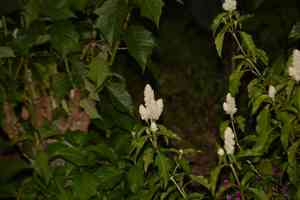
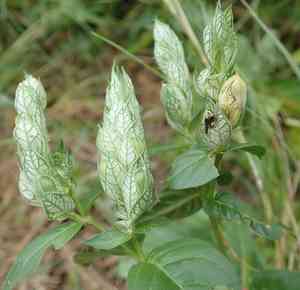
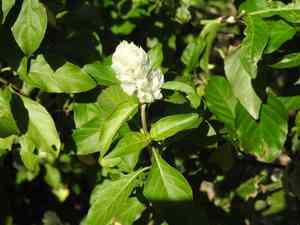
Quickly Identify Squirrel's tail
1
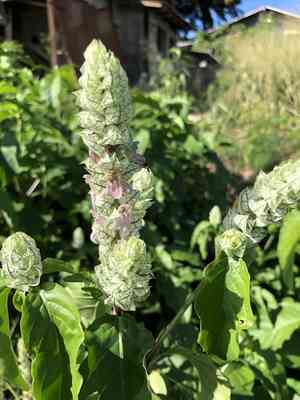
To identify Justicia betonica, look for its distinctive white bracts that resemble shrimp, lance-shaped green leaves, and tubular flowers. The stems are quadrangular when young.
Scientific Classification of Squirrel's tail
Phylum
Vascular plants
Class
Dicotyledons
Order
Lamiales
Family
Acanthus
Genus
Water-willows
Species
Squirrel's tail
Planting and Growing of Squirrel's tail
Care Difficulty
Easy
Watering Schedule
Every 6 days
Sunlight Requirements
Partial sun
Sunshine Duration
4-8 hours
Ideal Temperature
65-85℉
Soil Type
Potting Mix, Peat Mix
Soil pH
6.5-7.5
Fertilizer Type
Balanced
Pruning Season
Spring, Summer
Pruning Area
Branches, Leaves
Pruning Frequency
Once a year
Repotting Season
Spring
Pot Type
Plastic, Ceramic
 How to Water Squirrel's tail?
When watering Justicia betonica, aim for around 250 milliliters per session. Ensure the soil is evenly moist without becoming waterlogged. It's best to check the top inch of the soil and water when it feels dry to the touch. This way, you provide sufficient hydration without drowning the roots.
What are the symptoms of an underwatered Squirrel's tail?
›
What should I do if my Squirrel's tail is not getting enough water?
›
What are the symptoms of an overwatered Squirrel's tail?
›
How to save an overwatered Squirrel's tail?
›
 What Are the Sunlight Requirements for Squirrel's tail?
Justicia betonica thrives in partial sun, meaning 4-6 hours of sunlight daily. This range ensures enough light for photosynthesis while preventing the stress of full sun exposure, fostering healthy, vibrant growth.
More About Sunlight Requirements Techniques→
What is the ideal light condition for Justicia betonica?
›
How to ensure Justicia betonica gets ideal light?
›
What are the benefits of optimal light conditions for Justicia betonica?
›
 What Is the Ideal Temperature Range for Squirrel's tail?
Justicia betonica thrives best in temperatures of 65-85°F, as these conditions mimic its native tropical environment. Consistent warmth ensures optimal growth and flowering by maintaining essential physiological processes at their peak.
 What Soil is Best for Squirrel's tail?
Justicia betonica thrives in nutrient-rich soil that supplies essential minerals for optimal growth. A loamy texture ensures adequate drainage while retaining just the right amount of moisture. Ensuring the soil is well-drained prevents waterlogging, which can lead to root rot. Sandy loam is particularly effective in facilitating proper drainage, supporting healthy root development. Soil with good aeration is fundamental for Justicia betonica, as it facilitates the exchange of gases necessary for plant respiration. Maintaining soil texture through regular organic amendments can greatly benefit this process.
 How to Fertilize Squirrel's tail?
For Justicia betonica, the ideal fertilizer amount is to use a balanced liquid fertilizer diluted to half strength. This plant responds well to mild fertilizers, so aim for a concentration of 10-10-10 or 20-20-20 NPK. Always ensure the soil is moist before application to prevent root burns.
 How to Prune Squirrel's tail?
While Justicia betonica can be pruned throughout most of the year, avoid pruning during periods of extreme heat or drought. During such times, the plant is already under stress and may struggle to recover from the shock of pruning. Instead, wait for cooler temperatures, ensuring it has adequate water to support new growth. Moreover, always check the forecast to avoid pruning just before a cold snap, as new growth might be damaged by unexpected frost.
More About Pruning Techniques→
 How to Propagate Squirrel's tail plant?
1
Select a healthy parent plant and use pruners to cut a section of stem, below the node, about 4-6 inches long. Remove any leaves from the lower half of the cutting.
2
Dip the end of the stem in rooting hormone and plant it in a pot filled with potting mix. Water the soil lightly and cover the pot with a plastic bag to create a humid environment.
3
If propagating by seed, scatter seeds over the soil surface and lightly cover them with soil. Maintain even moisture until seedlings emerge and gradually expose them to indirect sunlight.
 How to Repot Squirrel's tail plant?
1
Justicia betonica needs repotting when roots start to emerge from the pot's drainage holes, indicating the plant has outgrown its current container. This is usually signaled by slower growth and poor water retention. Early signs include visibly cramped roots or the soil becoming hard and compacted.
2
Select a pot that is 1-2 inches larger in diameter than the current one. Choose a container with adequate drainage holes to prevent waterlogging. A slightly larger pot allows room for growth while minimizing the risk of root rot due to excess soil moisture.
3
Opt for a well-draining potting mix with a composition high in organic matter. This allows air circulation to the roots while holding enough moisture to support the plant. Good soil prevents compaction, encourages healthy root growth, and avoids stagnation.
Learn More About Squirrel's tail Diseases
Anthracnose
Bacterial Leaf Spot
Bacterial Soft Rot
Bacterial Wilt
Black Spot
Chemical Injury
Crown Gall
Damping-off
Downy Mildew
Drought Stress
Fusarium Wilt
Gray Mold
Leaf Curl
Leaf Spot
Mosaic
Nutrient Deficiency
Nutrient Toxicity
Powdery Mildew
Root Rot
Root-knot Nematode
Rusts
Sooty Mold
Spider Mites
Temperature Stress
Thrips Damage
White Mold



