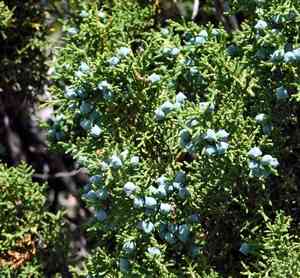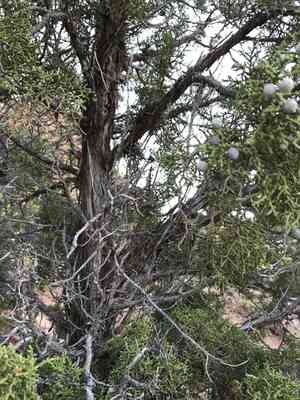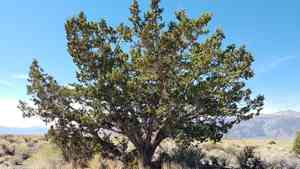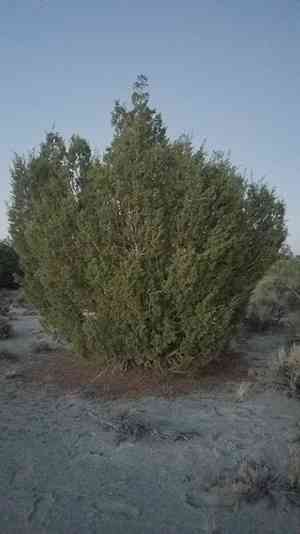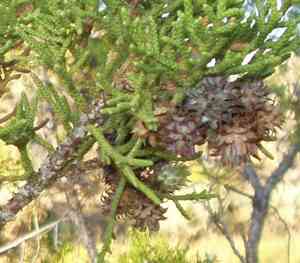
Utah Juniper(Juniperus osteosperma)

Utah Juniper (Juniperus osteosperma)

Also known as: Bigberry Juniper

In the western United States, Utah Juniper (Juniperus osteosperma) is commonly found and valued for its decay-resistant wood, making it a popular choice for constructing fence posts. Additionally, its pleasant aroma and long-lasting coals make it a favorite for firewood.

Attributes of Utah Juniper

Lifespan
Perennial
Plant Type
Tree
Plant Height
3 m to 6 m
Spread
3.5 m to 9 m
Leaf Color
Green
Flower Size
N/A (evergreen species with no prominent flowers)
Flower Color
Yellow Green

ForwardPlant - Identify plants with a snap

Identify and diagnose plants, get toxicity alerts, and explore safety guides for all types of fungi.

Try for Free

Images of Utah Juniper

Utah Juniper(Juniperus osteosperma)

Quickly Identify Utah Juniper

1
The tree can be identified by its bushy, round-headed form, scale-like, dark green to bluish-green leaves, and grayish, shredding bark. The berries are small, green when young, turning blue as they mature.

Scientific Classification of Utah Juniper

Phylum
Vascular plants
Class
Conifers
Order
Pinales
Family
Cypress
Genus
Junipers
Species
Utah Juniper

Planting and Growing of Utah Juniper

Care Difficulty
Easy
Watering Schedule
Every day
Sunlight Requirements
Full sun
Sunshine Duration
6-10 hours
Ideal Temperature
45-80℉
Soil Type
Potting Mix, Peat Mix
Soil pH
6.5-7.5
Fertilizer Type
Balanced
Pruning Season
Spring, Summer
Pruning Area
Branches, Leaves
Pruning Frequency
2 times a year
Repotting Season
Spring
Pot Type
Plastic, Ceramic

water icon How to Water Utah Juniper?

When watering Juniperus osteosperma, aim to provide approximately 500 milliliters of water per session. This amount ensures that the water reaches the root zone without oversaturating the soil. The objective is to moisten the soil just enough so that the water penetrates deeply and reaches the root network, allowing for adequate uptake without waterlogging.
What are the symptoms of an underwatered Utah Juniper?
What should I do if my Utah Juniper is not getting enough water?
What are the symptoms of an overwatered Utah Juniper?
How to save an overwatered Utah Juniper?

sunlight icon What Are the Sunlight Requirements for Utah Juniper?

Sunlight Requirements: Full sun, Partial sun
Duration of light: 6 to 12 hours
Juniperus osteosperma ideally needs full sun for up to 12 hours a day. Adequate light contributes to vigorous growth, lush foliage, and a balanced plant structure.
What is the best lighting for Juniperus osteosperma?
How to adjust light for indoor growing of Juniperus osteosperma?
Benefits of providing ideal lighting conditions for Juniperus osteosperma?
More About Sunlight Requirements Techniques

temperature icon What Is the Ideal Temperature Range for Utah Juniper?

Ideal Temperature: 45 ~ 80℉
Juniperus osteosperma thrives best within a temperature range of 45 to 80 degrees Fahrenheit. Within these conditions, the physiological processes, such as photosynthesis and nutrient uptake, occur optimally, contributing to robust growth and health of the plant. Consistently maintaining these temperatures ensures optimal metabolic activity and energy efficiency for the plant.

soil icon What Soil is Best for Utah Juniper?

Soil type: Sandy soil, Sandy loam
Soil PH: 6.5 ~ 7.5
Juniperus osteosperma thrives best in well-drained soil, which prevents root rot. By ensuring proper drainage, the plant maintains its health and vitality, promoting stable growth and a robust appearance. The plant is adapted to survive in low-nutrient soil environments. This minimizes the need for frequent fertilization, making it ideal for natural settings without intensive maintenance. Juniperus osteosperma can withstand periods of drought thanks to its adaptation to dry conditions, reducing the need for constant watering and making it suitable for xeriscaping.

fertilize icon How to Fertilize Utah Juniper?

Fertilizer type: Balanced
Juniperus osteosperma, commonly known as Utah Juniper, requires careful fertilization to thrive effectively. Start with a mild application, usually about a half to one pound of 10-10-10 or a similar balanced fertilizer per tree. For liquid fertilizers, ensure the solution is diluted to half the recommended strength to avoid overstressing.

prune icon How to Prune Utah Juniper?

Pruning Time: Spring, Winter
Start by inspecting your Juniperus osteosperma for any dead, damaged, or diseased branches. Removing these not only improves the plant's appearance but also prevents the spread of disease and promotes healthy growth. Thin out overcrowded branches to allow sunlight and air to penetrate the canopy. This will help prevent fungal diseases and encourage robust growth throughout the plant. Gently shape the juniper by selectively pruning to maintain its natural form. Focus on keeping the central leader intact while ensuring that lateral branches are well spaced and balanced for aesthetic appeal. Make your cuts just above a lateral bud or side branch to promote new growth in the desired direction. Use sharp, clean pruning tools to make precise cuts and avoid damage to the plant. More About Pruning Techniques

propagate icon How to Propagate Utah Juniper plant?

Propagate Time: Early spring
1
Gather seeds from ripe cones in the autumn. Ensure that the seeds are fully mature by checking they are hard and brown. Remove seeds from the cones and clean them to remove any pulp.
2
Store cleaned seeds in a refrigerator for 2-3 months to mimic the natural cold stratification process. This breaks the seeds' dormancy and increases the likelihood of successful germination come spring.
3
In early spring, sow the stratified seeds on seed trays filled with sterile potting soil. Cover them lightly with soil, water gently, and place the trays in a location with ample sunlight.
More About Propagating Techniques

repot icon How to Repot Utah Juniper plant?

Repotting frequency: Every 2-3 years
1
Look for signs like roots protruding from drainage holes or growth slowing down. These indications suggest that Juniperus osteosperma has outgrown its current pot, and it's time to give it more room to breathe and grow.
2
Select a pot that is 2 to 3 inches larger in diameter than the current one. Ensure it has good drainage to prevent root rot. The material of the pot should allow for airflow, such as terracotta, which aids in moisture regulation.
3
The ideal soil is one that mimics its natural habitat—sandy and well-draining. This type of soil prevents waterlogging, allowing Juniperus osteosperma to thrive by promoting root health while preventing diseases.

ForwardPlant - Identify plants with a snap

Find the best spots for them to optimize their health, simply using your phone.

Try for Free

Toxicity of Utah Juniper

Is Utah Juniper toxic to humans?

Utah Juniper poses a health risk both through ingestion and physical interaction. The severity of symptoms can vary significantly. The plant produces berries that may induce gastrointestinal issues and potentially lead to organ damage if consumed in excessive amounts. Additionally, other components of the plant such as leaves and stems can result in skin irritation upon contact. Juniper berries contain an oil called thujone, which, when ingested in large doses, can provoke stomach discomfort, diarrhea, and kidney complications. Direct handling of the plant can cause skin irritations. Pregnant or breastfeeding women are advised to avoid handling the plant and refrain from eating the berries.

Is Utah Juniper toxic to cat?

Utah Juniper, also known as Utah Juniper, possesses a mild toxic property towards cats. When felines ingest a significant quantity of the seeds from Utah Juniper, they may face the risk of poisoning. Pet owners should keenly monitor their cats for any symptoms of physical discomfort or illness, as these could signify potential poisoning associated with Utah Juniper. It is essential for cat guardians to be proactive in preventing their furry friends from consuming the seeds of Utah Juniper. If a cat displays any unusual health symptoms, urgent veterinary assistance is crucial. Prompt treatment at a veterinary facility can help safeguard the health and safety of the affected feline.

Is Utah Juniper toxic to dog?

Utah Juniper is regarded as mildly toxic to dogs. The primary risk of poisoning for dogs arises from consuming large quantities of its seeds. Pet owners should remain alert since ingestion of these seeds can result in various symptoms of toxicity, which may range from gastrointestinal distress and lethargy to more severe clinical manifestations, depending on the amount ingested. It is vital for dog owners to supervise their pets and restrict their access to the seeds of Utah Juniper. If there's any suspicion that a dog has consumed any part of Utah Juniper, particularly the seeds, it is imperative to seek immediate veterinary care to safeguard the health and well-being of the pet.

Identify toxic plants for your safety

Learn which plants are harmful to you and your pets, and make informed choices for a safer home!

Try for Free
WARNING
The judgment on toxicity and danger is for reference only. We DO NOT GUARANTEE any accuracy of such judgment. Therefore, you SHALL NOT rely on such judgment. It is IMPORTANT TO SEEK PROFESSIONAL ADVICE in advance when necessary.
More About Toxic Techniques