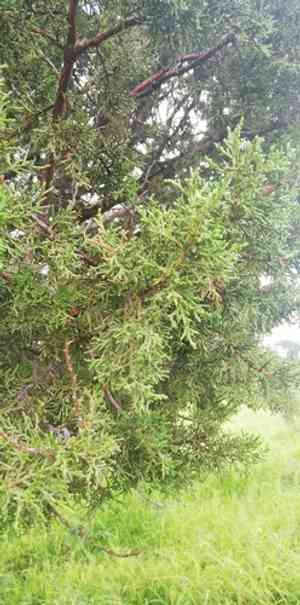
Rose fruited juniper(Juniperus coahuilensis)

Rose fruited juniper (Juniperus coahuilensis)

Also known as: Desert Juniper

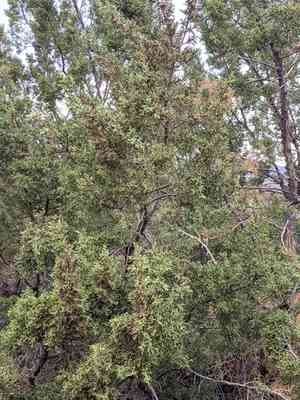
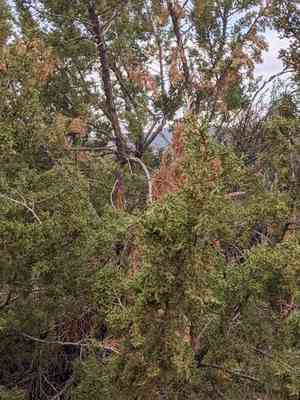
Rose fruited juniper (Juniperus coahuilensis) is a conifer commonly found in woodlands and savannahs. This species has the ability to resprout from stumps following fire or cutting. It closely resembles Juniperus monosperma, but they can be distinguished by several key features:

1. **Cone Color**:
- **Juniperus coahuilensis**: Features larger, pinkish berry-like cones.
- **Juniperus monosperma**: Produces smaller, purple-toned berry-like cones.

2. **Growth Habit**:
- Both species can resprout after damage, but this trait is notably robust in Juniperus coahuilensis.

3. **Habitat**:
- **Juniperus coahuilensis**: Prefers the Chihuahuan Desert and similar regions.
- **Juniperus monosperma**: Found in the southwestern United States, favoring dry, rocky soils and woodlands.

4. **Foliage**:
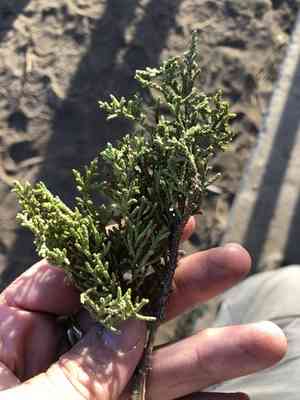
- **Juniperus coahuilensis**: Has scale-like leaves with more noticeable glandular dots.
- **Juniperus monosperma**: Leaves are smaller, scale-like, and more tightly pressed to the stems.

These distinctions aid in the accurate identification of each species.

Attributes of Rose fruited juniper

Lifespan
Perennial
Plant Type
Tree, Shrub
Plant Height
3 to 7 meters (10 to 23 feet)
Spread
3 to 5 meters (10 to 16 feet)
Leaf Color
Bright green to yellow-green
Flower Size
N/A
Flower Color
N/A

ForwardPlant - Identify plants with a snap

Identify and diagnose plants, get toxicity alerts, and explore safety guides for all types of fungi.

Try for Free

Images of Rose fruited juniper

Rose fruited juniper(Juniperus coahuilensis)

Quickly Identify Rose fruited juniper

1
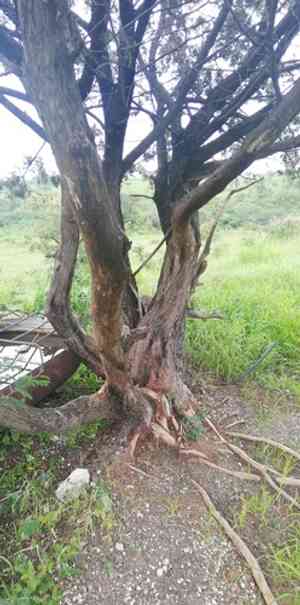
Identify Juniperus coahuilensis by its twisted trunk, needle-like leaves that are bright green to yellow-green in color, and round, berry-like cones that turn bluish when mature.

Scientific Classification of Rose fruited juniper

Phylum
Vascular plants
Class
Conifers
Order
Pinales
Family
Cypress
Genus
Junipers
Species
Rose fruited juniper

Planting and Growing of Rose fruited juniper

Care Difficulty
Moderate
Watering Schedule
Every day
Sunlight Requirements
Full sun
Sunshine Duration
6-8 hours
Ideal Temperature
60-75℉
Soil Type
Potting Mix, Peat Mix
Soil pH
6.5-7.5
Fertilizer Type
Balanced
Pruning Season
Spring, Summer
Pruning Area
Branches, Leaves
Pruning Frequency
2 times a year
Repotting Season
Spring
Pot Type
Plastic, Ceramic

water icon How to Water Rose fruited juniper?

Juniperus coahuilensis thrives in arid conditions and requires minimal watering. Watering should ensure the soil is evenly moist, but not waterlogged, providing around 500ml until the topsoil is moist without pooling on the surface.
What are the symptoms of an underwatered Rose fruited juniper? ›
What should I do if my Rose fruited juniper is not getting enough water? ›
What are the symptoms of an overwatered Rose fruited juniper? ›
How to save an overwatered Rose fruited juniper? ›

sunlight icon What Are the Sunlight Requirements for Rose fruited juniper?

Sunlight Requirements: Full sun
Duration of light: 6 to 8 hours
Juniperus coahuilensis thrives in full sun, ideally with 6 to 8 hours of direct sunlight daily. This optimal light exposure ensures healthy foliage, robust growth, and strengthens the plant's resistance against pests and environmental stresses.
What is the best orientation? ›
How to manage light in shaded areas? ›
How can seasonal changes affect lighting? ›

temperature icon What Is the Ideal Temperature Range for Rose fruited juniper?

Ideal Temperature: 60 ~ 75℉
The ideal temperature range for Juniperus coahuilensis is between 60°F and 75°F. This range allows the plant to thrive, promoting healthy growth and optimizing photosynthesis. Keeping temperatures within this range ensures that the plant's cellular and enzymatic processes operate efficiently.

soil icon What Soil is Best for Rose fruited juniper?

Soil type: Sandy soil, Loam, Sandy loam
Soil PH: 6.5 ~ 7.5
Juniperus coahuilensis thrives in well-drained soils, which prevent water from pooling at the roots, thereby reducing the risk of root rot and promoting healthy plant growth. This juniper species benefits from soils with moderate nutrient levels. Excessively rich soils can lead to lush foliage but may weaken the plant's structural integrity and resistance to environmental stressors. Preferring a slightly acidic to neutral pH, the plant can more effectively absorb essential nutrients. The ideal pH range supports optimal health and robust growth in various climates.

fertilize icon How to Fertilize Rose fruited juniper?

Fertilizer type: Balanced
For Juniperus coahuilensis, a moderate amount of fertilizer should be used. For liquid fertilizers, ensure that the nutrient solution is diluted to half the recommended strength to prevent root burn. For slow-release fertilizers, apply evenly around the root zone, focusing on providing balanced nutrients for healthy growth.

prune icon How to Prune Rose fruited juniper?

Pruning Time: Spring
Begin by removing any dead, diseased, or damaged branches with clean, sharp tools to prevent the spread of infection. Focus on crossing branches and growth that disrupts the plant's natural form to enhance structure. To shape Juniperus coahuilensis, prune lightly following its natural form. Use hand pruners to cut back to a lateral bud or branch. This ensures energy is directed to healthy growth points, maintaining a well-balanced appearance. More About Pruning Techniques→

propagate icon How to Propagate Rose fruited juniper plant?

Propagate Time: Late spring,Summer,Early autumn
1
Choose healthy, non-flowering stems from the juniper for cuttings. Ideally, these cuttings should be taken in late spring when the plant is actively growing. Ensure the cuttings are at least 4-6 inches long and have a few leaves but no flowers.
2
Prepare a seed bed with a mixture of sand and peat moss to provide excellent drainage. The bed should be moist but not waterlogged to facilitate seed germination. Sow the seeds evenly and cover lightly with soil.
3
Dip the cut end of the juniper cuttings in rooting hormone to promote root development. Place them in a prepared tray with a rooting medium and ensure they are positioned upright. Mist the cuttings regularly to maintain humidity and encourage rooting.
More About Propagating Techniques→

repot icon How to Repot Rose fruited juniper plant?

Repotting frequency: Every 2-3 years
1
Juniperus coahuilensis typically shows signs of requiring repotting when roots start emerging from the drainage holes or the plant exhibits stunted growth. Optimal repotting periods are in early spring or mid-autumn when the plant is less stressed by extreme temperatures.
2
Choose a pot slightly larger than the current one, with good drainage. A wider pot provides stability for the spreading root system. Proper drainage prevents waterlogged soil, reducing root rot risks and promoting healthy root development.
3
Select a well-draining sandy soil mix, complemented with perlite or grit to enhance aeration. This mix mirrors its natural rocky habitats, ensuring proper drainage and preventing root diseases while supporting robust growth.

ForwardPlant - Identify plants with a snap

Find the best spots for them to optimize their health, simply using your phone.

Try for Free