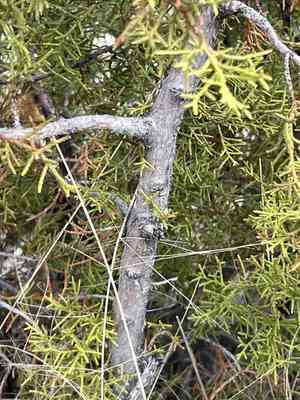
Redberry juniper (Juniperus arizonica)
Also known as: Arizona Juniper
The Utah juniper (Juniperus osteosperma) is a hardy conifer native to the arid regions of the Southwestern United States. This tree features bluish-gray, scale-like needles and produces berry-like cones that are vital for local wildlife. It is well-known for its resilience in dry conditions and often displays twisted branches and reddish bark, standing out in rocky, mountainous landscapes.
In This Article
Attributes of Redberry juniper
Lifespan
Perennial
Plant Type
Tree
Plant Height
3 to 5 meters (10 to 16 feet)
Spread
3 to 6 meters (10 to 20 feet)
Leaf Color
Blue-green
Flower Size
N/A
Flower Color
N/A
Images of Redberry juniper
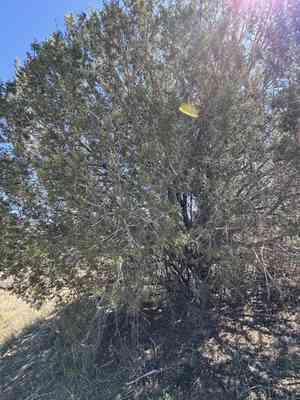
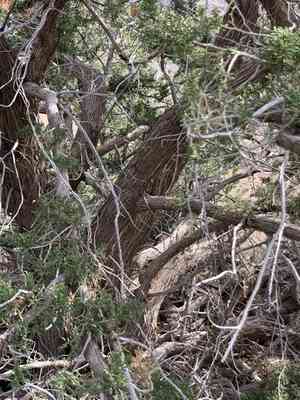
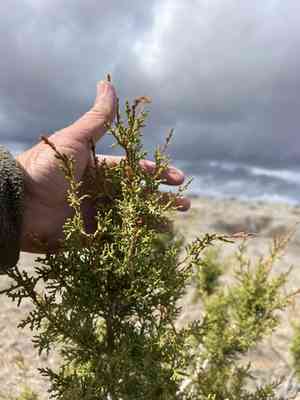
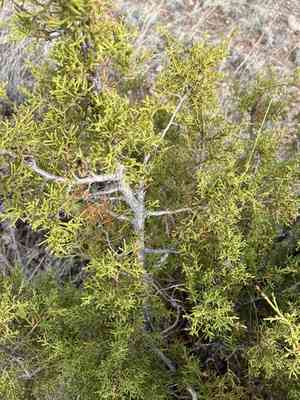
Quickly Identify Redberry juniper
1
Identify the Arizona juniper by its small, scale-like leaves and blue-green foliage. The bark is typically grayish-brown and fibrous, and it produces small, berry-like cones.
Scientific Classification of Redberry juniper
Phylum
Vascular plants
Class
Conifers
Order
Pinales
Family
Cypress
Genus
Junipers
Species
Redberry juniper
Planting and Growing of Redberry juniper
Care Difficulty
Easy
Watering Schedule
Every 2 days
Sunlight Requirements
Full sun
Sunshine Duration
8-12 hours
Ideal Temperature
60-75℉
Soil Type
Potting Mix, Peat Mix
Soil pH
6.5-7.5
Fertilizer Type
Balanced
Pruning Season
Spring, Summer
Pruning Area
Branches, Leaves
Pruning Frequency
2 times a year
Repotting Season
Spring
Pot Type
Plastic, Ceramic
 How to Water Redberry juniper?
When watering Juniperus arizonica, aim for thorough soaking. The soil should be moist to a depth of 15-20 cm, ensuring that the entire root system receives moisture. Utilize 500ml of water per session for potted plants to replicate a natural rainfall effect.
What are the symptoms of an underwatered Redberry juniper?
›
What should I do if my Redberry juniper is not getting enough water?
›
What are the symptoms of an overwatered Redberry juniper?
›
How to save an overwatered Redberry juniper?
›
 What Are the Sunlight Requirements for Redberry juniper?
Juniperus arizonica benefits most from full to partial sun; providing 6 to 8 hours of light ensures vibrant growth, robust foliage, and optimal health. This range allows the plant to maintain its vigor and resist diseases more effectively.
Ensuring Sufficient Sunlight
›
Dealing with Excessive Heat
›
Monitoring Seasonal Changes
›
 What Is the Ideal Temperature Range for Redberry juniper?
Juniperus arizonica thrives best between 60°F and 75°F. At this range, the plant can efficiently carry out its physiological processes, including photosynthesis and respiration, without stress. Consistent temperatures within this range support healthy growth and enhance the plant's natural defenses against diseases and pests.
 What Soil is Best for Redberry juniper?
Juniperus arizonica flourishes best in well-draining soils. This ensures that the roots do not retain excess moisture, which can lead to root rot. Optimal drainage prevents waterlogging and provides the roots with adequate air, promoting healthy growth and disease resistance. While Juniperus arizonica is not overly demanding, it benefits from soils that contain a moderate amount of organic material. Balanced nutrition ensures strong and lush growth as well as increased resilience against environmental stressors. This species prefers soil that ranges from neutral to slightly alkaline, which aligns with its native arid environment. Maintaining appropriate pH levels ensures optimal nutrient uptake and promotes overall plant vitality.
 How to Fertilize Redberry juniper?
Juniperus arizonica requires a balanced approach to fertilization. For liquid fertilizers, use a diluted mix—about one tablespoon per gallon of water. Slow-release fertilizers should be applied sparingly, following package instructions, usually around a handful per plant.
 How to Prune Redberry juniper?
Start by identifying any dead, diseased, or damaged branches. These branches should be removed first to prevent the spread of disease and to improve the look and health of the plant. Clear away these branches back to healthy wood or to the branch collar to ensure efficient healing. After removing unhealthy branches, focus on shaping the tree. Juniperus arizonica naturally grows in a conical shape, so aim to maintain this form. Trim any overly long or awkward branches that extend beyond the desired shape, cutting just above a healthy bud or lateral branch. Proper airflow is essential for preventing diseases. Thin out crowded branches that block air circulation through the canopy. Focus on areas where branches cross or rub against each other, choosing the weaker or less advantageous one to remove.
More About Pruning Techniques→
 How to Propagate Redberry juniper plant?
1
Use a well-draining soil mix rich in organic matter. Juniperus arizonica prefers slightly acidic to neutral soil, so adjusting pH levels accordingly ensures better germination and growth.
2
Sow the seeds on the soil surface and gently cover them with a thin layer of sand or soil. Keep the soil evenly moist but not waterlogged, as this aids in successful germination.
3
Choose semi-hardwood cuttings and make a clean cut just below the node. Dip the cut end in rooting hormone to enhance root development, and plant it in a mixture of sand and compost.
 How to Repot Redberry juniper plant?
1
Juniperus arizonica should be repotted when the roots start to circle the pot or emerge from drainage holes. The best time is early spring or autumn when the plant is less stressed and can recover quickly.
2
Select a pot that is slightly larger than the current one, with good drainage holes. A pot made of porous material like terra cotta is beneficial as it provides better airflow to the roots, promoting healthy growth and preventing root rot.
3
Choose a well-draining soil mix, such as one with a sandy composition. This type of soil mimics the natural arid conditions Juniperus arizonica prefers, reducing the risk of waterlogging and root diseases.



