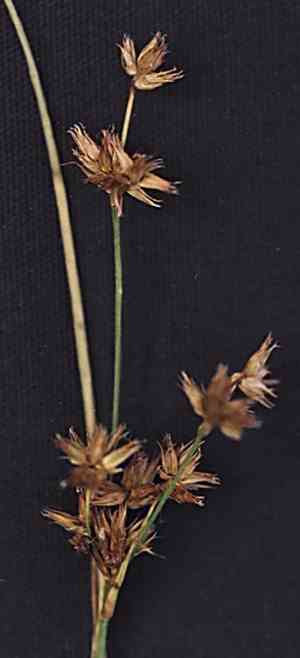
Knotted rush (Juncus nodosus)
Also known as: Blunt-flowered rush
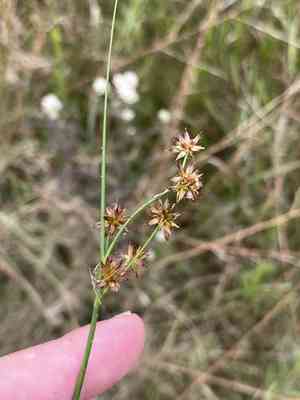
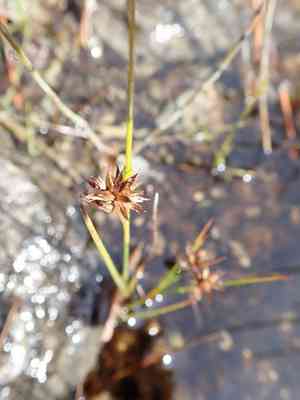
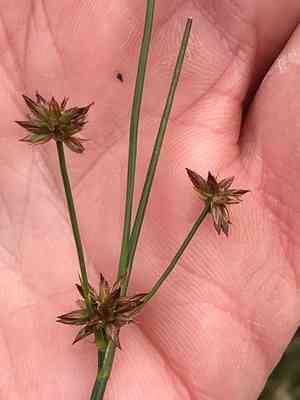
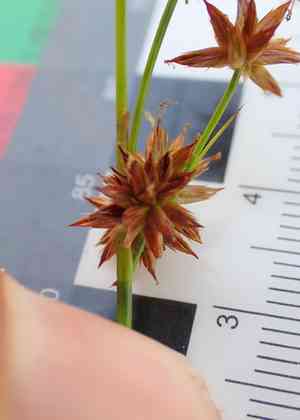
A rhizomatous perennial herb typically features slender, smooth stems that can reach up to approximately 60 centimeters in height. The inflorescence consists of spherical clusters of flowers. Each flower within the cluster has pointed segments that are green or brown, measuring a few millimeters in length and ending in a sharp tip.
In This Article
Attributes of Knotted rush
Lifespan
Perennial
Plant Type
Grass
Plant Height
15 cm to 51 cm
Spread
N/A
Leaf Color
Green (reduced to sheath)
Flower Size
1-3 mm
Flower Color
Yellow Red Green Brown
Images of Knotted rush
Quickly Identify Knotted rush
1
To identify Juncus nodosus, look for its cylindrical, pith-filled stems with distinct joint-like nodes. The plant\'s inflorescence is a cluster of small, brownish flowers located near the stem tips. Its leaves are reduced to sheaths, making the stems appear leafless.
Scientific Classification of Knotted rush
Phylum
Vascular plants
Class
Monocotyledons
Order
Poales
Family
Rush
Genus
Rushes
Species
Knotted rush
Planting and Growing of Knotted rush
Care Difficulty
Easy
Watering Schedule
Every 4 days
Sunlight Requirements
Full sun
Sunshine Duration
4-8 hours
Ideal Temperature
60-75℉
Soil Type
Potting Mix, Peat Mix
Soil pH
5.5-7.5
Fertilizer Type
Balanced
Pruning Season
Spring, Summer
Pruning Area
Branches, Leaves
Pruning Frequency
2 times a year
Repotting Season
Spring
Pot Type
Plastic, Ceramic
 How to Water Knotted rush?
For Juncus nodosus, ensure the soil is kept consistently moist but not waterlogged. This means watering around 200 ml each time, ensuring that the topsoil remains damp, providing a balance between moisture and drainage. You should fully saturate the soil without leaving standing water.
What are the symptoms of an underwatered Knotted rush?
›
What should I do if my Knotted rush is not getting enough water?
›
What are the symptoms of an overwatered Knotted rush?
›
How to save an overwatered Knotted rush?
›
 What Are the Sunlight Requirements for Knotted rush?
Juncus nodosus performs optimally in half to full-day sun exposure. This range bolsters its photosynthetic activity, enhancing growth, structural integrity, and resilience to environmental stresses.
What type of light does Juncus nodosus prefer?
›
How can you provide the ideal lighting for Juncus nodosus?
›
What benefits does ideal lighting offer Juncus nodosus?
›
 What Is the Ideal Temperature Range for Knotted rush?
Juncus nodosus thrives best within a temperature range of 60 to 75°F. This range ensures optimal metabolic and physiological processes, promoting healthy growth and development. Maintaining this temperature range helps prevent stress and supports the plant's natural resilience to environmental changes.
 What Soil is Best for Knotted rush?
Juncus nodosus thrives in soil that maintains a consistent level of moisture without becoming waterlogged. This ensures that its roots can absorb water steadily, promoting healthy growth and vibrant foliage. The plant requires soil with good aeration properties. Well-aerated soil allows roots to access necessary oxygen, reducing chances of root rot and ensuring robust plant health. Rich loam provides essential nutrients that this rush species needs to grow. Nutrient-rich soil enhances photosynthetic capabilities and boosts overall plant vitality.
 How to Fertilize Knotted rush?
Juncus nodosus, also known as knotted rush, requires a modest amount of fertilizer. Use approximately 1/2 cup of balanced liquid fertilizer diluted at half strength for every square foot per application. This amount supports steady growth without overwhelming the plant with excess nutrients.
 How to Prune Knotted rush?
Begin by inspecting the plant for any dead or damaged stems. Trim these down to the base to improve air circulation and overall plant health. Focus on cutting back about a third of the oldest stems to stimulate new growth. Use sharp, clean scissors to trim the plant into your desired shape. Cut just above a node to promote branching. Maintaining a slightly rounded shape enhances its natural appearance and prevents it from sprawling uncontrollably.
More About Pruning Techniques→
 How to Propagate Knotted rush plant?
1
Collect seeds from mature Juncus nodosus plants in late summer. Clean them thoroughly and dry them to prevent mold during storage. Store in a cool, dry place until ready for planting in early spring.
2
For both seeds and divisions, prepare well-draining soil. Incorporate compost to enrich the soil, providing essential nutrients that support root development and overall plant health.
3
Sow seeds on the soil surface or plant divisions, covering roots slightly. Keep soil consistently moist but not waterlogged. Water gently to avoid displacing seeds or damaging new divisions.
 How to Repot Knotted rush plant?
1
Juncus nodosus needs repotting when you notice its roots are growing out of the drainage holes, or the soil is compacted and stifling the plant. These signs suggest that the plant has outgrown its current space and needs room to thrive. Spring or summer is optimal, as the plant is actively growing and better able to handle transplant stress.
2
Opt for a pot that is a couple of inches larger in diameter than the current one. It's best to select a pot with ample drainage holes to prevent waterlogging, which Juncus nodosus dislikes. Using a slightly bigger pot allows for root expansion while ensuring the plant doesn't become waterlogged.
3
Choose loamy, well-draining soil to promote healthy root development. A mix that retains some moisture yet allows excess water to drain will best suit Juncus nodosus. This keeps the roots from staying waterlogged, minimizing the risk of rot.
Learn More About Knotted rush Diseases
Anthracnose
Bacterial Leaf Spot
Bacterial Soft Rot
Bacterial Wilt
Chemical Injury
Cyst Nematode
Damping-off
Downy Mildew
Drought Stress
Fusarium Wilt
Gray Mold
Leaf Spot
Mosaic
Nutrient Deficiency
Nutrient Toxicity
Powdery Mildew
Root Rot
Root-knot Nematode
Rusts
Sooty Mold
Spider Mites
Temperature Stress
Thrips Damage
White Mold



