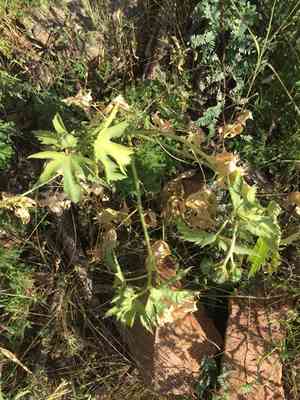
Ragged nettlespurge (Jatropha macrorhiza)
Also known as: Bigroot Jatropha, Jícama del Norte
Ragged nettlespurge (Euphorbia serrata) is well-adapted to arid environments through several distinct features and adaptations:
1. **Deep Root System**: It has an extensive root network that penetrates deep into the soil to access water from lower layers.
2. **Compact Leaves**: The smaller, serrated leaves reduce water loss by minimizing the surface area exposed to the sun.
3. **Water Storage**: Succulent parts of the plant, such as its stems and leaves, store water, allowing the plant to endure prolonged dry periods.
4. **Efficient Water Use**: The plant employs Crassulacean Acid Metabolism (CAM) photosynthesis, opening stomata at night to reduce water loss.
5. **Protective Sap**: The plant produces a toxic, milky sap that deters herbivores and minimizes damage.
Additionally, clusters of greenish-yellow flowers are adapted to attract specific pollinators, ensuring effective reproduction in challenging conditions. These adaptations allow ragged nettlespurge to thrive in arid environments by optimizing water use and enhancing survival.
Attributes of Ragged nettlespurge
Images of Ragged nettlespurge
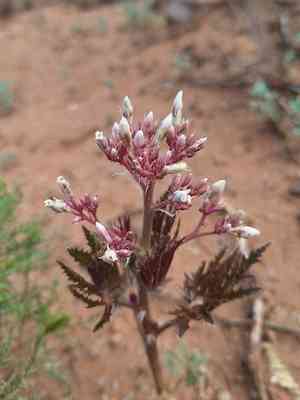
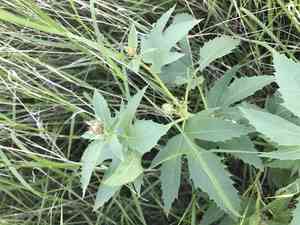
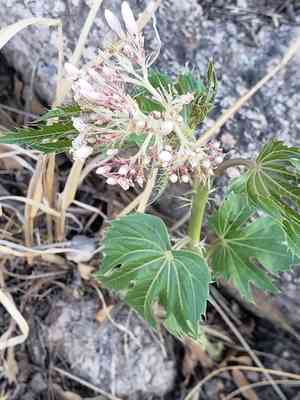
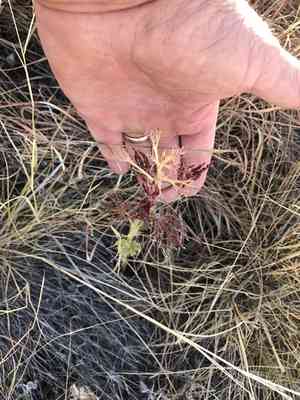
Quickly Identify Ragged nettlespurge
Scientific Classification of Ragged nettlespurge
Planting and Growing of Ragged nettlespurge
 How to Water Ragged nettlespurge?
 What Are the Sunlight Requirements for Ragged nettlespurge?
 What Is the Ideal Temperature Range for Ragged nettlespurge?
 What Soil is Best for Ragged nettlespurge?
 How to Fertilize Ragged nettlespurge?
 How to Prune Ragged nettlespurge?
 How to Propagate Ragged nettlespurge plant?
 How to Repot Ragged nettlespurge plant?
Toxicity
Ingestion, Contact with sap



