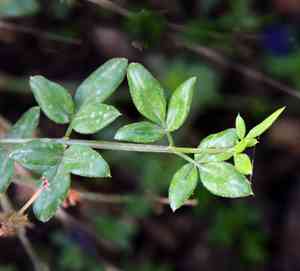
Winter jasmine (Jasminum nudiflorum)
Also known as: Winter-flowering jasmine
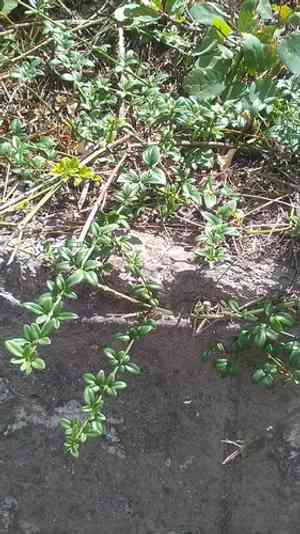
Native to China, winter jasmine is valued for its delicate branches and early bloom period. The plant's vibrant yellow flowers can spread widely, and it readily forms new roots when its branches contact the soil, making it an excellent option for covering slopes and banks. Additionally, winter jasmine's ability to climb with support allows for versatile landscaping uses.
In This Article
Attributes of Winter jasmine
Lifespan
Perennial
Plant Type
Shrub
Plant Height
3 m
Spread
3 m
Leaf Color
Green
Flower Size
1 cm
Flower Color
Yellow
Images of Winter jasmine
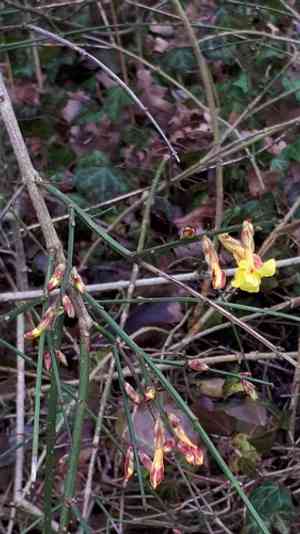
Quickly Identify Winter jasmine
1
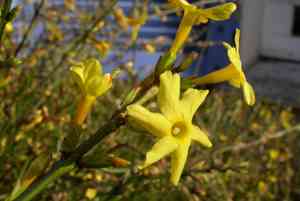
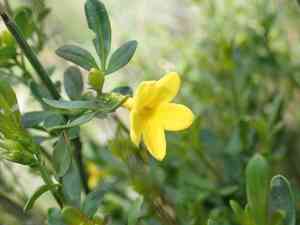
Vibrant yellow blossoms in funnel shape, 1-inch wide, blooming early spring.
2
Opposite trifoliate leaves, shiny with prominent veins, emerging after flowers.
3
Quadrangular green stems with glabrous surface, arching gracefully, slender appearance.
4
Uncommon two-lobed blackberry-like berries occasionally present, smooth and dark colored.
5
Bark transitions from green to gray or reddish-brown, peeling in scaly pattern.
Scientific Classification of Winter jasmine
Phylum
Vascular plants
Class
Dicotyledons
Order
Mints plantains olives and allies
Family
Olive
Genus
Jasmine
Species
Winter jasmine
Planting and Growing of Winter jasmine
Care Difficulty
Easy
Watering Schedule
Every 2 days
Sunlight Requirements
Full sun
Sunshine Duration
6-8 hours
Ideal Temperature
50-68℉
Soil Type
Potting Mix, Peat Mix
Soil pH
6.5-7.5
Fertilizer Type
Balanced
Pruning Season
Spring, Summer
Pruning Area
Branches, Leaves
Pruning Frequency
2 times a year
Repotting Season
Spring
Pot Type
Plastic, Ceramic
 How to Water Winter jasmine?
Winter Jasmine (Jasminum nudiflorum) prefers a moderate watering approach. Ensure the soil remains consistently moist, but not waterlogged. Aim for approximately 500 ml to thoroughly moisten the soil, allowing excess water to drain out completely.
More About Watering Techniques→
What are the symptoms of an underwatered Winter jasmine?
›
What should I do if my Winter jasmine is not getting enough water?
›
What are the symptoms of an overwatered Winter jasmine?
›
How to save an overwatered Winter jasmine?
›
 What Are the Sunlight Requirements for Winter jasmine?
Half-day to full-day sunlight is ideal, ensuring the plant gets enough energy for lush growth and abundant blooms. This exposure promotes strong branching and a bushier shape, enhancing the aesthetic appeal of Jasminum nudiflorum.
More About Sunlight Requirements Techniques→
What is the ideal light condition for Jasminum nudiflorum?
›
How can one achieve optimal light conditions?
›
What are the benefits of ideal lighting conditions?
›
 What Is the Ideal Temperature Range for Winter jasmine?
For Jasminum nudiflorum, the ideal temperature range falls between 50°F and 68°F. This range ensures optimal growth and flower production. The plant thrives best under mild temperatures, neither too cold nor excessively warm, as it simulates its native habitat conditions. Maintaining temperatures consistently within this range will promote vigorous growth and vibrant blooms.
 What Soil is Best for Winter jasmine?
Jasminum nudiflorum thrives best in well-drained soil to prevent waterlogging, which can lead to root rot. Well-drained soil ensures that the roots receive adequate oxygen and nutrients, promoting healthy growth and vibrant blooms. This plant appreciates a nutrient-rich soil composition. Incorporating organic matter like compost can boost soil fertility, ensuring that Jasminum nudiflorum gets the essential nutrients it needs to bloom profusely and maintain its lush foliage. While well-drained, the soil should also retain moderate moisture. This balance helps provide just the right amount of hydration, which is crucial for the plant's uptake of nutrients and maintenance of its overall vitality.
More About Soil→
 How to Fertilize Winter jasmine?
Jasminum nudiflorum typically requires a moderate amount of fertilizer. During its growing season, apply a balanced liquid fertilizer with a ratio like 10-10-10, diluting it to half the recommended strength to avoid root burn. Generally, about a tablespoon worth of granular fertilizer per square foot is adequate for solid types, ensuring it's well distributed in the soil.
More About Fertilizing Techniques→
 How to Prune Winter jasmine?
Begin by inspecting your Jasminum nudiflorum, commonly known as winter jasmine, for dead, damaged, or diseased branches. These should be the first to be removed, as they can impede the plant's health. Next, determine the desired shape and size of the plant and cut back any overgrown or leggy branches to maintain this structure. Make your cuts just above a healthy set of leaves or a swelling bud to encourage new growth. Remember, the goal is to open up the plant to allow light and air to penetrate, which leads to improved overall health.
More About Pruning Techniques→
 How to Propagate Winter jasmine plant?
1
Select a healthy stem and use pruning shears to cut a segment about 6 inches long. Remove leaves from the lower half to prepare it for planting.
2
Dip the base of the cutting into rooting hormone, which helps speed up the formation of roots and enhances the chances of successful propagation.
3
Insert the treated end of the cutting into a potting mix. Ensure that the soil is moist but not over-watered to prevent rotting.
 How to Repot Winter jasmine plant?
1
You'll know it's time to repot your Jasminum nudiflorum when you see its roots starting to emerge from the drainage holes or when it appears to be root-bound. Additionally, if the plant's growth has stagnated despite proper care, it might be asking for a bigger home.
2
Select a pot that is slightly larger than the current one, about 1-2 inches wider in diameter. Opt for a pot with multiple drainage holes to ensure excess water is easily removed. This prevents waterlogging, a common issue leading to root rot, thus promoting healthier root growth.
3
A well-draining loamy mix enriched with organic matter is ideal. The loamy texture aids with water retention and nutrient provision while preventing root suffocation. This balance is crucial for jasmine to thrive, meeting its need for moisture without risking fungal issues.
Learn More About Winter jasmine Diseases
Anthracnose
Bacterial Leaf Spot
Bacterial Soft Rot
Chemical Injury
Crown Gall
Damping-off
Downy Mildew
Drought Stress
Fusarium Wilt
Gray Mold
Leaf Curl
Leaf Spot
Mosaic
Nutrient Deficiency
Nutrient Toxicity
Powdery Mildew
Root Rot
Root-knot Nematode
Rusts
Sooty Mold
Spider Mites
Temperature Stress
Thrips Damage
White Mold



