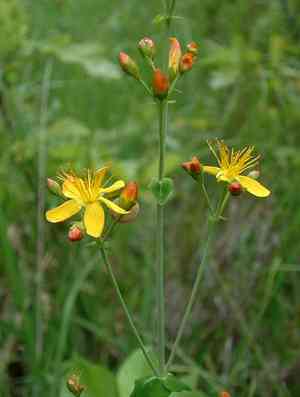
Slender St. John's wort (Hypericum pulchrum)
Also known as: Elegant St. John's wort
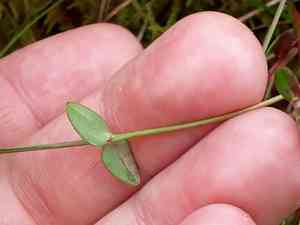
The slender St. John's wort, known for its heart-shaped leaves and widespread presence across Britain, has a distinctive feature: when its glands are crushed, they release a red pigment. In the 16th century, this red staining was symbolically associated with the blood of martyrs, particularly St. John the Baptist. This connection inspired both the English name "slender St. John's wort" and the German name "Geflecktes Johanniskraut," which translates to "spotted John's herb."
In This Article
Attributes of Slender St. John's wort
Lifespan
Perennial
Plant Type
Herb
Plant Height
40 cm
Spread
40 cm
Leaf Color
Green
Flower Size
1.2 cm to 1.8 cm
Flower Color
Yellow
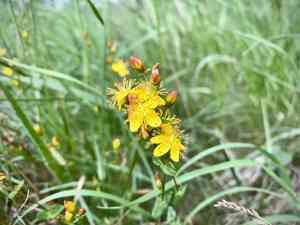
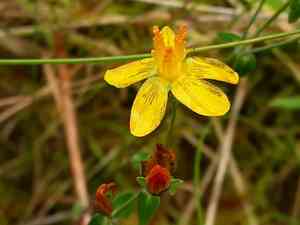
Images of Slender St. John's wort
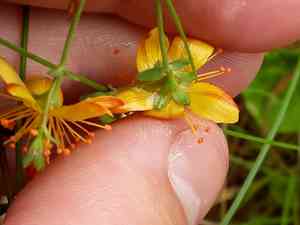
Quickly Identify Slender St. John's wort
1
Hypericum pulchrum can be identified by its slender, upright stems, opposite leaves that are narrowly oval, and bright yellow star-shaped flowers. The flowers typically appear from June to August.
Scientific Classification of Slender St. John's wort
Phylum
Vascular plants
Class
Dicotyledons
Order
Malpighiales
Family
St. John's wort
Genus
St. John's worts
Species
Slender St. John's wort
Planting and Growing of Slender St. John's wort
Care Difficulty
Easy
Watering Schedule
Every 2 days
Sunlight Requirements
Full sun
Sunshine Duration
8-12 hours
Ideal Temperature
59-77℉
Soil Type
Potting Mix, Peat Mix
Soil pH
6.5-7.5
Fertilizer Type
Balanced
Pruning Season
Spring, Summer
Pruning Area
Branches, Leaves
Pruning Frequency
2 times a year
Repotting Season
Spring
Pot Type
Plastic, Ceramic
 How to Water Slender St. John's wort?
Hypericum pulchrum prefers moderate watering. Apply about 300ml of water, ensuring the soil is evenly moist but not waterlogged. It thrives in well-drained soil, so ensure any excess water escapes to avoid root rot.
What are the symptoms of an underwatered Slender St. John's wort?
›
What should I do if my Slender St. John's wort is not getting enough water?
›
What are the symptoms of an overwatered Slender St. John's wort?
›
How to save an overwatered Slender St. John's wort?
›
 What Are the Sunlight Requirements for Slender St. John's wort?
Prefers full sun to partial sun locations, which fosters robust growth and abundant blooming. Optimal light aligns with 4-6 hours daily exposure to direct and indirect sunlight, promoting vitality and resistance to pests.
More About Sunlight Requirements Techniques→
What is the best sunlight intensity for Hypericum pulchrum?
›
How do you ensure enough light for Hypericum pulchrum indoors?
›
Why is proper light crucial for Hypericum pulchrum’s growth?
›
 What Is the Ideal Temperature Range for Slender St. John's wort?
The ideal temperature range for Hypericum pulchrum, commonly known as Slender St John's Wort, is between 59°F to 77°F. This range provides the optimal conditions for growth and ensures that the plant can thrive and flower successfully. Maintaining temperatures within this range helps in achieving balanced photosynthesis, which supports healthy leaf and bud formation. Regular monitoring of the environment to stay within this range is crucial for cultivating a robust Hypericum pulchrum.
 What Soil is Best for Slender St. John's wort?
This plant thrives best in well-drained soil, which prevents root rot and ensures the roots have access to oxygen. Excellent drainage is crucial for keeping the plant healthy, especially in heavy rainfall areas. Ensuring the soil has moderate nutrient levels will help sustain vigorous growth and vibrant blooms. Using a balanced fertilizer once or twice during the growing season can meet this requirement. Hypericum pulchrum prefers soil that retains moisture without being waterlogged. Regularly watering during dry spells and mulching can help maintain the appropriate level of moisture while preventing excessive water accumulation.
 How to Fertilize Slender St. John's wort?
Hypericum pulchrum benefits from moderate fertilization. For liquid fertilizer, dilute it to half the recommended strength on the package to prevent over-fertilization. Use approximately 100ml per plant each time you apply it. For slow-release granules, distribute a tablespoon around the base of the plant.
 How to Prune Slender St. John's wort?
Start pruning your Hypericum pulchrum by focusing on removing any dead or damaged stems. This encourages new growth and maintains the plant's overall health. Trim back overgrown areas to maintain the desired shape, ensuring sunlight penetrates through its foliage. To encourage a bushier growth form, pinch back new growth during the early stages of the growing season. This not only enhances the plant's aesthetic appeal but also promotes fuller foliage and more prolific flowering by signaling the plant to produce more lateral branches.
More About Pruning Techniques→
 How to Propagate Slender St. John's wort plant?
1
Begin by soaking the seeds in warm water for 24 hours. This helps to soften the seed coat and encourages faster germination. After soaking, plant the seeds in a seed tray filled with a well-draining seed mix.
2
Select healthy, non-flowering stems and cut a section about 10 cm in length just below a leaf node. Remove the lower leaves to reduce water loss and dip the cut end in rooting hormone to encourage root development.
3
Insert the cutting into a pot filled with a mix of half perlite and half peat moss. Firm the soil around the cutting and water lightly. Cover the pot with a plastic bag to maintain humidity, ensuring it doesn't touch the leaves.
 How to Repot Slender St. John's wort plant?
1
Hypericum pulchrum should be repotted when you observe roots growing out of the drainage holes, or if the soil dries out significantly faster than usual. Spring and autumn provide the best conditions for repotting as the plant can easily recover and establish in its new home.
2
Choose a pot that is only one size larger than the current one to prevent excess water retention, which could lead to root rot. A pot with drainage holes is essential to facilitate proper water flow and prevent waterlogging.
3
The ideal soil for Hypericum pulchrum should be well-draining yet retain enough moisture to support plant growth. A mix containing peat, perlite, and pine bark provides an excellent balance of moisture retention and aeration.
Learn More About Slender St. John's wort Diseases
Anthracnose
Bacterial Leaf Spot
Chemical Injury
Crown Gall
Cyst Nematode
Damping-off
Downy Mildew
Drought Stress
Fusarium Wilt
Gray Mold
Leaf Spot
Mosaic
Nutrient Deficiency
Nutrient Toxicity
Powdery Mildew
Root Rot
Root-knot Nematode
Rusts
Sooty Mold
Spider Mites
Temperature Stress
Thrips Damage
White Mold



