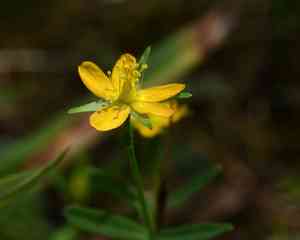
Lesser canadian St. John's wort (Hypericum canadense)
Also known as: Canada St. John's wort
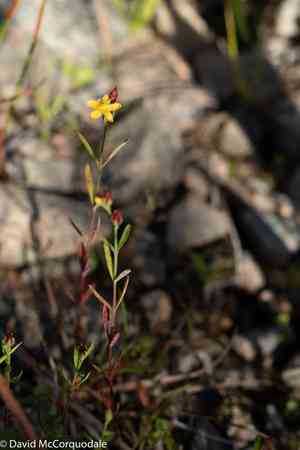
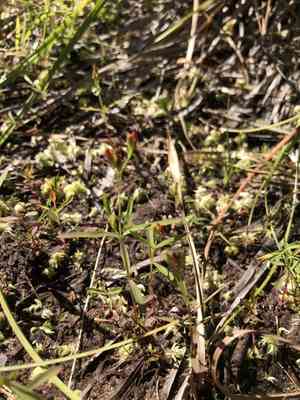
Hypericum canadense, known as Canadian St. John's wort, is a perennial herb that features slender, four-angled stems which can grow between 5 to 75 cm tall. These stems are typically simple but may branch out in the upper portion and are slightly winged. The plant has fibrous roots and lacks rhizomes or stolons. Its leaves are small, narrow, and range from linear to linear-oblanceolate in shape, displaying distinctive translucent dots due to tiny glands. The leaves are sessile, arranged oppositely along the stem, and contribute to the plant's delicate appearance.
In This Article
Attributes of Lesser canadian St. John's wort
Lifespan
Annual
Plant Type
Herb
Plant Height
Typically 20-60 cm
Spread
Not applicable, as it is a herb rather than a tree
Leaf Color
Green
Flower Size
Approximately 1-1.5 cm
Flower Color
Yellow
Images of Lesser canadian St. John's wort
Quickly Identify Lesser canadian St. John's wort
1
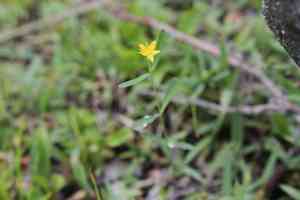
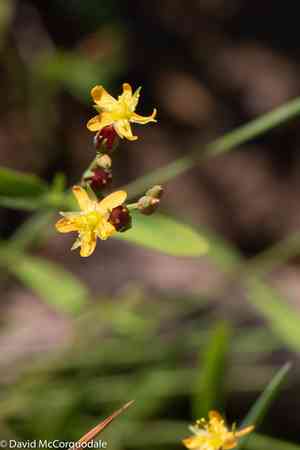
Identification of Hypericum canadense can be done by looking for its small yellow flowers with five petals, narrow lanceolate leaves, and smooth, hairless stems. Additionally, its flowers have numerous stamens which can aid in its identification.
Scientific Classification of Lesser canadian St. John's wort
Phylum
Vascular plants
Class
Dicotyledons
Order
Malpighiales
Family
St. John's wort
Genus
St. John's worts
Species
Lesser canadian St. John's wort
Planting and Growing of Lesser canadian St. John's wort
Care Difficulty
Easy
Watering Schedule
Every 2 days
Sunlight Requirements
Partial sun
Sunshine Duration
6-10 hours
Ideal Temperature
65-75℉
Soil Type
Potting Mix, Peat Mix
Soil pH
4.5-6.5
Fertilizer Type
Balanced
Pruning Season
Spring, Summer
Pruning Area
Branches, Leaves
Pruning Frequency
2 times a year
Repotting Season
Spring
Pot Type
Plastic, Terracotta
 How to Water Lesser canadian St. John's wort?
Water the Hypericum canadense until the soil is moist but not waterlogged. Aim to saturate about 300 milliliters of water at each watering session, ensuring that excess water drains well. This approach helps maintain optimal moisture levels while preventing root rot.
What are the symptoms of an underwatered Lesser canadian St. John's wort?
›
What should I do if my Lesser canadian St. John's wort is not getting enough water?
›
What are the symptoms of an overwatered Lesser canadian St. John's wort?
›
How to save an overwatered Lesser canadian St. John's wort?
›
 What Are the Sunlight Requirements for Lesser canadian St. John's wort?
Hypericum canadense thrives best in partial sun to light shade. This ensures optimal growth, healthy flowering, and reduced stress from environmental conditions.
Optimal Sunlight Duration
›
Solutions for Ideal Light
›
Benefits of Perfect Lighting
›
 What Is the Ideal Temperature Range for Lesser canadian St. John's wort?
The ideal temperature range for cultivating Hypericum canadense is between 65°F and 75°F. This temperature range is optimal for growth and development, allowing for healthy leaf and flower production. Within these temperatures, the plant can efficiently photosynthesize and maintain its metabolic functions effectively.
 What Soil is Best for Lesser canadian St. John's wort?
Hypericum canadense prefers well-drained soil, which prevents waterlogging that can lead to root rot. This ensures that the roots receive adequate oxygen, promoting healthy plant growth. While drainage is essential, this plant appreciates soil that retains some moisture. Ensuring the soil holds moisture helps in sustaining the plant during dry spells, crucial for its growth cycle. The plant thrives in nutrient-rich soil, providing the essential minerals and nutrients needed for robust growth, flowering, and disease resistance.
 How to Fertilize Lesser canadian St. John's wort?
For Hypericum canadense, it is essential to use the right amount of fertilizer to avoid over or underfeeding. Generally, you should dilute liquid fertilizers to half the recommended strength. For slow-release fertilizers, use approximately 1-2 tablespoons per plant, depending on the plant's size and soil quality.
 How to Prune Lesser canadian St. John's wort?
Begin by inspecting the plant for any dead, damaged, or diseased stems. Use clean, sharp pruning shears to cut these back to healthy tissue. Focus on maintaining an open structure to allow sunlight and air circulation throughout the plant, which is key for its health. Reduce the plant's size by cutting back up to one-third of the older stems, which will also promote new growth. Shape Hypericum canadense by selectively trimming the outer branches. This approach aids in keeping the plant compact and encourages fuller, denser growth. Always aim to cut above a leaf node to stimulate the growth of new branches and flowers. For best results, make your cuts at a slight angle just above a leaf pair or bud.
More About Pruning Techniques→
 How to Propagate Lesser canadian St. John's wort plant?
1
Start by collecting seeds from mature Hypericum canadense plants in autumn. Store them in a cool, dry place until early spring, then sow them in trays with seed-starting mix, lightly covered with soil.
2
In early spring, select a healthy Hypericum canadense plant and take 4-6 inch long cuttings from non-flowering shoots. Remove the leaves from the lower half and dip the cut end in rooting hormone before planting in a suitable medium.
3
In spring, carefully dig up a mature plant and divide the root ball into separate clumps, ensuring each has ample roots and foliage. Replant the divisions at the same depth they were growing before.
 How to Repot Lesser canadian St. John's wort plant?
1
Repot your Hypericum canadense when you notice signs like roots emerging from the drainage holes, a slowdown in growth, or the soil drying out too quickly after watering. These signals indicate that the plant may be root-bound and needs more space to thrive.
2
Select a pot that's one size larger than the current one, with ample drainage. A slightly larger pot provides enough space for root expansion without overwhelming the plant with excess soil, which can lead to water retention and root rot.
3
Opt for a well-draining sandy loam to mimic Hypericum canadense's natural habitat. Such soil ensures that water drains efficiently, preventing root rot while maintaining adequate moisture levels for healthy growth.



