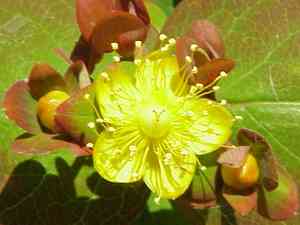
Tutsan (Hypericum androsaemum)
Also known as: Sweet Amber, Sweet-amber, Shrubby St. John’s wort
Tutsan (Hypericum androsaemum), a relative of St. John's Wort, originates from Europe, Iran, and the Mediterranean. This rapidly spreading plant is deemed invasive in several regions, including Australia, where it is notably avoided by both livestock and wildlife.
In This Article
Attributes of Tutsan
Lifespan
Perennial
Plant Type
Shrub
Plant Height
60 cm to 90 cm
Spread
1 m
Leaf Color
Green
Flower Size
1.5 cm to 2 cm
Flower Color
Yellow
Images of Tutsan
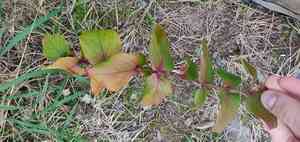
Quickly Identify Tutsan
1
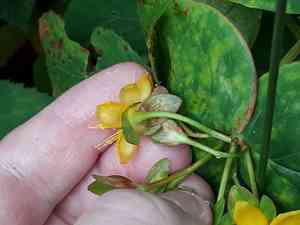
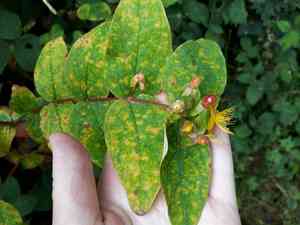
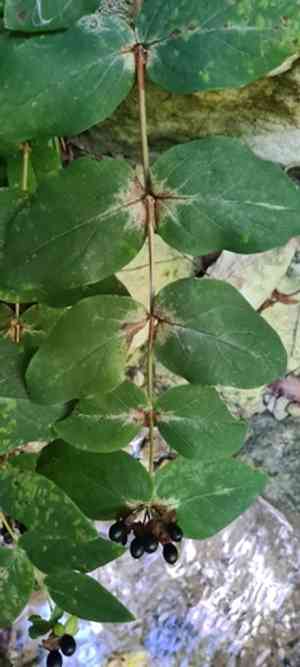
To identify Hypericum androsaemum, look for a shrub with yellow five-petaled flowers and opposite, simple leaves. The leaves are oval to oblong, and the plant often has reddish stems. The fruit is initially red but turns black when mature.
Scientific Classification of Tutsan
Phylum
Vascular plants
Class
Dicotyledons
Order
Malpighiales
Family
St. John's wort
Genus
St. John's worts
Species
Tutsan
Planting and Growing of Tutsan
Care Difficulty
Easy
Watering Schedule
Every 3 days
Sunlight Requirements
Partial sun
Sunshine Duration
6-10 hours
Ideal Temperature
60-75℉
Soil Type
Potting Mix, Peat Mix
Soil pH
6.5-7.5
Fertilizer Type
Balanced
Pruning Season
Spring, Summer
Pruning Area
Branches, Leaves
Pruning Frequency
Once a year
Repotting Season
Spring
Pot Type
Plastic, Ceramic
 How to Water Tutsan?
Hypericum androsaemum prefers consistent moisture but not sogginess. Each watering session should allow the soil to be moistened thoroughly up to 500 milliliters per session, ensuring the water reaches its root system but avoids waterlogging.
More About Watering Techniques→
What are the symptoms of an underwatered Tutsan?
›
What should I do if my Tutsan is not getting enough water?
›
What are the symptoms of an overwatered Tutsan?
›
How to save an overwatered Tutsan?
›
 What Are the Sunlight Requirements for Tutsan?
Hypericum androsaemum prefers partial sun to full shade. Ideally, it benefits from a balance of morning and late afternoon sunlight, which supports healthy growth and vibrant blooms, while safeguarding against the damaging effects of harsh midday sun.
More About Sunlight Requirements Techniques→
What is the ideal light condition for Hypericum androsaemum?
›
How can I achieve these light conditions?
›
What are the benefits of ideal lighting for this plant?
›
 What Is the Ideal Temperature Range for Tutsan?
The ideal temperature range for Hypericum androsaemum to thrive is between 60°F and 75°F. This range provides a stable environment that supports its growth cycle by ensuring adequate metabolic and photosynthetic activities. Maintaining these temperatures can help in achieving optimal foliage and flower production.
 What Soil is Best for Tutsan?
Hypericum androsaemum thrives in well-drained soils that prevent waterlogging. This prevents root rot, ensuring healthy root development and promoting vigorous plant growth. This plant thrives in moderately fertile soils, meaning it doesn't require overly rich soil. This helps maintain balanced growth without promoting excessive foliage at the expense of flowers. The presence of organic matter improves soil structure and nutrient availability, supporting the robust growth of Hypericum androsaemum. It ensures the soil retains enough moisture without becoming compacted.
More About Soil→
 How to Fertilize Tutsan?
When fertilizing Hypericum androsaemum, use a balanced all-purpose fertilizer. For liquid formulations, a concentration of 1 tablespoon per gallon of water is adequate. Use only half of the recommended dose mentioned on the fertilizer package for younger plants to prevent root burn.
More About Fertilizing Techniques→
 How to Prune Tutsan?
Start by removing any dead, damaged, or diseased branches to keep the plant healthy. Use clean, sharp shears to make clean cuts at a 45-degree angle just above a leaf node. This encourages new growth and reduces the risk of infections. Once the unhealthy branches are removed, trim back the overgrown branches to shape the plant, promoting a bushier appearance. To maintain a compact and dense shape, you should focus on cutting back the longer stems. Cut these stems back to an outward-facing bud to encourage spreading rather than upward growth. This will help your Hypericum androsaemum maintain a balanced appearance. Also, thin out the center of the plant periodically to ensure good air circulation.
More About Pruning Techniques→
 How to Propagate Tutsan plant?
1
Collect seeds from mature Hypericum androsaemum plants and sow them in a seed tray filled with a suitable growing medium. Cover lightly with soil and keep moist.
2
Choose a healthy stem from a parent plant, cut a 4-6 inch section using pruning shears, and remove the lower leaves. Place the cutting in a pot filled with moist rooting medium.
3
Gently dig up a mature plant and divide it into smaller sections, ensuring each section has roots attached. Replant the divisions in prepared soil and water thoroughly.
 How to Repot Tutsan plant?
1
Hypericum androsaemum should be repotted when its roots are visibly growing out of the drainage holes, or when its growth appears stunted despite proper care. Early spring or autumn, when the plant is not in active bloom, are the best times to repot, allowing it to establish in new soil before winter or the next growing season.
2
Select a pot that is just one size larger than the current one, with adequate drainage holes. A slightly bigger pot keeps the soil from becoming waterlogged, reducing the likelihood of root rot. A terracotta pot is ideal as it allows excess moisture to evaporate, thus ensuring healthy root development.
3
Opt for a rich, well-draining potting mix that facilitates aeration while retaining essential moisture without waterlogging. A blend with compost or organic matter is beneficial as it provides necessary nutrients, promoting vigorous growth and healthy foliage.
Toxicity
ingestion
WARNING
The judgment on toxicity and danger is for reference only. We DO NOT GUARANTEE any accuracy of such judgment. Therefore, you SHALL NOT rely on such judgment. It is IMPORTANT TO SEEK PROFESSIONAL ADVICE in advance when necessary.
Learn More About Tutsan Diseases
Anthracnose
Bacterial Leaf Spot
Black Spot
Chemical Injury
Damping-off
Downy Mildew
Drought Stress
Fusarium Wilt
Gray Mold
Leaf Curl
Leaf Spot
Mosaic
Nutrient Deficiency
Nutrient Toxicity
Powdery Mildew
Root Rot
Root-knot Nematode
Rusts
Sooty Mold
Spider Mites
Temperature Stress
Thrips Damage
White Mold



