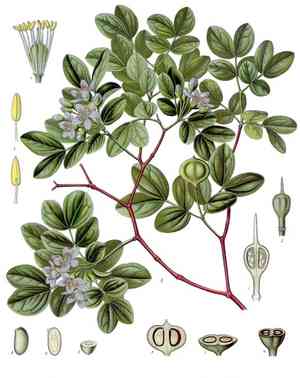
Roughbark lignum-vitae (Guaiacum officinale)
Also known as: Gaïacwood, Tree of life, Guaiacum wood, Guaiacum
The Lignum Vitae (Guaiacum officinale) is a tree species indigenous to the Caribbean and the northern coasts of South America. It holds the title of Jamaica's national flower. This tree features distinctive five-petalled blue blossoms, which eventually develop into vibrant yellow-orange fruits with red flesh and black seeds. Additionally, the Lignum Vitae is renowned for its exceptionally durable wood.
In This Article
Attributes of Roughbark lignum-vitae
Lifespan
Perennial
Plant Type
Tree
Plant Height
3 m to 9 m
Spread
2.5 m to 3.5 m
Leaf Color
Green
Flower Size
2.5 cm
Flower Color
Purple White Blue
Images of Roughbark lignum-vitae
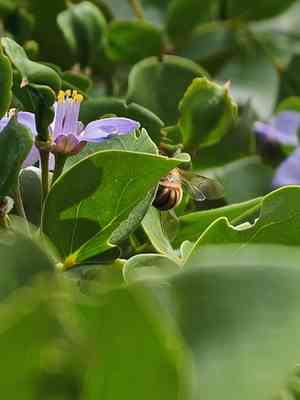
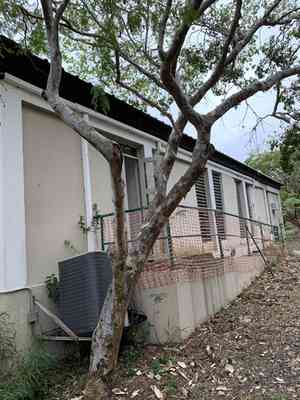
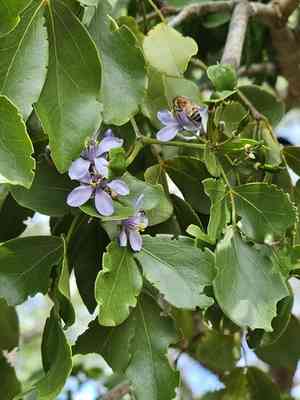
Quickly Identify Roughbark lignum-vitae
1
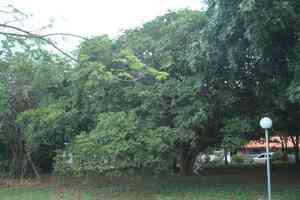
Guaiacum officinale can be identified by its small stature, dense and dark green leaves, and distinctive blue or purple flowers. The wood is notably heavy and feels greasy to the touch due to its resin content. The bark is grayish and smooth in young trees, becoming furrowed with age.
Scientific Classification of Roughbark lignum-vitae
Phylum
Vascular plants
Class
Dicotyledons
Order
Zygophyllales
Family
Creosote-bush
Genus
Guaiacum
Species
Roughbark lignum-vitae
Planting and Growing of Roughbark lignum-vitae
Care Difficulty
Hard
Watering Schedule
Every 2 days
Sunlight Requirements
Full sun
Sunshine Duration
6-12 hours
Ideal Temperature
75-85℉
Soil Type
Potting Mix, Peat Mix
Soil pH
6.5-7.5
Fertilizer Type
Balanced
Pruning Season
Spring, Summer
Pruning Area
Branches, Leaves
Pruning Frequency
2 times a year
Repotting Season
Spring
Pot Type
Ceramic, Plastic
 How to Water Roughbark lignum-vitae?
For Guaiacum officinale, or Lignum Vitae, watering should mimic the plant's preference for a slightly dry environment. Irrigate the soil until it is moderately moist but not waterlogged. A deep watering once a time, allowing the excess water to drain away, is ideal. Adjust according to the season, ensuring the succulent divinities of its wood are maintained.
What are the symptoms of an underwatered Roughbark lignum-vitae?
›
What should I do if my Roughbark lignum-vitae is not getting enough water?
›
What are the symptoms of an overwatered Roughbark lignum-vitae?
›
How to save an overwatered Roughbark lignum-vitae?
›
 What Are the Sunlight Requirements for Roughbark lignum-vitae?
For Guaiacum officinale, the ideal light range is full sun. Under this range, the plant experiences increased flowering, sturdy growth, and enhanced resilience against common stress factors.
More About Sunlight Requirements Techniques→
How much light does Guaiacum officinale need?
›
What are some solutions to provide ideal light conditions?
›
What are the benefits of providing ideal light?
›
 What Is the Ideal Temperature Range for Roughbark lignum-vitae?
Guaiacum officinale thrives best in warm tropical environments, making a temperature range of 75°F to 85°F ideal for its growth. Within this range, the plant can maintain optimal physiological processes, enhancing photosynthesis and cellular respiration. Maintaining a stable temperature helps promote healthy leaves and blooms.
 What Soil is Best for Roughbark lignum-vitae?
Guaiacum officinale thrives best in well-draining soils to prevent root rot. These soils allow water to drain swiftly, avoiding waterlogged conditions. A well-draining soil ensures that the plant's roots receive adequate amounts of oxygen, facilitating healthy growth. This plant benefits from a nutrient-rich soil that supplies essential elements for its growth. Incorporating organic matter like compost can boost soil fertility, providing a balanced diet for Guaiacum officinale and promoting lush foliage. Guaiacum officinale prefers soil that retains some moisture but isn't overly wet. Maintaining moderate moisture levels ensures the plant has access to water without the risk of root diseases from excessive dampness, fostering its growth and resilience.
 How to Fertilize Roughbark lignum-vitae?
For Guaiacum officinale, the amount of fertilizer should be moderate to avoid overwhelming the plant. Use 1/4 strength of a balanced liquid fertilizer solution every two weeks during the growing season to provide adequate nutrients without causing nutrient burn.
 How to Prune Roughbark lignum-vitae?
Begin by removing any dead, diseased, or damaged branches. This initial step prevents the spread of disease and allows the plant to focus its energy on healthy growth and development, ensuring a robust and vigorous appearance. For shaping, trim the outer foliage lightly. Avoid heavy cuts which can stress Guaiacum officinale. Prune just above a leaf node or bud for a natural regrowth pattern, enhancing its ornamental value. To improve airflow, thin out some of the internal branches that might cross or crowd the center. This practice not only helps in reducing fungal issues but also allows sunlight to penetrate evenly for better photosynthesis.
More About Pruning Techniques→
 How to Propagate Roughbark lignum-vitae plant?
1
Before planting seeds from Guaiacum officinale, it is critical to clean and treat them to improve germination rates. Soak seeds in water for 24 hours to soften the outer shell, enhancing their likelihood of sprouting. Ensure that seeds are free from mold and appear healthy.
2
Choose a healthy parent plant and use pruning shears to cut 6-8 inch stems. The cut should be made just below a leaf node. Remove lower leaves to expose nodes, which will be buried in soil to promote rooting. Using rooting hormone can further encourage root development.
3
Prepare a well-draining mix, preferably a blend of peat and perlite, ensuring it is loose enough to allow new roots to penetrate easily. Fill pots or trays with this mix, leaving enough space for planting seeds or inserting cuttings at the right depth.
 How to Repot Roughbark lignum-vitae plant?
1
Repot the Guaiacum officinale when you notice slower growth, roots emerging from the drainage holes, or soil that retains water longer. These signs indicate the roots need more space and fresh soil.
2
Choose a pot that's one size larger than the current one, with adequate drainage holes. A slightly bigger pot prevents over-watering, ensuring the roots have enough space to grow comfortably without risk of root rot.
3
Opt for a well-draining potting mix rich in organic material. This type of soil prevents water stagnation and ensures the roots receive optimal aeration and nutrients, promoting healthy plant growth.
Toxicity
Ingestion
WARNING
The judgment on toxicity and danger is for reference only. We DO NOT GUARANTEE any accuracy of such judgment. Therefore, you SHALL NOT rely on such judgment. It is IMPORTANT TO SEEK PROFESSIONAL ADVICE in advance when necessary.
Learn More About Roughbark lignum-vitae Diseases
Anthracnose
Bacterial Leaf Spot
Bacterial Wilt
Crown Gall
Cyst Nematode
Damping-off
Drought Stress
Fusarium Wilt
Gray Mold
Leaf Curl
Leaf Spot
Mosaic
Nutrient Deficiency
Nutrient Toxicity
Powdery Mildew
Root Rot
Root-knot Nematode
Rusts
Sooty Mold
Spider Mites
Temperature Stress
Thrips Damage
White Mold



