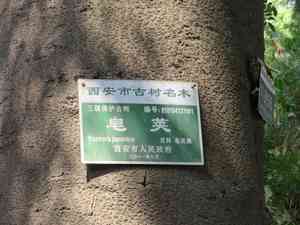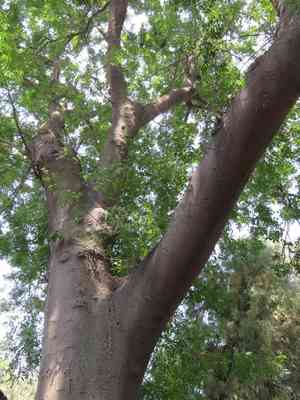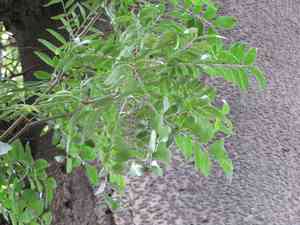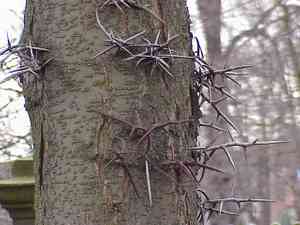
Chinese Honeylocust(Gleditsia sinensis)

Chinese Honeylocust (Gleditsia sinensis)

Also known as: Soap bean

The Chinese Honeylocust (Gleditsia sinensis) is a flowering deciduous tree indigenous to China's valley streams and has been introduced to hilly areas in India and Pakistan. Notably, the pulp found within its seed pods can serve as a natural detergent. Additionally, this tree is effective for creating windbreaks and barrier hedges, enhancing agricultural landscapes.

Attributes of Chinese Honeylocust

Lifespan
Perennial
Plant Type
Tree
Plant Height
30 m
Spread
6 m to 11 m
Leaf Color
Green
Flower Size
9 mm to 1 cm
Flower Color
Yellow Green

ForwardPlant - Identify plants with a snap

Identify and diagnose plants, get toxicity alerts, and explore safety guides for all types of fungi.

Try for Free

Images of Chinese Honeylocust

Chinese Honeylocust(Gleditsia sinensis)

Quickly Identify Chinese Honeylocust

1
The tree can be identified by its distinctive reddish-brown bark, small compound leaves, thorns on branches, and long, twisted seed pods which can be up to 50 cm long.

Scientific Classification of Chinese Honeylocust

Phylum
Vascular plants
Class
Dicotyledons
Order
Legumes, milkworts and allies
Family
Legume
Genus
Honey locusts
Species
Chinese Honeylocust

Planting and Growing of Chinese Honeylocust

Care Difficulty
Easy
Watering Schedule
Every 3 days
Sunlight Requirements
Full sun
Sunshine Duration
6-10 hours
Ideal Temperature
59-77℉
Soil Type
Potting Mix, Peat Mix
Soil pH
6.5-7.5
Fertilizer Type
Balanced
Pruning Season
Spring, Summer
Pruning Area
Branches, Leaves
Pruning Frequency
2 times a year
Repotting Season
Spring
Pot Type
Plastic, Ceramic

water icon How to Water Chinese Honeylocust?

Gleditsia sinensis requires a thorough watering approach. Water the soil until it is evenly moist but not waterlogged, ensuring all layers are reached. Aim for about 500 ml per session depending on the plant’s size and soil condition, allowing water to drain adequately.
What are the symptoms of an underwatered Chinese Honeylocust?
What should I do if my Chinese Honeylocust is not getting enough water?
What are the symptoms of an overwatered Chinese Honeylocust?
How to save an overwatered Chinese Honeylocust?

sunlight icon What Are the Sunlight Requirements for Chinese Honeylocust?

Sunlight Requirements: Full sun, Partial sun
Duration of light: 6 to 8 hours
Gleditsia sinensis thrives with full to partial sun exposure, ideally 6-8 hours daily, which supports robust growth and full foliage development.
What is the ideal light condition?
How to achieve ideal light conditions?
What benefits come from ideal light conditions?
More About Sunlight Requirements Techniques

temperature icon What Is the Ideal Temperature Range for Chinese Honeylocust?

Ideal Temperature: 59 ~ 77℉
The ideal temperature range for Gleditsia sinensis should be between 59°F and 77°F. Within this range, the plant can maintain optimal metabolic functions and grow robustly. It supports processes such as photosynthesis and nutrient uptake efficiently, contributing to the plant's overall health and vigor.

soil icon What Soil is Best for Chinese Honeylocust?

Soil type: Loam, Sandy loam, Sandy soil
Soil PH: 6.5 ~ 7.5
Gleditsia sinensis thrives in well-drained soils to prevent root rot and other associated issues. Adequate drainage ensures that the roots receive an appropriate amount of oxygen and prevents waterlogging, which could lead to stunted growth or disease. This plant benefits from nutrient-rich soil that provides essential macro and micronutrients for growth. Fertile soil supports robust foliage, flowering, and overall plant health, enhancing its aesthetic and ecological contributions. The soil should retain moderate moisture without excessive dryness or saturation. Consistent moisture levels promote steady growth rates and help sustain the plant during dry or windy conditions.

fertilize icon How to Fertilize Chinese Honeylocust?

Fertilizer type: Balanced
For Gleditsia sinensis, balance is key. Liquid fertilizers should be diluted to half strength to avoid nutrient burn. For solid fertilizers, use about 50 grams per square meter of their growing area. Ensure even distribution to prevent root damage and allow the plant to absorb nutrients optimally.

prune icon How to Prune Chinese Honeylocust?

Pruning Time: Spring, Summer, Autumn, Winter
Begin by identifying dead, diseased, or crossed branches. These should be the first targets of your pruning session. Carefully examine each branch and decide which ones are unproductive or detrimental to the plant's structure. Position your shears to make a clean cut above the branch collar, which is the swollen area where the branch attaches to the trunk. A precise cut at this location ensures proper healing and regrowth. Trim to maintain a balanced and open canopy that allows sunlight and air to penetrate the branches efficiently. This approach reduces the likelihood of fungal diseases while promoting vibrant, bushy growth. Collect and dispose of all pruned material properly. Leaving debris on the ground can attract pests and diseases, so burn it or add it to your compost if diseased branches are not involved. More About Pruning Techniques

propagate icon How to Propagate Chinese Honeylocust plant?

Propagate Time: Spring, Early summer
1
Use a well-draining potting mix to fill the seed tray. The mix should be moist but not waterlogged. This will provide the right environment for seed germination and root growth.
2
Sow the seeds evenly in the tray, lightly covering them with soil. Keep the tray in a warm location with indirect sunlight to facilitate germination.
3
In early summer, take semi-hardwood cuttings from a healthy Gleditsia sinensis plant. Remove the lower leaves and dip the cut end in rooting hormone before planting in moist potting soil.
More About Propagating Techniques

repot icon How to Repot Chinese Honeylocust plant?

Repotting frequency: Every 2-3 years
1
Monitor the growth of Gleditsia sinensis. If you observe roots circling the pot or growing out of drainage holes, it's time to repot. This typically signals the plant's need for more room and nutrients, evident by stunted growth or yellowing leaves.
2
Select a pot that's one size larger than the current one, ensuring it has excellent drainage. A larger pot promotes healthy root expansion and prevents root bound issues, ultimately supporting optimum plant health and growth.
3
Use well-draining loamy soil, which provides balanced nutrition and proper moisture control. This soil type ensures root aeration and prevents waterlogging, creating a healthy growing environment for Gleditsia sinensis.

ForwardPlant - Identify plants with a snap

Find the best spots for them to optimize their health, simply using your phone.

Try for Free

Toxicity of Chinese Honeylocust

Is Chinese Honeylocust toxic to humans?

The Chinese Honeylocust plant poses a poisoning risk either through ingestion or direct contact. Prolonged ingestion may lead to a range of symptoms from mild to severe. Every part of the plant harbors potentially toxic substances. Symptoms resulting from consumption include nausea, diarrhea, irritability, weakness in the limbs, feelings of fullness in the upper abdomen, issues affecting the central nervous system, and respiratory depression.

Identify toxic plants for your safety

Learn which plants are harmful to you and your pets, and make informed choices for a safer home!

Try for Free
WARNING
The judgment on toxicity and danger is for reference only. We DO NOT GUARANTEE any accuracy of such judgment. Therefore, you SHALL NOT rely on such judgment. It is IMPORTANT TO SEEK PROFESSIONAL ADVICE in advance when necessary.
More About Toxic Techniques