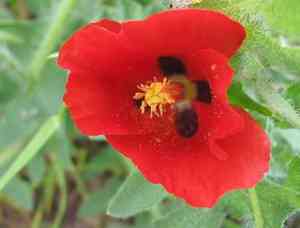
Red horned poppy (Glaucium corniculatum)
Also known as: Common horned poppy
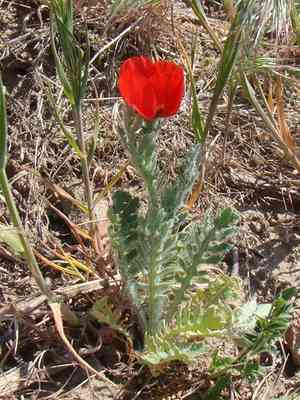
The red horned poppy (Glaucium corniculatum) showcases eye-catching red blooms, each petal featuring a dark spot near its base. The plant's name, Glaucium, is inspired by the Greek term for sea green, reflecting its blue-green, wavy foliage. This summer-blooming flower is resistant to rabbits and deer. Originally from Eurasia, it has also been introduced to various regions across the United States.
In This Article
Attributes of Red horned poppy
Lifespan
Annual, Biennial, Perennial
Plant Type
Herb
Plant Height
20 cm to 40 cm
Spread
40 cm
Leaf Color
Gray Green Silver
Flower Size
5 cm to 8 cm
Flower Color
Red Orange Black
Images of Red horned poppy
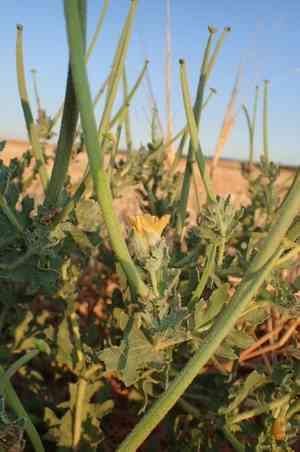
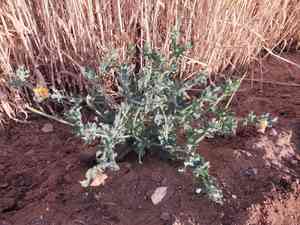
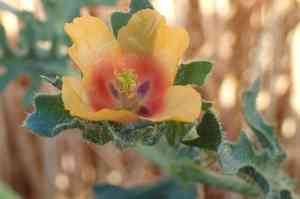
Quickly Identify Red horned poppy
1
Identify Glaucium corniculatum by its distinct bright red flowers with black markings at the base, and its long, curved seed pods that resemble horns. The leaves are bluish-green and lobed, often covered with a fine, hairy texture.
Scientific Classification of Red horned poppy
Phylum
Vascular plants
Class
Dicotyledons
Order
Ranunculales
Family
Poppy
Genus
Horned poppies
Species
Red horned poppy
Planting and Growing of Red horned poppy
Care Difficulty
Easy
Watering Schedule
Every 2 days
Sunlight Requirements
Full sun
Sunshine Duration
6-10 hours
Ideal Temperature
60-75℉
Soil Type
Potting Mix, Peat Mix
Soil pH
6.5-7.5
Fertilizer Type
Balanced
Pruning Season
Spring, Summer
Pruning Area
Branches, Leaves
Pruning Frequency
2 times a year
Repotting Season
Spring
Pot Type
Terracotta, Plastic
 How to Water Red horned poppy?
The watering amount for Glaucium corniculatum should be around 500 milliliters per session. It's important to water until the soil is moist but not waterlogged. Aim for the soil to be dry to the touch on the surface before watering again, ensuring you avoid root rot while promoting healthy growth.
What are the symptoms of an underwatered Red horned poppy?
›
What should I do if my Red horned poppy is not getting enough water?
›
What are the symptoms of an overwatered Red horned poppy?
›
How to save an overwatered Red horned poppy?
›
 What Are the Sunlight Requirements for Red horned poppy?
Glaucium corniculatum thrives best under full sun conditions, ideally receiving 6-8 hours of direct sunlight per day. This lighting encourages prolific blooming and sustains the plant's vigor, enhancing its ornamental value.
More About Sunlight Requirements Techniques→
What type of lighting conditions does Glaucium corniculatum prefer?
›
How can you provide ideal lighting conditions for Glaucium corniculatum?
›
What benefits does Glaucium corniculatum gain from ideal lighting conditions?
›
 What Is the Ideal Temperature Range for Red horned poppy?
The ideal temperature range for growing Glaucium corniculatum is between 60°F and 75°F. Within this range, the plant can carry out its physiological processes most efficiently. Moderate temperatures ensure optimal growth and blooming, making it suitable for the plant's natural Mediterranean habitat.
 What Soil is Best for Red horned poppy?
Glaucium corniculatum thrives in well-draining soil which prevents waterlogging and root rot. Ensuring adequate drainage mimics its natural habitat and promotes healthy growth. While this plant isn't a heavy feeder, it benefits from moderate nutrient levels in the soil, providing the essential minerals for robust flowering and vibrant foliage. A soil pH of 6.5 to 7.5 is ideal for Glaucium corniculatum, helping it utilize nutrients effectively and maintain balance within the soil ecosystem.
 How to Fertilize Red horned poppy?
For Glaucium corniculatum, apply a balanced fertilizer at half the recommended strength to avoid root burn. Typically, 1 tablespoon of liquid fertilizer diluted in 1 gallon of water is sufficient for every application.
 How to Prune Red horned poppy?
Start by removing any dead or diseased stems to promote healthy growth. Use sharp, sterilized scissors or pruners to make clean cuts. Follow the natural shape of the plant while trimming back overgrown areas to maintain its unique form. Aim for balance and symmetry, cutting above a leaf node to encourage branching. Glaucium corniculatum blooms can be deadheaded to prolong the flowering period. Simply snip off spent flowers as close to the main stem as possible. This prevents the plant from channeling energy into seed production and can initiate new blooms, ensuring continuous coloration and beauty through the seasons.
More About Pruning Techniques→
 How to Propagate Red horned poppy plant?
1
Fill the seed tray with potting soil, levelling it off gently. Ensure the soil is moist but not waterlogged before sowing the seeds.
2
Scatter the Glaucium corniculatum seeds thinly over the soil surface. Cover them lightly with a thin layer of potting soil—about twice the thickness of the seed—and press down gently.
3
Carefully water the seeds using a fine mist spray to avoid washing away the seeds. Keep the soil consistently moist but not too wet to prevent fungal diseases.
 How to Repot Red horned poppy plant?
1
Repotting Glaucium corniculatum should occur when you notice roots poking out of the drainage holes or when the plant's growth appears stunted. Spring or early summer is ideal, as this is the growing season, allowing the plant to recover quickly from any stress caused by repotting.
2
Choose a pot that's slightly larger than the current one, ideally with good drainage. A terracotta pot is beneficial as it allows air circulation and excess moisture to evaporate, reducing the risk of root rot for this drought-tolerant species.
3
Opt for a well-draining soil mix, such as a sandy or gritty composition. This ensures that the roots don't remain in soggy conditions, which is crucial for Glaucium corniculatum, as it prefers dry, porous substrates similar to its native habitat.
Toxicity
Ingestion, Skin Contact
WARNING
The judgment on toxicity and danger is for reference only. We DO NOT GUARANTEE any accuracy of such judgment. Therefore, you SHALL NOT rely on such judgment. It is IMPORTANT TO SEEK PROFESSIONAL ADVICE in advance when necessary.
Learn More About Red horned poppy Diseases
Anthracnose
Bacterial Leaf Spot
Bacterial Soft Rot
Bacterial Wilt
Chemical Injury
Damping-off
Downy Mildew
Drought Stress
Fusarium Wilt
Gray Mold
Leaf Curl
Leaf Spot
Mosaic
Nutrient Deficiency
Nutrient Toxicity
Powdery Mildew
Root Rot
Root-knot Nematode
Rusts
Sooty Mold
Spider Mites
Temperature Stress
Thrips Damage
White Mold



