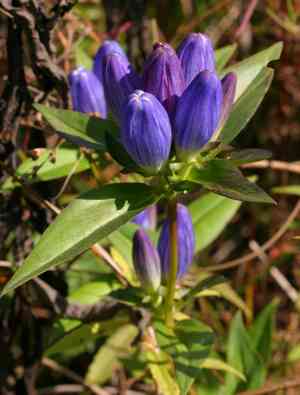
Bottle gentian (Gentiana andrewsii)
Also known as: Sampson's Snakeroot, Cloistered Heart, Closed gentian, Fringe-top bottle gentian
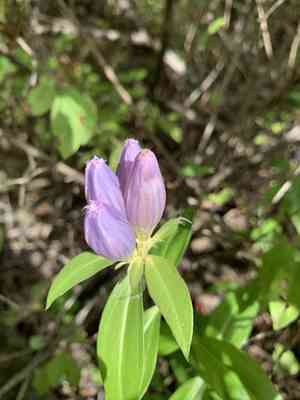
The bottle gentian, scientifically known as Gentiana andrewsii, is named for its bottle-shaped flowers. These late-season blooms are predominantly pollinated by bumblebees, which are uniquely capable of forcing open the tightly closed flowers to access the nectar inside.
In This Article
Attributes of Bottle gentian
Lifespan
Perennial
Plant Type
Herb
Plant Height
30 cm to 61 cm
Spread
30 cm
Leaf Color
Dark Green
Flower Size
2.5 to 3 centimeters (1 to 1.2 inches)
Flower Color
Blue White Purple Lavender Violet
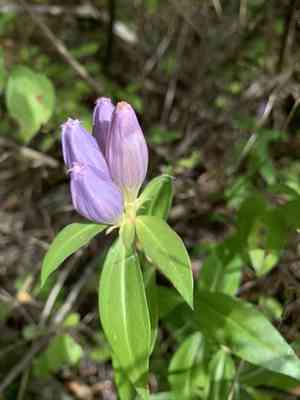
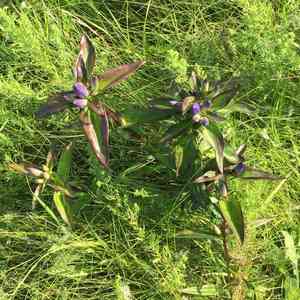
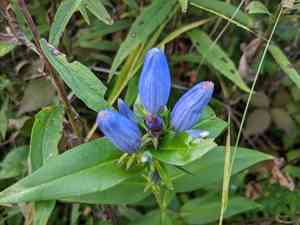
Images of Bottle gentian
Quickly Identify Bottle gentian
1
The plant can be identified by its unique flowers, which do not open fully, giving them a \'closed\' appearance. Look for lanceolate leaves that are arranged oppositely along the stem and are dark green in color.
Scientific Classification of Bottle gentian
Phylum
Vascular plants
Class
Dicotyledons
Order
Gentianales
Family
Gentian
Genus
Gentian
Species
Bottle gentian
Planting and Growing of Bottle gentian
Care Difficulty
Easy
Watering Schedule
Every 2 days
Sunlight Requirements
Partial sun
Sunshine Duration
4-8 hours
Ideal Temperature
60-75℉
Soil Type
Potting Mix, Peat Mix
Soil pH
6-7.5
Fertilizer Type
Balanced
Pruning Season
Spring, Summer
Pruning Area
Branches, Leaves
Pruning Frequency
2 times a year
Repotting Season
Spring
Pot Type
Plastic, Ceramic
 How to Water Bottle gentian?
When watering Gentiana andrewsii, aim for about 500 milliliters per session. The goal is to keep the soil evenly moist without flooding it. Ensure the water reaches the roots but doesn’t let them sit in waterlogged soil.
What are the symptoms of an underwatered Bottle gentian?
›
What should I do if my Bottle gentian is not getting enough water?
›
What are the symptoms of an overwatered Bottle gentian?
›
How to save an overwatered Bottle gentian?
›
 What Are the Sunlight Requirements for Bottle gentian?
Partial sunlight is ideal, providing 4-6 hours daily. This balance is crucial for maintaining consistent growth, vibrant blooms, and resistance against environmental stresses.
More About Sunlight Requirements Techniques→
How much sun does Gentiana andrewsii need?
›
What are the practical solutions to achieve ideal lighting?
›
Why is ideal lighting beneficial for Gentiana andrewsii?
›
 What Is the Ideal Temperature Range for Bottle gentian?
Gentiana andrewsii thrives best in temperatures ranging from 60°F to 75°F. This range provides the optimum environment for the plant to perform photosynthesis efficiently, enabling faster growth and more vibrant blooms. The temperatures within this range mirror the plant's natural habitat, thereby reducing stress and promoting overall health.
 What Soil is Best for Bottle gentian?
Gentiana andrewsii thrives in well-drained soil, ensuring the roots do not become waterlogged. This reduces the risk of root rot and fungal infections, providing a robust environment for healthy growth. This plant prefers soil that can retain moisture without becoming soggy. Adequate moisture retention supports continuous growth and prevents stress during dry spells, enhancing the plant's overall resilience. A nutrient-rich substrate encourages vibrant blooms and healthy foliage. The presence of organic matter such as compost or well-rotted manure boosts soil fertility, supplying essential nutrients to the plant.
 How to Fertilize Bottle gentian?
Gentiana andrewsii requires a balanced approach to fertilization. Use a liquid fertilizer with a balanced N-P-K ratio of 10-10-10, applying at a rate of 1 tablespoon per gallon of water. Ensure the soil is slightly moist before application to avoid root burn.
 How to Prune Bottle gentian?
Begin by removing any dead or damaged stems, cutting them back to healthy tissue. Focus on thinning the plant by cutting back stems that are tangled or crossing. This promotes better air circulation. Trim the plant selectively to maintain a pleasing shape and encourage natural growth. Ensure each cut is made above a node, where new growth can emerge, to encourage a bushier appearance. After pruning, it's essential to water and fertilize the plant adequately to support recovery and stimulate new growth. Monitor the plant for any signs of stress or disease, adjusting care as needed. Mulching around the base can help retain moisture and provide additional nutrients.
More About Pruning Techniques→
 How to Propagate Bottle gentian plant?
1
Soak the seeds in lukewarm water overnight to help wake them from dormancy. This enhances germination rates once planted.
2
Prepare a mixture of peat moss, perlite, and coarse sand. This provides adequate drainage and aeration for seedlings and cuttings.
3
Sow seeds lightly on the soil surface, pressing them gently into the soil without burying them. Maintain moisture by misting the surface.
 How to Repot Bottle gentian plant?
1
Gentiana andrewsii should be repotted when you notice that its growth has slowed or roots start emerging from the drainage holes. Early spring or after its blooming season in autumn is ideal, allowing the plant to stabilize in its new environment during mild temperatures.
2
Select a pot that provides ample drainage and is slightly larger than the previous one. A pot with a width to depth ratio that matches its root structure ensures minimal root disturbance and encourages healthier growth.
3
Opt for a well-draining loamy mix that retains moisture but doesn't remain soggy. This soil type mirrors Gentiana's natural habitat, providing the right balance of nutrients and aeration for root development.



