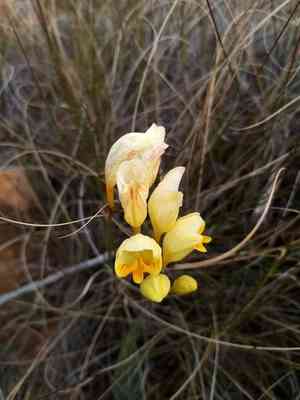
Common freesia (Freesia corymbosa)
Also known as: No common aliases
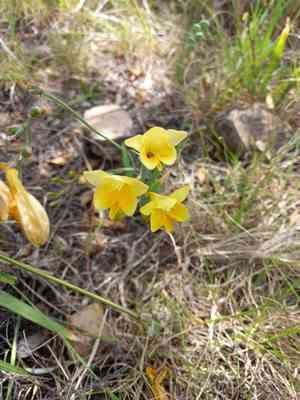
The flower you're referring to is likely the Common Freesia. This plant features elegant, trumpet-shaped blooms that sit atop slender, arching stems. These blossoms, often found in loose clusters, emit a pleasing fragrance that attracts pollinators. The plant's sword-like leaves create a lush backdrop, and it grows from a hardy corm that does well in well-drained soil and moderate climates, making it a resilient harbinger of spring.
In This Article
Attributes of Common freesia
Lifespan
Perennial
Plant Type
Herb
Plant Height
30-45 cm
Spread
No significant crown
Leaf Color
Green
Flower Size
2.5-5 cm
Flower Color
Various (typically white, yellow, pink)
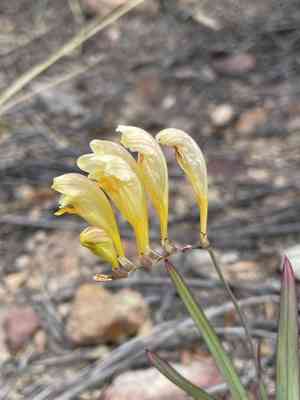
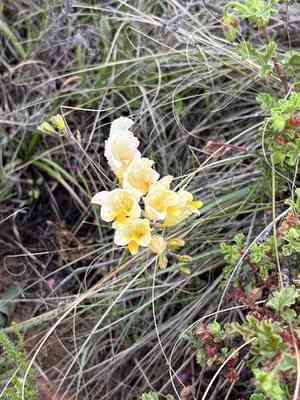
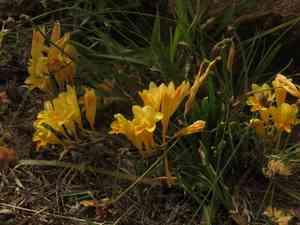
Images of Common freesia
Quickly Identify Common freesia
1
Identify Freesia corymbosa by its sweetly scented, funnel-shaped flowers that grow in a fan-like spray. The leaves are narrow and grass-like, making it distinct among other garden flowers.
Scientific Classification of Common freesia
Phylum
Vascular plants
Class
Monocotyledons
Order
Asparagales
Family
Iris
Genus
Freesia
Species
Common freesia
Planting and Growing of Common freesia
Care Difficulty
Moderate
Watering Schedule
Every 3 days
Sunlight Requirements
Partial sun
Sunshine Duration
4-8 hours
Ideal Temperature
60-70℉
Soil Type
Potting Mix, Peat Mix
Soil pH
6.5-7.5
Fertilizer Type
Balanced
Pruning Season
Spring, Summer
Pruning Area
Branches, Leaves
Pruning Frequency
2 times a year
Repotting Season
Spring
Pot Type
Plastic, Terracotta
 How to Water Common freesia?
Freesia corymbosa generally requires about 150 milliliters of water per session. It's important to water thoroughly so the soil is completely moistened without being waterlogged. Make sure the top inch of the soil has dried out before the next watering to prevent root rot.
What are the symptoms of an underwatered Common freesia?
›
What should I do if my Common freesia is not getting enough water?
›
What are the symptoms of an overwatered Common freesia?
›
How to save an overwatered Common freesia?
›
 What Are the Sunlight Requirements for Common freesia?
Partial sun to full sun exposure is ideal, ensuring 6-8 hours of light enhances Freesia corymbosa's blooming potential and overall health.
How much light does Freesia corymbosa need?
›
What are the solutions for ideal lighting?
›
What benefits does ideal lighting provide?
›
 What Is the Ideal Temperature Range for Common freesia?
The ideal temperature range for Freesia corymbosa is between 60°F and 70°F. This range ensures optimal blooming and growth. Consistent temperatures help maintain the plant’s metabolic processes, ensuring healthy foliage and vibrant blooms.
 What Soil is Best for Common freesia?
Freesia corymbosa thrives in soil rich in organic matter. Such soil provides essential nutrients that promote healthy growth and vibrant blooming. The addition of well-rotted compost or manure can improve soil fertility, ensuring the plant receives the nutrients it needs to flourish. This plant requires soil with excellent drainage to prevent root rot. Sandy loam is ideal as it allows excess water to flow away from the roots, maintaining an optimal moisture balance and supporting healthy root development. While good drainage is essential, the soil should retain enough moisture to keep the plant hydrated. Loam and sandy loam soils can retain moisture effectively without becoming waterlogged, providing a stable environment for consistent growth.
 How to Fertilize Common freesia?
Freesia corymbosa requires careful attention to fertilization to support its vibrant blooms. It's best to use a balanced 10-10-10 fertilizer at half strength. Over-application can harm this delicate plant, so be mindful to adhere to recommended amounts.
 How to Prune Common freesia?
Begin your pruning by identifying and removing the dead, damaged, or diseased stems. Start from the base and work your way up, ensuring no brown or wilted parts are left. This will not only improve the plant's appearance but also its overall health. Freesia corymbosa benefits from cutting back spent flowers. Trim the flower stalk down to the base after blooming has finished. This process, known as deadheading, will encourage new blooms in the next growth cycle.
More About Pruning Techniques→
 How to Propagate Common freesia plant?
1
Before sowing, soak Freesia corymbosa seeds in warm water for 24 hours to soften the seed coat, which aids germination. After soaking, allow the seeds to dry briefly before planting them in a prepared tray.
2
Fill a seed tray with a well-draining soil mix. Sow the seeds at a depth of about 0.5 cm and cover lightly with soil. Ensure the tray is kept in a warm location with indirect sunlight to facilitate seed germination.
3
When propagating by division, carefully dig up the plant, ensuring to take out the entire root system without causing damage. Gently separate the bulbs or rhizomes into sections, ensuring each section has roots attached, then replant them in suitable locations.
 How to Repot Common freesia plant?
1
You should consider repotting Freesia corymbosa when you notice that the roots are poking out of the drainage holes or when the plant seems to be outgrowing its current pot. These signs usually indicate that the plant needs more space to continue growing healthily.
2
Select a pot that is one or two sizes larger than the current pot. Ensure it has adequate drainage holes to prevent waterlogging. A slightly larger pot allows the roots to expand comfortably, promoting healthier growth and abundant blooms.
3
Opt for a well-draining, sandy loam to ensure excess water drains away swiftly. This soil type prevents root rot and allows for adequate aeration, providing an environment where Freesia corymbosa can thrive.
Learn More About Common freesia Diseases
Anthracnose
Bacterial Leaf Spot
Bacterial Soft Rot
Bacterial Wilt
Crown Gall
Cyst Nematode
Damping-off
Downy Mildew
Fusarium Wilt
Gray Mold
Leaf Spot
Mosaic
Powdery Mildew
Root Rot
Root-knot Nematode
Rusts
Sooty Mold
White Mold
Chemical Injury
Drought Stress
Nutrient Deficiency
Nutrient Toxicity
Temperature Stress
Spider Mites
Thrips Damage



