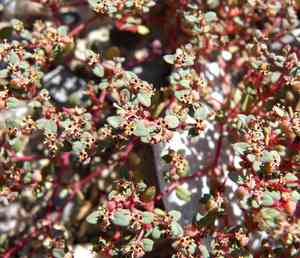
Sonoran sandmat (Euphorbia micromera)
Also known as: None
Euphorbia micromera, found in northern Mexico and the southwestern United States, thrives in arid, sandy, desert environments. It typically forms a mat-like structure, which is why it is commonly referred to as "Sonoran sandmat."
In This Article
Attributes of Sonoran sandmat
Lifespan
Annual
Plant Type
Herb
Plant Height
15 cm
Spread
Up to 10 cm
Leaf Color
Green (minimal or absent)
Flower Size
1-2 mm
Flower Color
Yellow Green Red Orange
Images of Sonoran sandmat

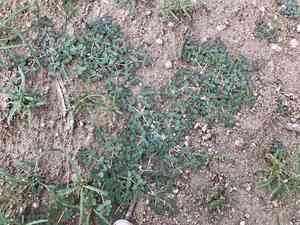
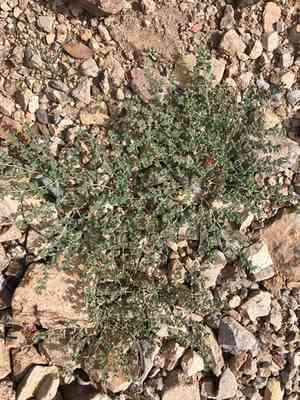
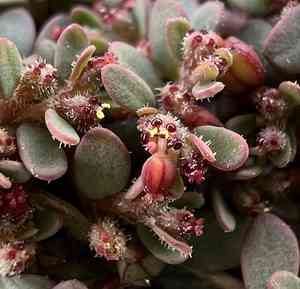
Quickly Identify Sonoran sandmat
1
To identify Euphorbia micromera, look for its small size, succulent nature, and tiny, star-shaped flowers. The leaves are usually reduced or absent, and the stems are typically green and fleshy.
Scientific Classification of Sonoran sandmat
Phylum
Vascular plants
Class
Dicotyledons
Order
Malpighiales
Family
Spurge
Genus
Spurges
Species
Sonoran sandmat
Planting and Growing of Sonoran sandmat
Care Difficulty
Easy
Watering Schedule
Every 2 days
Sunlight Requirements
Full sun
Sunshine Duration
6-10 hours
Ideal Temperature
65-75℉
Soil Type
Potting Mix, Peat Mix
Soil pH
6.5-7.5
Fertilizer Type
Balanced
Pruning Season
Spring, Summer
Pruning Area
Branches, Leaves
Pruning Frequency
2 times a year
Repotting Season
Spring
Pot Type
Plastic, Ceramic
 How to Water Sonoran sandmat?
Euphorbia micromera requires careful watering due to its drought-tolerant nature. Water with approximately 100 ml each time, ensuring the soil is evenly moist but not waterlogged. It's important to let the soil dry out between waterings, mimicking its natural habitats in arid regions.
What are the symptoms of an underwatered Sonoran sandmat?
›
What should I do if my Sonoran sandmat is not getting enough water?
›
What are the symptoms of an overwatered Sonoran sandmat?
›
How to save an overwatered Sonoran sandmat?
›
 What Are the Sunlight Requirements for Sonoran sandmat?
Euphorbia micromera ideally requires full sun exposure but can manage with partial sun during peak hours. Adequate light promotes healthy growth and prevents etiolation.
More About Sunlight Requirements Techniques→
How much direct sunlight does Euphorbia micromera need?
›
Can it tolerate partial shade?
›
What are the benefits of getting ideal light?
›
 What Is the Ideal Temperature Range for Sonoran sandmat?
Euphorbia micromera thrives best in temperatures ranging from 65°F to 75°F. This range provides an ideal balance that encourages healthy photosynthesis and energy production. Within this temperature band, the plant efficiently absorbs nutrients and maintains its structural integrity, supporting optimal growth and vibrant foliage.
 What Soil is Best for Sonoran sandmat?
Euphorbia micromera thrives in well-draining soil. This prevents root rot and ensures that the roots receive adequate oxygen, promoting healthy growth and vitality. This plant requires soil with a balanced nutrient content. A balanced nutrient soil supplies essential minerals for robust growth and vibrant blooms. The soil should be aerated to prevent compactness, allowing roots to spread easily. Proper aeration enhances nutrient uptake and promotes a thriving plant environment.
 How to Fertilize Sonoran sandmat?
When fertilizing Euphorbia micromera, use a balanced liquid fertilizer diluted to half strength to ensure that the plant receives the essential nutrients without overwhelming its roots. The exact amount will depend on the size of the plant and container, typically around 10-20 ml of diluted solution per watering session is adequate.
 How to Prune Sonoran sandmat?
Euphorbia micromera produces a milky sap that can irritate skin or eyes upon contact. Always wear gloves and eye protection when handling or pruning the plant. The sap might also be toxic if ingested, so it's crucial to keep pets and children away during and after pruning. While regular pruning is beneficial, over-pruning can lead to stress and reduced growth in Euphorbia micromera. Ensure that you do not remove more than one-third of the plant's foliage at any one time. This cautious approach helps preserve the plant's health and vitality.
More About Pruning Techniques→
 How to Propagate Sonoran sandmat plant?
1
Take cuttings from a healthy parent plant using sterilized scissors during early spring for best results. Place them in a dry, shaded area for a few days to allow them to callous over.
2
Sow the seeds directly onto the surface of well-draining soil. Do not cover them as they require light to germinate. Mist the soil lightly and keep it consistently moist but not waterlogged.
3
Choose pots with good drainage holes. For cuttings, small pots work best to allow for easy transfer once roots establish. Seedlings can also be started in trays before transplanting.
 How to Repot Sonoran sandmat plant?
1
Euphorbia micromera should be repotted when its roots begin to outgrow the pot, or when the soil becomes too compact. Early spring or summer is ideal, as these seasons support the plant’s growth cycle. If you notice slow drainage, this might be another sign it's time for a new pot.
2
Choose a pot with adequate drainage holes that is slightly larger than the previous one. A clay pot is preferable as it allows air circulation and can help prevent root rot. The extra space helps the roots expand, but avoid oversized pots as they can lead to water retention.
3
Opt for a well-draining cacti and succulent soil mix. Incorporating perlite or coarse sand can enhance drainage. This composition minimizes the risk of waterlogging, which is crucial for preventing root rot and maintaining plant health.
Toxicity
Ingestion, Skin Contact
WARNING
The judgment on toxicity and danger is for reference only. We DO NOT GUARANTEE any accuracy of such judgment. Therefore, you SHALL NOT rely on such judgment. It is IMPORTANT TO SEEK PROFESSIONAL ADVICE in advance when necessary.
Learn More About Sonoran sandmat Diseases
Anthracnose
Bacterial Leaf Spot
Bacterial Soft Rot
Crown Gall
Damping-off
Downy Mildew
Drought Stress
Fusarium Wilt
Gray Mold
Leaf Curl
Leaf Spot
Mosaic
Nutrient Deficiency
Nutrient Toxicity
Powdery Mildew
Root Rot
Root-knot Nematode
Rusts
Sooty Mold
Spider Mites
Temperature Stress
Thrips Damage
White Mold



