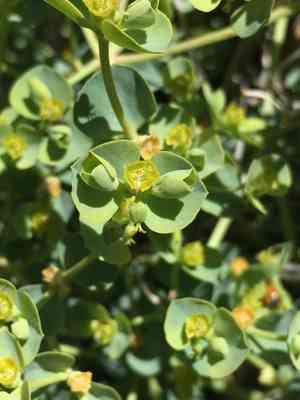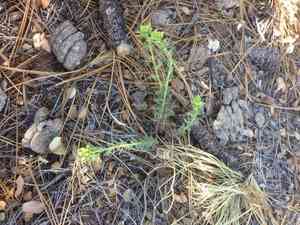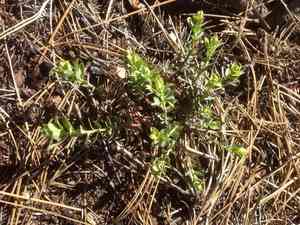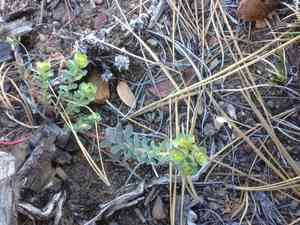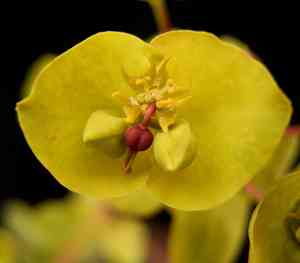
Woodland spurge(Euphorbia lurida)

Woodland spurge (Euphorbia lurida)

Also known as: N/A

Woodland spurge (Euphorbia corollata) is a perennial herb known for its upright growth and milky sap, which can be an irritant. The plant features alternate or whorled leaves and small, white bracts that resemble flowers. These bracts surround the actual tiny flowers, adding to the plant's visual appeal.

Natural Habitat:
Woodland spurge is commonly found in dry, open woods, prairies, and glades. It prefers well-drained soils and can thrive in both sunny and partially shaded environments. This plant is native to the eastern and central regions of North America. Its ability to thrive in varying light conditions and its resilient nature make it a notable component of its natural habitats.

Attributes of Woodland spurge

Lifespan
Perennial
Plant Type
Succulent
Plant Height
20-50 cm
Spread
N/A
Leaf Color
Green
Flower Size
Up to 1 cm
Flower Color
Greenish-yellow

ForwardPlant - Identify plants with a snap

Identify and diagnose plants, get toxicity alerts, and explore safety guides for all types of fungi.

Try for Free

Images of Woodland spurge

Woodland spurge(Euphorbia lurida)

Quickly Identify Woodland spurge

1
Euphorbia lurida can be identified by its fleshy, green leaves and milky sap. It produces small, greenish-yellow flowers and has a tendency to grow in a rosette formation.

Scientific Classification of Woodland spurge

Phylum
Vascular plants
Class
Dicotyledons
Order
Malpighiales
Family
Spurge
Genus
Spurges
Species
Woodland spurge

Planting and Growing of Woodland spurge

Care Difficulty
Moderate
Watering Schedule
Every 2 days
Sunlight Requirements
Partial sun
Sunshine Duration
4-8 hours
Ideal Temperature
65-75℉
Soil Type
Potting Mix, Peat Mix
Soil pH
6.5-7.5
Fertilizer Type
Balanced
Pruning Season
Spring, Summer
Pruning Area
Branches, Leaves
Pruning Frequency
2 times a year
Repotting Season
Spring
Pot Type
Plastic, Ceramic

water icon How to Water Woodland spurge?

For Euphorbia lurida, it's crucial to allow the soil to dry out between waterings. Watering with around 150 ml each time should suffice, ensuring the soil is moist but not waterlogged. This plant is adapted to arid environments, so overwatering can be detrimental.
What are the symptoms of an underwatered Woodland spurge?
What should I do if my Woodland spurge is not getting enough water?
What are the symptoms of an overwatered Woodland spurge?
How to save an overwatered Woodland spurge?

sunlight icon What Are the Sunlight Requirements for Woodland spurge?

Sunlight Requirements: Partial sun
Duration of light: 4 to 6 hours
Euphorbia lurida ideally thrives in partial sun, benefiting from about 4 to 6 hours of filtered sunlight daily. This balance promotes healthy growth and vibrant foliage.
Problem Identification
Practical Measures
Achieving Ideal Conditions

temperature icon What Is the Ideal Temperature Range for Woodland spurge?

Ideal Temperature: 65 ~ 75℉
The ideal temperature range for Euphorbia lurida is between 65°F and 75°F. This range provides optimal conditions for the plant's metabolic processes and photosynthesis, promoting healthy growth and flowering. Maintaining this temperature helps avoid stress that can lead to weakened plant health or susceptibility to diseases.

soil icon What Soil is Best for Woodland spurge?

Soil type: Sandy loam, Loam
Soil PH: 6.5 ~ 7.5
Euphorbia lurida thrives in well-drained soils which help prevent root rot by allowing excess water to escape easily. This ensures the plant’s root system remains firm and healthy, promoting better nutrient absorption. While this plant isn't overly demanding, moderately fertile soil will provide the necessary nutrients for growth. It ensures the Euphorbia gains adequate nourishment without being overwhelmed by excessive nutrients that can harm it. Soil enriched with organic matter supports Euphorbia lurida's growth by maintaining moisture and providing slow-release nutrients. Such amendment enhances soil texture and aeration, crucial for root development.

fertilize icon How to Fertilize Woodland spurge?

Fertilizer type: Balanced
For Euphorbia lurida, apply a diluted liquid fertilizer at half the recommended strength every two weeks during the growing season. This ensures that the plant receives a steady supply of nutrients without the risk of over-fertilization. During the dormant season, cease fertilizing as the plant's nutrient requirements diminish.

prune icon How to Prune Woodland spurge?

Pruning Time: Spring, Summer
Start by cleaning your tools to avoid infections. Identify the dead or diseased branches and remove them with clean cuts. Trim back any overgrown stems to maintain your desired shape. Always cut just above a node to promote new growth. For more advanced shaping, envision the final silhouette you want for your Euphorbia lurida. Gently trim back branches to create layers and depth. Use small, precise cuts to encourage a bushier appearance. More About Pruning Techniques

propagate icon How to Propagate Woodland spurge plant?

Propagate Time: Early spring, Late spring
1
Choose a healthy, mature stem for cutting. It should be disease-free and robust to ensure the success of propagation. A stem with multiple nodes is preferable.
2
Use your sharp pruning shears to make a clean cut below a node. Remove any leaves from the bottom half of the stem to prevent rot when placed in the soil or water for rooting.
3
Dip the cut end into rooting hormone, then plant it in well-draining soil. Ensure the soil is moist but not waterlogged to facilitate root development.
More About Propagating Techniques

repot icon How to Repot Woodland spurge plant?

Repotting frequency: Every 2-3 years
1
Repot Euphorbia lurida when you notice roots appearing at the drainage holes or when its growth significantly slows down. This indicates that the plant has outgrown its current container. Spring or early summer is the perfect time for repotting, as the plant is in its active growing phase, allowing it to recover more quickly from any transplant shock.
2
It's crucial to select a pot that is just one size larger than the current one to avoid excessive soil moisture which could harm the root system. A pot with drainage holes is essential to ensure that excess water can escape, preventing root rot and other moisture-related issues, keeping your Euphorbia lurida healthy and thriving.
3
Opt for a well-draining cactus mix, which provides excellent aeration and prevents water from sitting in the soil. The mix should mimic the plant's natural growing conditions, ensuring proper root stability and allowing nutrients to be readily available to the Euphorbia lurida, promoting healthier growth.

ForwardPlant - Identify plants with a snap

Find the best spots for them to optimize their health, simply using your phone.

Try for Free

Toxicity

ingestion, skin contact

Identify toxic plants for your safety

Learn which plants are harmful to you and your pets, and make informed choices for a safer home!

Try for Free
WARNING
The judgment on toxicity and danger is for reference only. We DO NOT GUARANTEE any accuracy of such judgment. Therefore, you SHALL NOT rely on such judgment. It is IMPORTANT TO SEEK PROFESSIONAL ADVICE in advance when necessary.