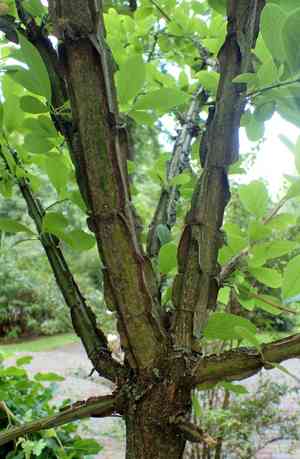
Corktree (Euonymus phellomanus)
Also known as: Corky spindle
The Corktree (Euonymus phellomanus) stands out for its distinctive corky bark, which develops a plated texture with age. Additionally, its vibrant pink fruits enhance its ornamental value. This hardy plant is adaptable to diverse soil types and light conditions, making it a versatile choice for many landscapes.
In This Article
Attributes of Corktree
Lifespan
Perennial
Plant Type
Shrub
Plant Height
2.5 m
Spread
1 m
Leaf Color
Green
Flower Size
0.5 to 1 cm
Flower Color
Yellow Green
Images of Corktree
Quickly Identify Corktree
1
Identify Euonymus phellomanus by its corky, winged branches, elliptical to lanceolate leaves, and its distinctive pink to red capsule-like fruits that split open to reveal orange seeds.
Scientific Classification of Corktree
Phylum
Vascular plants
Class
Dicotyledons
Order
Celastrales
Family
Bittersweet
Genus
Spindle trees
Species
Corktree
Planting and Growing of Corktree
Care Difficulty
Easy
Watering Schedule
Every 3 days
Sunlight Requirements
Partial sun
Sunshine Duration
6-10 hours
Ideal Temperature
60-75℉
Soil Type
Potting Mix, Peat Mix
Soil pH
6.5-7.5
Fertilizer Type
Balanced
Pruning Season
Spring, Summer
Pruning Area
Branches, Leaves
Pruning Frequency
2 times a year
Repotting Season
Spring
Pot Type
Plastic, Ceramic
 How to Water Corktree?
For Euonymus phellomanus, it is essential to water until the top few inches of soil are consistently moist. Watering with approximately 500 milliliters allows for thorough soaking without oversaturating the soil. The goal is to ensure the moisture reaches the root zone, while excess water drains away, preventing potential root rot.
What are the symptoms of an underwatered Corktree?
›
What should I do if my Corktree is not getting enough water?
›
What are the symptoms of an overwatered Corktree?
›
How to save an overwatered Corktree?
›
 What Are the Sunlight Requirements for Corktree?
This plant does best in partial sun to full sun conditions, wherein it receives about 4 to 6 hours of sunlight daily. Such exposure fosters vibrant leaf colors and strong structural growth, essential for its ornamental appeal.
More About Sunlight Requirements Techniques→
How much sunlight does Euonymus phellomanus need?
›
What solutions can help provide ideal light?
›
What benefits arise from ideal light exposure?
›
 What Is the Ideal Temperature Range for Corktree?
The ideal temperature range for Euonymus phellomanus is between 60°F and 75°F. This range ensures optimal growth and development. At these temperatures, the plant's metabolic processes function efficiently, allowing for proper photosynthesis, respiration, and nutrient transportation. Maintaining this temperature range helps prevent stress and ensures the plant remains healthy and vigorous.
 What Soil is Best for Corktree?
Euonymus phellomanus thrives in well-drained soil as it prevents waterlogging, reducing the risk of root rot. Well-drained soil ensures that the roots have access to both moisture and oxygen, promoting healthy growth and vibrant foliage. Incorporating rich organic matter into the soil provides essential nutrients for Euonymus phellomanus. This boosts its growth, enhances soil structure, and promotes beneficial microbial activity, resulting in robust and resilient plants. Maintaining a moist soil condition is vital for Euonymus phellomanus, especially during dry spells. Consistent moisture availability supports steady growth, lush foliage, and reduces water stress, which can otherwise lead to leaf drop.
 How to Fertilize Corktree?
For Euonymus phellomanus, it is ideal to follow a balanced fertilization regimen. Apply liquid fertilizer at a concentration of 1 teaspoon per gallon of water. For slow-release, use a balanced granular type spread evenly across the soil, following dosage instructions for shrubs.
 How to Prune Corktree?
Begin by removing any dead, damaged, or diseased branches. This clears the way for healthy growth and prevents the spread of potential pathogens. Trim back the tips of the branches to encourage a more compact form. Aim to maintain the plant's natural shape while removing any errant branches that disrupt its aesthetic. Make thinning cuts to open up the center of the plant, allowing light and air to penetrate more deeply, which is essential for a healthier shrub.
More About Pruning Techniques→
 How to Propagate Corktree plant?
1
To propagate Euonymus phellomanus, first gather seeds from mature fruits or take semi-hardwood cuttings. For cuttings, select healthy shoots that are free from diseases and pests, and cut them just below a node.
2
Prepare a well-draining growing medium, such as a mix of peat and perlite. This ensures that excess moisture does not cause the seeds to rot or the cuttings to succumb to fungal diseases. Light, airy soil also encourages root development.
3
For seed propagation, sow the seeds on the surface of the soil and lightly cover them. For cutting propagation, dip the cut end in rooting hormone before inserting it into the growing medium. Keep the medium moist but not waterlogged.
 How to Repot Corktree plant?
1
Euonymus phellomanus should be repotted when you notice the roots circling the pot or emerging from drainage holes. These signs indicate that the plant has outgrown its current container and needs more space. Additionally, a lack of growth or wilting, despite adequate watering, can signal the roots are too cramped. Optimal times to repot are early spring or autumn when the plant is not actively growing.
2
Select a pot that is 2-3 inches larger in diameter than the current one. It should have adequate drainage holes to prevent waterlogging. The advantage of a slightly larger pot is that it gives the roots room to expand, promoting healthier growth. Avoid choosing a pot that is too large, as excessive soil can retain water, risking root rot.
3
For Euonymus phellomanus, opt for a well-draining garden soil enriched with organic matter. Such soil prevents water retention, reducing the risk of root diseases. Well-draining soil ensures that excess water runs off easily while retaining enough moisture for the plant's uptake. Adding perlite or sand can enhance drainage capacity, vital for root health.
Toxicity
Ingestion
WARNING
The judgment on toxicity and danger is for reference only. We DO NOT GUARANTEE any accuracy of such judgment. Therefore, you SHALL NOT rely on such judgment. It is IMPORTANT TO SEEK PROFESSIONAL ADVICE in advance when necessary.
Learn More About Corktree Diseases
Anthracnose
Bacterial Leaf Spot
Black Spot
Chemical Injury
Crown Gall
Cyst Nematode
Damping-off
Downy Mildew
Drought Stress
Fusarium Wilt
Gray Mold
Leaf Curl
Leaf Spot
Mosaic
Nutrient Deficiency
Nutrient Toxicity
Powdery Mildew
Root Rot
Root-knot Nematode
Rusts
Sooty Mold
Spider Mites
Temperature Stress
Thrips Damage
White Mold



