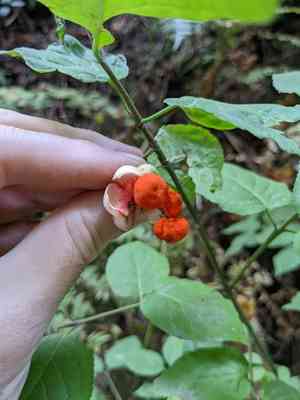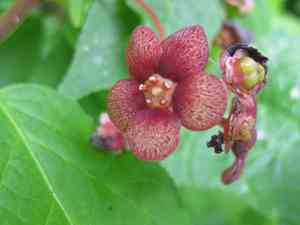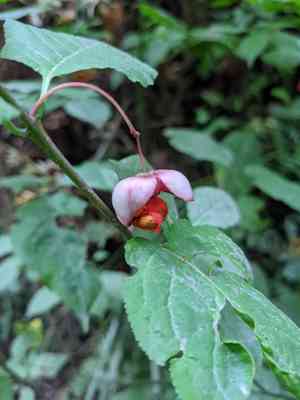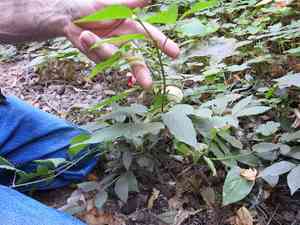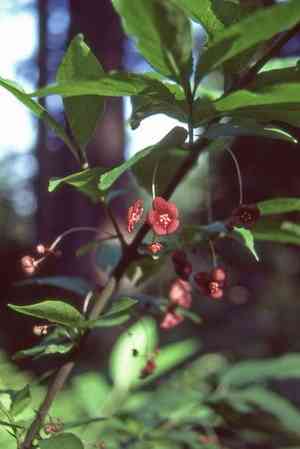
Western burning bush(Euonymus occidentalis)

Western burning bush (Euonymus occidentalis)

Also known as: Western strawberry-bush

The Western burning bush (Euonymus occidentalis), a spindle tree native to the Pacific coast of North America, thrives in well-drained sandy soils and can grow in both full sun and partial shade. Its name is derived from its vibrant red autumn foliage. Note that it is mildly toxic if ingested, so it's best to avoid planting it in areas accessible to pets.

Attributes of Western burning bush

Lifespan
Perennial
Plant Type
Shrub
Plant Height
1.8 m to 6 m
Spread
3 m to 6 m
Leaf Color
Green
Flower Size
1.02 cm to 1.7 cm
Flower Color
Red Brown White Pink Purple Burgundy

ForwardPlant - Identify plants with a snap

Identify and diagnose plants, get toxicity alerts, and explore safety guides for all types of fungi.

Try for Free

Images of Western burning bush

Western burning bush(Euonymus occidentalis)

Quickly Identify Western burning bush

1
Oval to lance-shaped leaves with finely serrated margins.
2
Purple-brown flowers with white mottling and central nectar disc.
3
Distinctive three-lobed capsule fruit with vibrant red aril.
4
Slender, climbing stem with 4-angled young branches.
5
Smooth bark transitioning from greenish to woody with age.

Scientific Classification of Western burning bush

Phylum
Vascular plants
Class
Dicotyledons
Order
Celastrales
Family
Bittersweet
Genus
Spindle trees
Species
Western burning bush

Planting and Growing of Western burning bush

Care Difficulty
Moderate
Watering Schedule
Every 3 days
Sunlight Requirements
Partial sun
Sunshine Duration
4-8 hours
Ideal Temperature
55-70℉
Soil Type
Potting Mix, Peat Mix
Soil pH
6.5-7.5
Fertilizer Type
Balanced
Pruning Season
Spring, Summer
Pruning Area
Branches, Leaves
Pruning Frequency
2 times a year
Repotting Season
Spring
Pot Type
Plastic, Ceramic

water icon How to Water Western burning bush?

Water Euonymus occidentalis thoroughly until you see excess draining out of the pot's bottom. This usually equates to around 400 milliliters of water per session. The key is to ensure the entire root ball is moistened, yet not to the point of water logging, maintaining a balance between being well-fed and being prone to root rot.
What are the symptoms of an underwatered Western burning bush?
What should I do if my Western burning bush is not getting enough water?
What are the symptoms of an overwatered Western burning bush?
How to save an overwatered Western burning bush?

sunlight icon What Are the Sunlight Requirements for Western burning bush?

Sunlight Requirements: Partial sun
Duration of light: 4 to 6 hours
The ideal lighting range for Euonymus occidentalis is partial sun, enabling photosynthesis without risking foliage scorch. It thrives on balanced exposure, promoting fuller, healthier growth.
How much sunlight does Euonymus occidentalis prefer?
How to create an ideal lighting setup?
Benefits of optimal lighting conditions
More About Sunlight Requirements Techniques

temperature icon What Is the Ideal Temperature Range for Western burning bush?

Ideal Temperature: 55 ~ 70℉
The ideal temperature range for Euonymus occidentalis to thrive is between 55°F and 70°F. This range provides the optimal conditions for growth, allowing the plant to maintain its health and resist diseases. Temperatures within this range help ensure that the photosynthesis process is efficient and that the plant can sustain vibrant foliage.

soil icon What Soil is Best for Western burning bush?

Soil type: Loam, Acidic soil
Soil PH: 6.5 ~ 7.5
Euonymus occidentalis thrives in well-drained soil to avoid root rot. Ensuring good drainage will keep the roots healthy, preventing over-saturation and promoting healthy growth. The plant requires nutrient-rich soil to fuel its growth, especially in the growing season. Loamy soil, which is rich in organic matter, provides the essential nutrients that support lush foliage and vibrant blooms. Soil with moderate fertility supports balanced growth, preventing the plant from becoming leggy or weak. By maintaining moderate fertility, the plant can achieve its full ornamental potential without excessive fertilization.

fertilize icon How to Fertilize Western burning bush?

Fertilizer type: Balanced
Euonymus occidentalis appreciates a balanced approach to fertilizing. A standard recommendation is to use a 10-10-10 NPK fertilizer, ensuring that each application provides the necessary nutrients without overwhelming the plant’s system. Typically, 1/2 to 1 pound of granular fertilizer per 100 square feet is adequate. For liquid fertilizers, follow the manufacturer's instructions carefully, usually applying 1 tablespoon per gallon of water.

prune icon How to Prune Western burning bush?

Pruning Time: Spring, Summer
Start by removing any dead, diseased, or damaged branches. Look for branches that cross or are rubbing against each other and prune them to prevent wounds that can lead to infections. Make cuts at a 45-degree angle, about 1/4 inch above a bud that faces outward. This promotes faster healing and encourages new growth to develop in a desirable direction. Trim back the outermost branches to maintain a neat shape and control the size of the Euonymus occidentalis. Focus on keeping a natural appearance by cutting branches just above leaf nodes. More About Pruning Techniques

propagate icon How to Propagate Western burning bush plant?

Propagate Time: Spring, Early summer
1
Collect seeds from mature Euonymus occidentalis plants when the seed pods have dried and are about to split. Ensure that the seeds are fully developed and intact. It's best to clean the seeds by removing any surrounding pulp to prevent mold growth during storage.
2
Select healthy stems from the parent plant and cut four to six-inch sections just below a node. Remove excess leaves from the lower half of the cutting to minimize moisture loss and place them in water until ready to be planted in rooting medium.
3
For layering, select a flexible stem on the parent plant and bend it to the ground. Partially bury a section of the stem using soil or pins to hold it in place. Ensure that the tip of the branch is exposed and regularly watered until roots develop.

repot icon How to Repot Western burning bush plant?

Repotting frequency: Every 2-3 years
1
Euonymus occidentalis needs to be repotted when you notice roots circling the pot or protruding through drainage holes. Early spring is ideal as the plant is about to begin its active growth phase, which helps it recover more quickly. Be gentle when handling the plant to minimize stress.
2
Select a pot that is one size larger than the current pot, ideally with good drainage holes to prevent waterlogging. The material should promote aeration; terracotta pots are excellent for this. A well-chosen pot provides enough space for roots to expand and ensures proper air circulation.
3
Opt for an organic-rich, well-draining potting mix to ensure Euonymus occidentalis roots have access to both nutrients and air. A mix that retains moisture but doesn't stay waterlogged is ideal. This balance supports healthy root development and the plant's overall vigor.

ForwardPlant - Identify plants with a snap

Find the best spots for them to optimize their health, simply using your phone.

Try for Free

Toxicity of Western burning bush

Is Western burning bush toxic to cat?

The western burning bush poses a moderate to severe toxic risk to felines. Symptoms may manifest as vomiting, diarrhea, and lethargy. Should a cat consume a considerable quantity of any part of this plant, it could experience heart irregularities. Therefore, if you believe your cat has been nibbling on this plant, contact your veterinarian for guidance.

Is Western burning bush toxic to dog?

The Western burning bush poses a moderate level of toxicity to dogs. Every part of this plant contains harmful substances that affect both the digestive and circulatory systems. Typically, a significant quantity of the western burning bush needs to be ingested for any severe reaction to occur, and given that the plant is not particularly palatable to dogs, most responses tend to be mild. Symptoms can include nausea, diarrhea, vomiting, weakness, and diminished appetite. If a large amount is consumed, it is advisable to consult a veterinarian, as there is the potential for more serious reactions like an irregular heart rate, coma, or even death, although such occurrences are extremely rare.

Identify toxic plants for your safety

Learn which plants are harmful to you and your pets, and make informed choices for a safer home!

Try for Free
WARNING
The judgment on toxicity and danger is for reference only. We DO NOT GUARANTEE any accuracy of such judgment. Therefore, you SHALL NOT rely on such judgment. It is IMPORTANT TO SEEK PROFESSIONAL ADVICE in advance when necessary.
More About Toxic Techniques