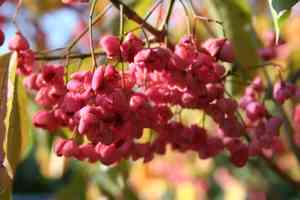
Hamilton's spindletree (Euonymus hamiltonianus)
Also known as: Siebold's spindle, Hamiltons strawberry bush, Himalayan spindletree
Certainly! Here’s a revised version:
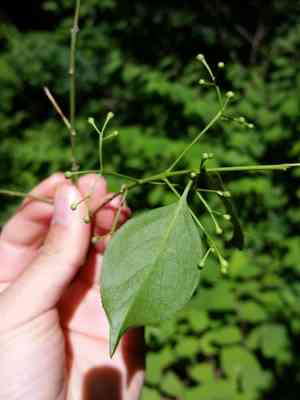
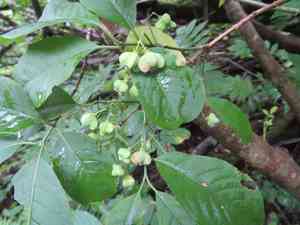
In its natural habitat, this species can develop into a shrub reaching 3 meters or a tree up to 20 meters in height. The leaves are somewhat oval with pointed ends, reaching lengths of up to 15 cm. The inflorescence presents as a cymose cluster, featuring several white flowers, each approximately 1 cm in diameter. The fruit capsule, which can be brown, yellowish, or reddish, splits into four parts, each containing brown seeds encased in orange arils.
In This Article
Attributes of Hamilton's spindletree
Lifespan
Perennial
Plant Type
Tree, Shrub
Plant Height
3 m
Spread
2 m
Leaf Color
Green Red
Flower Size
7 mm
Flower Color
White Green
Images of Hamilton's spindletree
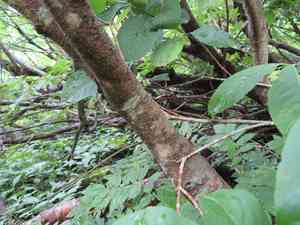
Quickly Identify Hamilton's spindletree
1
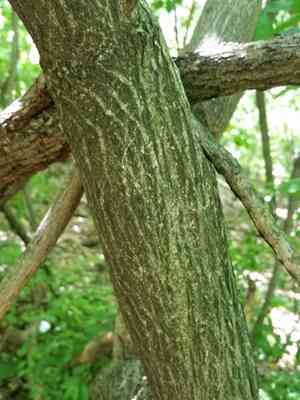
Identify Euonymus hamiltonianus by its oval to elliptical leaves that turn bright red or purple in autumn. The small, inconspicuous flowers are followed by distinctively showy, four-lobed pink to red fruit capsules, which split open to reveal seeds covered with a bright orange-red aril.
Scientific Classification of Hamilton's spindletree
Phylum
Vascular plants
Class
Dicotyledons
Order
Celastrales
Family
Bittersweet
Genus
Spindle trees
Species
Hamilton's spindletree
Planting and Growing of Hamilton's spindletree
Care Difficulty
Easy
Watering Schedule
Every 3 days
Sunlight Requirements
Partial sun
Sunshine Duration
4-8 hours
Ideal Temperature
60-75℉
Soil Type
Potting Mix, Peat Mix
Soil pH
6.5-7.5
Fertilizer Type
Balanced
Pruning Season
Spring, Summer
Pruning Area
Branches, Leaves
Pruning Frequency
2 times a year
Repotting Season
Spring
Pot Type
Plastic, Ceramic
 How to Water Hamilton's spindletree?
For Euonymus hamiltonianus, ensure that the soil is watered thoroughly until water starts to drip out of the drainage holes. This generally equates to around 500 mL per session but may vary depending on pot size and soil composition.
What are the symptoms of an underwatered Hamilton's spindletree?
›
What should I do if my Hamilton's spindletree is not getting enough water?
›
What are the symptoms of an overwatered Hamilton's spindletree?
›
How to save an overwatered Hamilton's spindletree?
›
 What Are the Sunlight Requirements for Hamilton's spindletree?
Partial to full sun provides the ideal light range, promoting vibrant leaf coloration and structural integrity in Euonymus hamiltonianus. Consistent lighting ensures robust health and resilience against pests.
More About Sunlight Requirements Techniques→
What is the ideal lighting for Euonymus hamiltonianus?
›
How can you provide the ideal lighting?
›
What are the benefits of ideal lighting?
›
 What Is the Ideal Temperature Range for Hamilton's spindletree?
For optimal growth, Euonymus hamiltonianus thrives in temperatures ranging from 60°F to 75°F. This range supports healthy photosynthetic activity, promotes robust growth, and ensures vibrant foliage. Consistently maintaining these temperatures helps the plant to avoid stress, bringing out the best in its natural aesthetic appeal.
 What Soil is Best for Hamilton's spindletree?
Euonymus hamiltonianus thrives in soil that retains moisture without becoming waterlogged. Adequate moisture ensures robust growth and prevents wilting in dry spells. Rich, fertile soil with ample organic matter benefits the plant by supplying essential nutrients for lush foliage and prolific flowering. Well-aerated soil allows roots to breathe, promoting healthy root development and preventing root rot in Euonymus hamiltonianus.
 How to Fertilize Hamilton's spindletree?
Euonymus hamiltonianus, or the Hamilton's Spindle, requires careful attention to the quantity of fertilizer used. In general, apply about one tablespoon of granulated slow-release fertilizer per each gallon of soil during the spring. For liquid fertilizers, use a water-soluble 10-10-10 formula diluted to half strength, ensuring that the plant doesn't get overwhelmed by nutrients.
 How to Prune Hamilton's spindletree?
Start by carefully examining your Euonymus hamiltonianus for any branches that show signs of disease, such as discoloration or unusual growth patterns. Removing these branches will prevent the spread of disease to healthy parts of the plant. When pruning, it’s crucial to make cuts at a 45-degree angle to ensure that water doesn’t collect on cut surfaces, which can lead to rot. This angled cut will also promote better healing and quicker growth responses.
More About Pruning Techniques→
 How to Propagate Hamilton's spindletree plant?
1
To propagate from seeds, collect seeds from mature plants once they have fully ripened. Ensure they are dried and stored in a cool, dry place before planting in the desired medium.
2
Select semi-hardwood cuttings from healthy branches. Cut about 4-6 inches in length, with several leaves attached. Trim the leaves to reduce moisture loss and dip the cut end in rooting hormone.
3
To propagate via layering, choose a low-growing branch and bend it gently to the ground. Make a small cut to promote rooting and cover the section with soil until roots develop.
 How to Repot Hamilton's spindletree plant?
1
Look for signs like roots emerging from the pot's drainage holes, slow growth, or wilting leaves despite adequate watering. These indicate it's time to repot your Euonymus hamiltonianus to ensure healthy growth and prevent rootbound issues.
2
Select a pot that's one size larger than the current one with ample drainage holes. This allows for better root expansion and prevents waterlogging, crucial for maintaining the plant's health and ensuring robust growth.
3
Opt for a well-draining potting mix rich in organic matter. This ensures good aeration and drainage, preventing root rot while providing necessary nutrients and enhancing the plant’s vigor and resilience.
Toxicity
Ingestion
WARNING
The judgment on toxicity and danger is for reference only. We DO NOT GUARANTEE any accuracy of such judgment. Therefore, you SHALL NOT rely on such judgment. It is IMPORTANT TO SEEK PROFESSIONAL ADVICE in advance when necessary.



