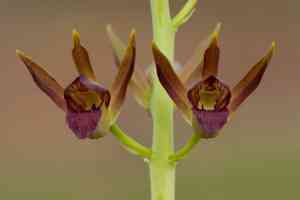
Wild coco (Eulophia alta)
Also known as: Umbrella Orchid
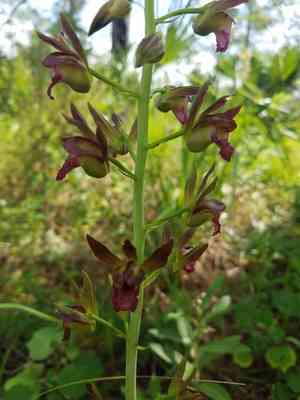
The orchid you're referring to is likely the Wild Coco. This terrestrial orchid features tall flower spikes adorned with greenish-yellow blossoms highlighted by deep purple accents. It grows from pseudobulbs that store water, enabling it to adapt to diverse conditions in its natural tropical and subtropical habitats. Wild Coco flourishes under forest canopies, benefiting from the nutrient-rich, organic soils found there.
In This Article
Attributes of Wild coco
Lifespan
Perennial
Plant Type
Herb
Plant Height
1 to 2 meters
Spread
Approximately 30-50 cm
Leaf Color
Green
Flower Size
Approximately 2-3 cm
Flower Color
Greenish-yellow to purple with markings
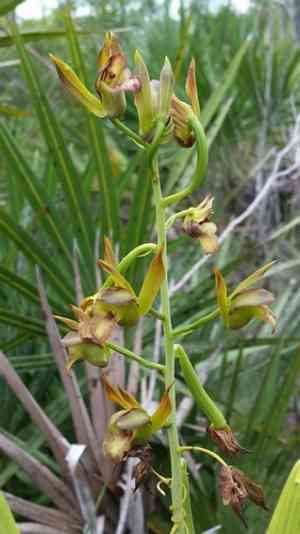
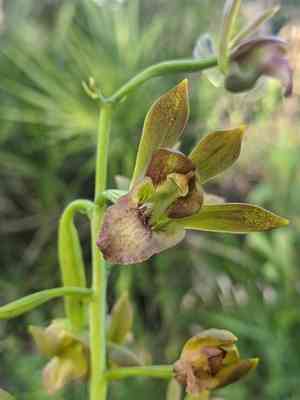
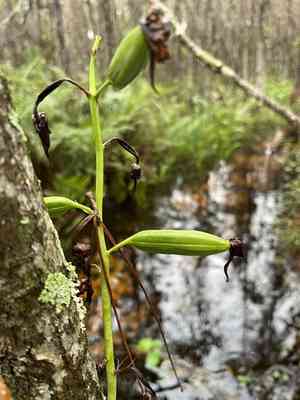
Images of Wild coco
Quickly Identify Wild coco
1
Recognizable by its tall, thin flower spikes that can reach up to 2 meters, and its greenish-yellow to purple flowers with distinct markings. The leaves are long, lanceolate, and somewhat pleated.
Scientific Classification of Wild coco
Phylum
Vascular plants
Class
Monocotyledons
Order
Asparagales
Family
Orchid
Genus
Corduroy orchid
Species
Wild coco
Planting and Growing of Wild coco
Care Difficulty
Moderate
Watering Schedule
Every 2 days
Sunlight Requirements
Partial sun
Sunshine Duration
4-8 hours
Ideal Temperature
65-85℉
Soil Type
Potting Mix, Peat Mix
Soil pH
6-7
Fertilizer Type
Balanced
Pruning Season
Spring, Summer
Pruning Area
Branches, Leaves
Pruning Frequency
2 times a year
Repotting Season
Spring
Pot Type
Plastic, Ceramic
 How to Water Wild coco?
Eulophia alta requires about 250ml of water during each watering session. The watering should ensure that the soil is evenly moist but not soggy, mimicking its natural habitat. The goal is to keep the soil slightly damp, without excess water accumulating, which could lead to root rot.
What are the symptoms of an underwatered Wild coco?
›
What should I do if my Wild coco is not getting enough water?
›
What are the symptoms of an overwatered Wild coco?
›
How to save an overwatered Wild coco?
›
 What Are the Sunlight Requirements for Wild coco?
The ideal light range for Eulophia alta includes partial sun and full sun. Proper lighting promotes lush growth and optimal flowering, essential for maintaining its vibrant and healthful appearance.
What are Eulophia alta's ideal lighting conditions?
›
How to achieve ideal lighting for Eulophia alta?
›
What are the benefits of ideal lighting for Eulophia alta?
›
 What Is the Ideal Temperature Range for Wild coco?
The ideal temperature range for Eulophia alta, a tropical orchid, is between 65°F to 85°F. Maintaining this range helps to ensure optimal growth and blooming conditions. Consistently warm temperatures are crucial in replicating the plant's natural habitat.
 What Soil is Best for Wild coco?
Eulophia alta thrives in well-draining soil which prevents water stagnation that could cause root rot. The ability to drain excess moisture allows the plant to absorb necessary nutrients without the risk of being over-saturated. The plant benefits significantly from soil rich in organic matter. Organic components enhance nutrient availability, allowing the plant to access essential minerals more readily, promoting healthy and vigorous growth. While excellent drainage is crucial, the soil should still possess the ability to retain some moisture. This ensures that the plant remains hydrated between waterings, particularly in drier conditions.
 How to Fertilize Wild coco?
For Eulophia alta, use a balanced fertilizer with an N-P-K ratio of 20-20-20. When using liquid fertilizer, mix 1 teaspoon per gallon of water and apply uniformly over the soil to ensure even distribution.
 How to Prune Wild coco?
Begin by inspecting the plant thoroughly. Look for healthy green stems versus any yellow or dead parts. Aim to remove dead or diseased foliage first, enhancing the plant's aesthetic appeal and overall health. This step is vital as it directs the plant’s energy to healthier parts. Trim back yellowed or damaged leaves close to the base, being careful not to disturb the main pseudobulbs. Cut just above a node to encourage new growth from that point. Always prune with the plant’s natural shape in mind, maintaining a balanced look to support uniform light exposure. Post-pruning, maintain ideal humidity levels and refrain from watering the foliage directly to avoid rot. Ensure the plant is placed in a well-ventilated area, aiding recovery. Monitor the plant for any signs of stress or disease, adjusting care routines as necessary to promote recovery.
More About Pruning Techniques→
 How to Propagate Wild coco plant?
1
Harvest seeds from mature Eulophia alta orchids. Clean and dry them thoroughly before storing. Prepare them for sowing by soaking in a growth hormone solution, if available, to promote healthy germination.
2
Spread the seeds evenly on a moistened sterile potting mix in seed starting trays. Cover lightly with a thin layer of the mix or sand. Ensure they are positioned in a warm, bright location but out of direct sunlight.
3
In the early growing season, carefully divide established Eulophia alta plants. Use a sterilized knife to cut through the root ball. Replant them immediately in individual pots with a suitable orchid mix.
 How to Repot Wild coco plant?
1
Eulophia alta shows it's ready for repotting when you notice roots crowding the pot or emerging through drainage holes. Repotting is best done during the growing season to minimize stress and support recovery. Look for slowed growth, reduced flower production, or wilting as signs it's time to refresh its environment.
2
Opt for a pot that is only slightly larger than the current one. Ensure it has ample drainage holes to prevent waterlogging. Ceramic or clay pots work well as they allow good air circulation, keeping the roots healthy and reducing the risk of root rot.
3
Use a well-draining orchid mix designed to mimic a tropical environment. Such mixes promote excellent air circulation around the roots and retain just the right amount of moisture. The right soil mix supports robust growth and glorious flowering.
Learn More About Wild coco Diseases
Anthracnose
Bacterial Leaf Spot
Bacterial Soft Rot
Bacterial Wilt
Black Spot
Chemical Injury
Crown Gall
Cyst Nematode
Damping-off
Downy Mildew
Drought Stress
Fusarium Wilt
Gray Mold
Leaf Spot
Mosaic
Nutrient Deficiency
Nutrient Toxicity
Powdery Mildew
Root Rot
Root-knot Nematode
Rusts
Sooty Mold
Spider Mites
Temperature Stress
Thrips Damage
White Mold



