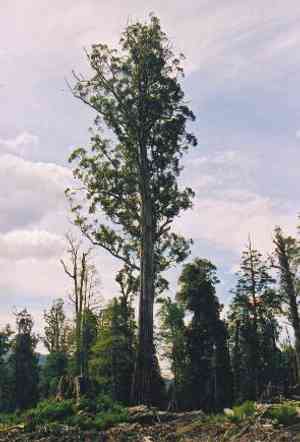
Mountain ash (Eucalyptus regnans)
Also known as: Australian mountain ash, Stringy gum
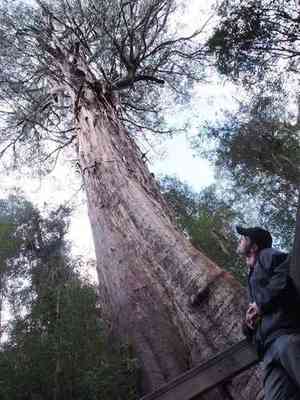
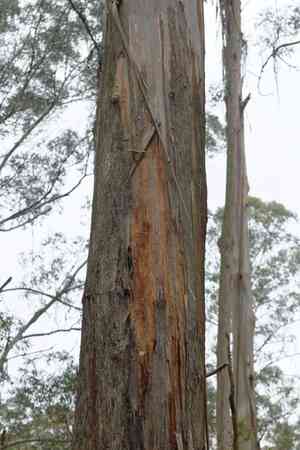
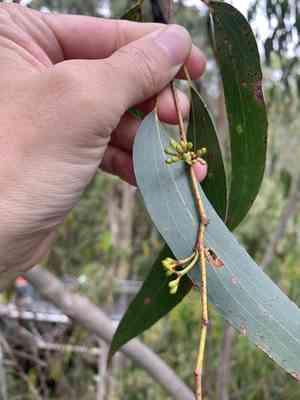
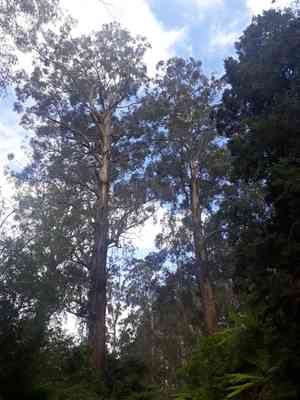
Eucalyptus regnans, also known as the mountain ash, is a towering evergreen tree that can reach heights of 70 to 114 meters. It features a straight trunk with smooth, cream-grey bark, which becomes rough and fibrous at the base, extending up to 20 meters. The adult leaves are alternately arranged, lance-shaped to falcate, and measure 9 to 14 cm in length and 1.5 to 3 cm in width. The tree produces clusters of 9 to 15 white flowers, each about 1 cm in diameter, typically blooming from December to February.
In This Article
Attributes of Mountain ash
Lifespan
Perennial
Plant Type
Tree, Shrub
Plant Height
20 m
Spread
8 m
Leaf Color
Glossy green
Flower Size
0.8 to 1.2 cm
Flower Color
White
Images of Mountain ash
Quickly Identify Mountain ash
1
Identifying Eucalyptus regnans involves looking for its tall, straight trunk and smooth bark, which sheds in strips. The leaves are lanceolate and glossy green, and the white flowers bloom in groups.
Scientific Classification of Mountain ash
Phylum
Vascular plants
Class
Dicotyledons
Order
Myrtales
Family
Myrtle
Genus
Eucalypts
Species
Mountain ash
Planting and Growing of Mountain ash
Care Difficulty
Hard
Watering Schedule
Every 2 days
Sunlight Requirements
Full sun
Sunshine Duration
4-6 hours
Ideal Temperature
60-75℉
Soil Type
Potting Mix, Peat Mix
Soil pH
6.5-7.5
Fertilizer Type
Balanced
Pruning Season
Spring, Summer
Pruning Area
Branches, Leaves
Pruning Frequency
2 times a year
Repotting Season
Spring
Pot Type
Plastic, Terracotta
 How to Water Mountain ash?
Eucalyptus regnans requires approximately 500 milliliters of water per session. It's essential to ensure that the water penetrates deep into the soil to assist root hydration. The goal is to reach a depth where the soil feels damp but not waterlogged, providing sufficient moisture for the roots without drowning them.
What are the symptoms of an underwatered Mountain ash?
›
What should I do if my Mountain ash is not getting enough water?
›
What are the symptoms of an overwatered Mountain ash?
›
How to save an overwatered Mountain ash?
›
 What Are the Sunlight Requirements for Mountain ash?
The ideal light range for Eucalyptus regnans involves full sun exposure, which ensures optimal growth by promoting strong foliage and a wider canopy. This ample sunlight supports essential energy synthesis processes.
More About Sunlight Requirements Techniques→
How much direct sunlight is optimal?
›
Can Eucalyptus regnans handle partial shade?
›
What strategies help maximize light exposure?
›
 What Is the Ideal Temperature Range for Mountain ash?
Eucalyptus regnans thrives best in a temperature range between 60°F and 75°F. This range supports optimal photosynthesis and growth, as the plant can efficiently utilize available moisture and sunlight. These conditions simulate the native environment of the plant, allowing it to develop robustly.
 What Soil is Best for Mountain ash?
Eucalyptus regnans requires soil with excellent drainage due to its native growth in areas with consistent rainfall. Proper drainage prevents root rot and ensures the tree's overall health by maintaining optimal moisture levels in the soil. The tree thrives in nutrient-dense loam, which provides the essential minerals and organic matter it requires for vigorous growth. An enriching soil composition supports robust trunk development and expansive leaf canopy. Eucalyptus regnans favors slightly acidic to neutral soils, similar to its native forest floors. This pH range facilitates the uptake of essential nutrients, promoting healthy foliage and resilience against diseases.
 How to Fertilize Mountain ash?
For Eucalyptus regnans, it is crucial to provide balanced nutrition. Apply about 1/2 cup of liquid fertilizer diluted to half-strength monthly during the growing season. For slow-release granules, use approximately 2 cups per tree annually. Adjust based on the specific nutritional requirements and observed growth patterns.
 How to Prune Mountain ash?
Begin by assessing the overall shape and size of the Eucalyptus regnans. Remove any dead or damaged branches by cutting them back to their base. Focus on thinning out the canopy to allow light penetration and air circulation. Aim for a balanced look, removing branches that cross each other or grow inward.
More About Pruning Techniques→
 How to Propagate Mountain ash plant?
1
Collect seeds from mature Eucalyptus regnans trees when the seed capsules start to open. Ensure seeds are dry by storing them in a paper bag in a cool, dry place until planting season.
2
Plant the seeds in seed trays filled with sterilized soil mix. Cover them lightly with soil, as Eucalyptus seeds require light for germination, and maintain constant moisture using a gentle misting spray.
3
Place the seed trays in a warm location with indirect sunlight. Monitor temperature and moisture levels regularly, as germination usually occurs in 14-21 days if conditions are optimal.
 How to Repot Mountain ash plant?
1
Eucalyptus regnans shows signs it's ready for repotting when roots start to circle the pot or grow out of the drainage holes. Another cue is if the growth becomes stunted despite adequate light and water. Spring and summer are ideal, as the plant is in an active growth phase, making it more resilient to the repotting process.
2
Select a pot that is just one size larger than the current one. Ensure it has sufficient drainage holes to prevent waterlogging, which is detrimental to the roots. Terracotta pots are great for moisture regulation, but ensure any type used is sturdy enough to support the plant as it grows.
3
Use well-draining, loamy soil that mimics its natural forest floor habitat. Such soil helps maintain the necessary moisture and nutrients without becoming soggy. Its lightweight nature also makes it easier for roots to grow and expand, crucial for young Eucalyptus regnans trees.



