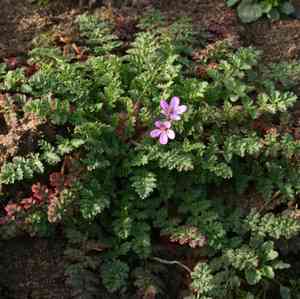
Common stork's-bill (Erodium cicutarium)
Also known as: Redstem filaree
The **Caltrop** (Tribulus terrestris), commonly known as puncture vine, is a robust plant well-adapted to desert climates. This resilient species produces seed pods that burst open, scattering seeds far from the parent plant. The distinctive design of its seed pods ensures efficient seed dispersal, promoting its growth in arid conditions.
In This Article
Attributes of Common stork's-bill
Lifespan
Annual, Biennial
Plant Type
Herb
Plant Height
10 cm to 20 cm
Spread
60 cm
Leaf Color
Green Brown Red
Flower Size
2.5 cm
Flower Color
Pink Purple
Images of Common stork's-bill
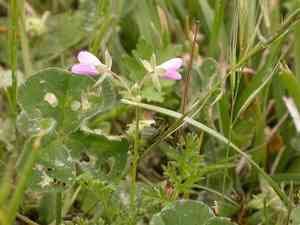
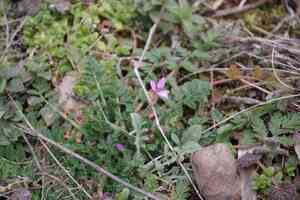
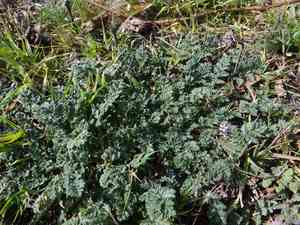
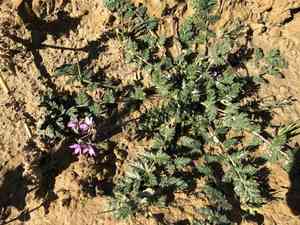
Quickly Identify Common stork's-bill
1
Erodium cicutarium can be identified by its fern-like, lobed leaves, hairy stems, and distinctive pink to purple flowers with five petals. The plant generally grows close to the ground and has long, beak-like seed pods.
Scientific Classification of Common stork's-bill
Phylum
Vascular plants
Class
Dicotyledons
Order
Geraniales
Family
Geranium
Genus
Filarees
Species
Common stork's-bill
Planting and Growing of Common stork's-bill
Care Difficulty
Easy
Watering Schedule
Every 3 days
Sunlight Requirements
Full sun
Sunshine Duration
4-8 hours
Ideal Temperature
60-75℉
Soil Type
Potting Mix, Peat Mix
Soil pH
6-7.5
Fertilizer Type
Balanced
Pruning Season
Spring, Summer
Pruning Area
Branches, Leaves
Pruning Frequency
2 times a year
Repotting Season
Spring
Pot Type
Plastic, Ceramic
 How to Water Common stork's-bill?
When watering Erodium cicutarium, ensure the soil is moistened thoroughly but not waterlogged, delivering about 150 milliliters each time. This mimics its natural habitat, promoting healthy growth.
What are the symptoms of an underwatered Common stork's-bill?
›
What should I do if my Common stork's-bill is not getting enough water?
›
What are the symptoms of an overwatered Common stork's-bill?
›
How to save an overwatered Common stork's-bill?
›
 What Are the Sunlight Requirements for Common stork's-bill?
Erodium cicutarium flourishes with full sun exposure. This ideal range enhances flowering and overall growth by providing ample energy for photosynthesis throughout the day, making it vibrant and resilient.
How much sun does Erodium cicutarium need?
›
What if direct sunlight is not available?
›
How do ideal lighting conditions affect growth?
›
 What Is the Ideal Temperature Range for Common stork's-bill?
Erodium cicutarium thrives best in temperatures ranging from 60°F to 75°F. This range supports optimal metabolic functions and facilitates healthy growth and development. In this environment, the plant can photosynthesize efficiently, focus resources on both foliage expansion and root system strengthening, and maintain a strong immune system against pests and diseases.
 What Soil is Best for Common stork's-bill?
Erodium cicutarium thrives in well-draining soils that prevent waterlogging, which can lead to root rot. A well-drained soil ensures that air can penetrate down to the roots, aiding in healthy plant growth. This plant prefers soils with light nutrient content. Excessive nutrients can lead to aggressive growth, but moderate levels help maintain its natural, delicate balance and vibrant appearance. Erodium cicutarium does best in soils with moderate organic matter. The organic composition enriches the soil, providing essential nutrients slowly and improving soil structure for optimal root development.
 How to Fertilize Common stork's-bill?
For Erodium cicutarium, use a balanced 15-15-15 NPK fertilizer. In liquid form, apply at a concentration of one tablespoon per gallon of water. For granular forms, ensure around two ounces per square foot of soil when using slow-release fertilizers to meet the plant's nutritional needs comprehensively.
 How to Prune Common stork's-bill?
Before you start, inspect the plant for any dead or diseased sections. These should be the first to go. Not only do they detract from its appearance, but they can also harbor pests or diseases that might spread to healthy parts of the plant. After dealing with any problem areas, focus on the overall shape and size of the plant. It’s best to work systematically, trimming excessive growth to maintain the plant’s shape. Prune gradually to avoid shocking the plant and to ensure it retains its natural, lush appearance.
 How to Propagate Common stork's-bill plant?
1
Sow the Erodium cicutarium seeds thinly on the surface of the potting soil. Gently press the seeds into the soil without covering them, as they require light for germination. Maintain a consistent moisture level until germination occurs.
2
Place the seed tray in a warm and bright location, ensuring it receives indirect sunlight. The seeds usually germinate within 7 to 14 days. Keep the soil moist but not waterlogged during this period to prevent damping-off.
3
Once the seedlings have developed true leaves and are strong enough to handle, transplant them into individual pots. Handle the seedlings gently by their leaves to prevent damage to the delicate stems and roots.
 How to Repot Common stork's-bill plant?
1
Repotting is necessary when Erodium cicutarium shows signs of root-bound conditions. Look for roots growing through drainage holes or visible crowded roots at the surface. An overall weakened growth and reduced flowering can also indicate it needs a bigger space to flourish.
2
Select a pot slightly larger than the current one to provide room for growth without overwhelming the plant. It should have adequate drainage holes to avoid water accumulation that could lead to root rot. Terracotta pots are excellent as they aid in moisture regulation.
3
Choose well-draining, sandy loam soil rich in organic matter, which ensures good aeration and moisture retention. This type of soil helps roots establish quickly while minimizing the risk of root rot, promoting healthy plant development.
Learn More About Common stork's-bill Diseases
Anthracnose
Bacterial Leaf Spot
Bacterial Soft Rot
Bacterial Wilt
Chemical Injury
Crown Gall
Cyst Nematode
Damping-off
Downy Mildew
Drought Stress
Fusarium Wilt
Gray Mold
Leaf Spot
Mosaic
Nutrient Deficiency
Nutrient Toxicity
Powdery Mildew
Root Rot
Root-knot Nematode
Rusts
Sooty Mold
Spider Mites
Temperature Stress
Thrips Damage
White Mold



