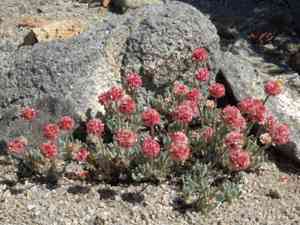
White mountains buckwheat (Eriogonum gracilipes)
Also known as: Slender Buckwheat
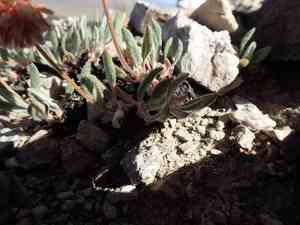
White Mountains buckwheat (Eriogonum ovalifolium var. vineum) is a resilient perennial herb well-adapted to arid, high-elevation terrains. Here are its key features and environmental adaptations:
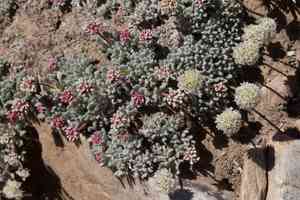
1. **Growth Habit**: It forms low, dense mats, which help minimize water loss and shield the plant from strong winds.
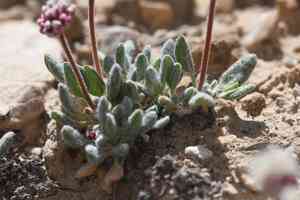
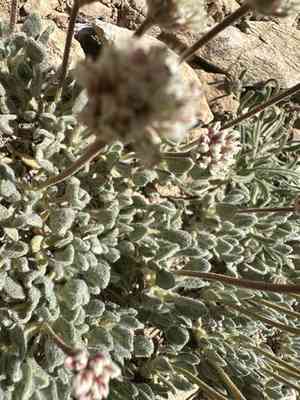
2. **Foliage**: The leaves are small, oval-shaped, and often covered with tiny hairs, aiding in water conservation by reducing evaporation.
3. **Flowers**: This plant produces compact clusters of small flowers that range from white to pink, perched on short stalks. These flowers are effective at attracting pollinators in sparse, rugged environments.
4. **Root System**: It boasts a deep and extensive root network, enabling it to tap into moisture from deeper soil layers, crucial for survival in dry conditions.
5. **Habitat**: White Mountains buckwheat thrives in rocky, well-drained soils commonly found in mountainous regions, which helps prevent root rot and supports its drought-resistant nature.
These adaptations make White Mountains buckwheat well-suited to endure the challenging conditions of arid, high-altitude landscapes.
Attributes of White mountains buckwheat
Images of White mountains buckwheat
 How to Water White mountains buckwheat?
 What Are the Sunlight Requirements for White mountains buckwheat?
 What Is the Ideal Temperature Range for White mountains buckwheat?
 What Soil is Best for White mountains buckwheat?
 How to Fertilize White mountains buckwheat?
 How to Prune White mountains buckwheat?
 How to Propagate White mountains buckwheat plant?
 How to Repot White mountains buckwheat plant?



