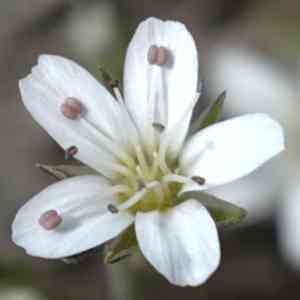
Fendler's sandwort (Eremogone fendleri)
Also known as: Fendler's Sandwort
Fendler's sandwort (Arenaria fendleri) is a hardy perennial herb well-suited to dry environments. It features slender, needle-like leaves arranged in dense clusters, which effectively minimize water loss. During its flowering period, Fendler's sandwort produces small, star-shaped flowers that range in color from pale pink to white, perched on thin, upright stems. This flowering strategy aids in attracting pollinators even in the sparse conditions of arid landscapes.
In This Article
Attributes of Fendler's sandwort
Lifespan
Perennial
Plant Height
10-30 cm
Spread
30-60 cm
Leaf Color
Green
Flower Size
1-2 cm
Flower Color
White
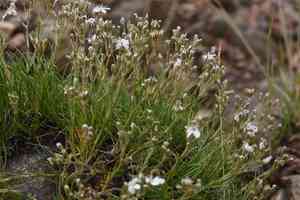
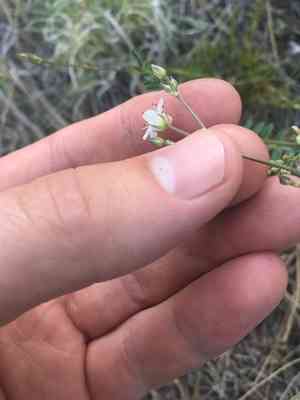
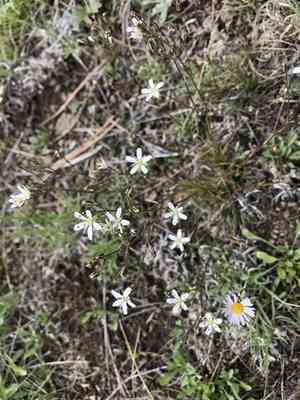
Images of Fendler's sandwort
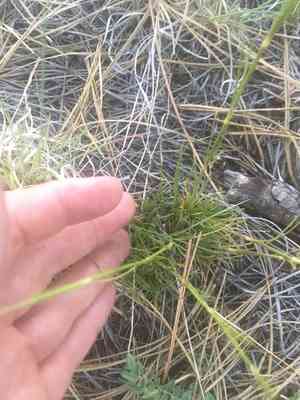
Quickly Identify Fendler's sandwort
1
This plant can be identified by its small, linear leaves and clusters of white flowers that bloom in late spring to summer. It typically grows low to the ground, forming dense mats.
Scientific Classification of Fendler's sandwort
Phylum
Vascular plants
Class
Dicotyledons
Order
Caryophyllales
Family
Pink
Genus
Eremogone
Species
Fendler's sandwort
Planting and Growing of Fendler's sandwort
Care Difficulty
Moderate
Watering Schedule
Every 2 days
Sunlight Requirements
Full sun
Sunshine Duration
4-8 hours
Ideal Temperature
60-70℉
Soil Type
Potting Mix, Peat Mix
Soil pH
6.5-7.5
Fertilizer Type
Balanced
Pruning Season
Spring, Summer
Pruning Area
Branches, Leaves
Pruning Frequency
2 times a year
Repotting Season
Spring
Pot Type
Plastic, Ceramic
 How to Water Fendler's sandwort?
For Eremogone fendleri, the watering amount should be just enough to moisten the soil without making it soggy. Aim for approximately 250 ml in one go, ensuring that the water penetrates deeply to reach the roots, without leaving any water standing in the pot. It's important to remember that this plant thrives on a routine that allows the soil to dry out completely between waterings.
What are the symptoms of an underwatered Fendler's sandwort?
›
What should I do if my Fendler's sandwort is not getting enough water?
›
What are the symptoms of an overwatered Fendler's sandwort?
›
How to save an overwatered Fendler's sandwort?
›
 What Are the Sunlight Requirements for Fendler's sandwort?
Eremogone fendleri thrives in full sun to partial sun exposure. Proper light conditions enhance its photosynthesis efficiency, leading to lush growth and improved blooming cycles that showcase vibrant flower displays.
Optimal Sunlight Exposure
›
Solutions for Ideal Light Conditions
›
Outcomes of Proper Lighting
›
 What Is the Ideal Temperature Range for Fendler's sandwort?
Eremogone fendleri thrives best within a temperature range of 60 to 70°F. This range supports healthy growth, flowering, and optimal nutrient uptake by the plant. Maintaining this range minimizes stress and maximizes longevity.
 What Soil is Best for Fendler's sandwort?
Eremogone fendleri thrives in well-drained soils that prevent water retention, reducing the risk of root rot. Using substrates such as sandy soils helps in maintaining proper drainage, ensuring the plant's roots receive adequate oxygen. This plant is naturally adapted to nutrient-poor conditions. It's a tough species that prefers low-fertility soils, a trait that reduces competition from more nutrient-demanding plants, thus allowing Eremogone fendleri to flourish. The plant prefers soils with moderate moisture that mimic its natural environments. Ensuring consistent moisture without tipping into saturation is vital, as this discourages fungal infections and encourages healthy growth.
 How to Fertilize Fendler's sandwort?
For Eremogone fendleri, fertilizer should be applied moderately. When using a liquid fertilizer, dilute it to half strength to avoid burning the plant roots. Apply approximately 1/4 cup per plant if using a liquid concentrate, ensuring the soil is moist before application.
 How to Prune Fendler's sandwort?
Pruning Eremogone fendleri regularly helps promote healthy and robust growth. Target spent flowers and overgrown stems, cutting them back to encourage fresh, compact growth without making the plant too sparse. If your Eremogone fendleri appears unruly, prune strategically to maintain its natural, mounding shape. Trim back any protruding branches gently, maintaining the plant’s symmetry and balance for its best appearance.
More About Pruning Techniques→
 How to Propagate Fendler's sandwort plant?
1
Harvest seeds from mature Eremogone fendleri plants during the late summer or autumn when seed pods have dried. Seeds should be collected and stored in a dry, cool place until planting.
2
Select healthy stems for cuttings, preferably non-flowering shoots. Cut a section approximately 4-6 inches long, ensuring there are a few leaf nodes on the cutting.
3
Fill the seed trays with a well-draining seed-starting mix. Sow seeds on the surface and lightly cover them with soil. Water gently and keep them in a warm, sunny location.
 How to Repot Fendler's sandwort plant?
1
Repot Eremogone fendleri when you notice the roots becoming crowded or poking out from the drainage holes. Another signal is stunted growth or poor soil drainage. These are indicators that your plant needs a larger space or fresh soil nutrients to thrive.
2
Select a pot that's about 1-2 inches larger in diameter than the current one. It should have ample drainage holes to prevent waterlogging. This helps the delicate roots to grow healthier and prevents root rot, ensuring a well-aerated root environment.
3
Opt for a well-draining sandy mix. This type of soil mimics Eremogone fendleri's natural habitat, providing adequate aeration while retaining some moisture. The right soil helps in preventing water retention issues, ensuring healthy root development.
Learn More About Fendler's sandwort Diseases
Anthracnose
Bacterial Leaf Spot
Bacterial Wilt
Crown Gall
Cyst Nematode
Damping-off
Downy Mildew
Drought Stress
Fusarium Wilt
Gray Mold
Leaf Spot
Mosaic
Nutrient Deficiency
Nutrient Toxicity
Powdery Mildew
Root Rot
Root-knot Nematode
Rusts
Sooty Mold
Spider Mites
Temperature Stress
Thrips Damage
White Mold



