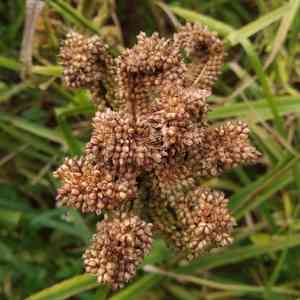
African finger millet (Eleusine coracana)
Also known as: Rapoko grass, African yard-grass
This annual herbaceous plant, which is a perennial grass, typically grows to a height of 30 to 90 cm. The plant features a main stem ending in a structure with five to seven individual ears that often curve inward at the tips in a claw-like manner. Each ear, measuring 1 to 10 cm in length, holds 60 to 80 spikelets arranged in two rows, with each spikelet containing four to six flowers.
In This Article
Attributes of African finger millet
Lifespan
Annual
Plant Type
Grass
Plant Height
60-120 cm
Spread
N/A, as it is a herbaceous plant
Leaf Color
Green
Flower Size
N/A, as flowers are small and inconspicuous within the panicles
Flower Color
Yellow Green Brown
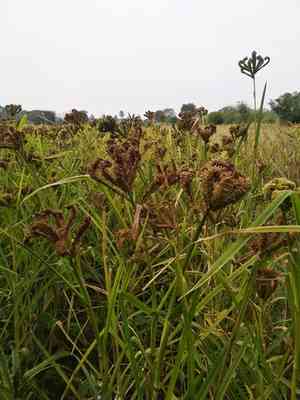
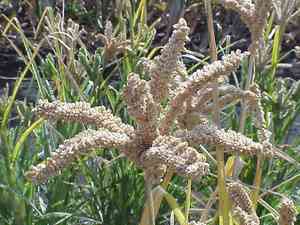
Images of African finger millet
Quickly Identify African finger millet
1
Finger millet can be identified by its characteristic \'finger-like\' panicles that resemble a hand with outstretched fingers, and its small, round seeds. The plant typically has a robust stem and broad leaves.
Scientific Classification of African finger millet
Phylum
Vascular plants
Class
Monocotyledons
Order
Poales
Family
Grass
Genus
Goosegrasses
Species
African finger millet
Planting and Growing of African finger millet
Care Difficulty
Easy
Watering Schedule
Every 3 days
Sunlight Requirements
Full sun
Sunshine Duration
6-10 hours
Ideal Temperature
75-86℉
Soil Type
Potting Mix, Peat Mix
Soil pH
5-8.2
Fertilizer Type
Balanced
Pruning Season
Spring, Summer
Pruning Area
Branches, Leaves
Pruning Frequency
2 times a year
Repotting Season
Spring
Pot Type
Plastic, Terracotta
 How to Water African finger millet?
For Eleusine coracana, aim to provide about 500ml of water per watering session. The soil should be moist but not waterlogged, allowing it to dry slightly between waterings. This ensures that the roots can breathe and absorb nutrients efficiently.
What are the symptoms of an underwatered African finger millet?
›
What should I do if my African finger millet is not getting enough water?
›
What are the symptoms of an overwatered African finger millet?
›
How to save an overwatered African finger millet?
›
 What Are the Sunlight Requirements for African finger millet?
Eleusine coracana ideally thrives with full sun to partial sun, receiving 6 to 8 hours of daylight. Optimal light strengthens its physiological development and enhances its grain yield and nutritional value.
More About Sunlight Requirements Techniques→
How much light does Eleusine coracana require?
›
What solutions help achieve ideal light conditions?
›
What benefits does ideal lighting offer?
›
 What Is the Ideal Temperature Range for African finger millet?
The ideal temperature range for Eleusine coracana is between 75°F to 86°F. This range supports optimal growth and development, allowing the plant to effectively regulate its physiological processes. Within this range, Eleusine coracana can efficiently photosynthesize, maintain cellular functions, and ensure robust development. Maintaining this temperature consistency is crucial, especially during the critical growth phases, to achieve high yields and healthy plants.
 What Soil is Best for African finger millet?
Eleusine coracana thrives in well-drained soil. This is crucial to prevent waterlogging, which can damage the roots and otherwise hinder growth. Well-drained soil ensures that the roots have adequate oxygen for healthy development. This plant prefers soils with moderate fertility levels, which provide the necessary nutrients without excessive richness that may lead to excessive foliage at the expense of grain production. While requiring well-drained soil, Eleusine coracana also benefits from soils that retain some moisture, helping to sustain the plant during dry spells without frequent watering.
 How to Fertilize African finger millet?
The application rate for Eleusine coracana should be moderate. Typically, liquid fertilizers can be used at a concentration of 1 tablespoon per gallon of water. For solid fertilizers, apply approximately 20 grams per square meter during the growing season to ensure steady growth and productivity.
 How to Prune African finger millet?
To prune Eleusine coracana effectively, start by sterilizing your pruning tools to prevent the spread of diseases. Begin by removing any dead or damaged leaves and stems. Cut back the plant to a manageable shape, promoting a well-balanced structure. Focus on thinning areas with dense growth to improve air circulation. It's advisable to prune back to a node or a stem junction to encourage new growth. Always use clean, sharp tools for neat cuts that facilitate quick healing. For those looking to maximize yield, approach pruning with precision. Identify and remove any secondary branches that aren't contributing to major growth or grain production. The focus should be on encouraging the main stems to flourish and produce a robust grain count. Additionally, remove any sprouting suckers and focus on nurturing a fewer number of stems that show healthy and vigorous growth. This strategic reduction will help concentrate nutrients and enhance the overall yield of your finger millet.
More About Pruning Techniques→
 How to Propagate African finger millet plant?
1
Fill each seed tray with a high-quality potting mix, ensuring that the soil is evenly spread and lightly compacted. This provides a stable base for seed placement and facilitates consistent moisture distribution.
2
Evenly distribute Eleusine coracana seeds on the surface of the potting mix. Cover the seeds lightly with a thin layer of soil to protect them while allowing light to penetrate, which is necessary for germination.
3
Gently water the seed trays using a fine mist or spray bottle to avoid dislodging the seeds. Keep the soil consistently moist but not waterlogged, ensuring that drainage is adequate to prevent root rot.
 How to Repot African finger millet plant?
1
Eleusine coracana needs repotting when you notice the roots begin to circle the pot's base or start protruding from drainage holes. Additionally, if the growth appears stunted or water doesn't drain effectively, it's a sign to repot. Ideally, undertake this task during the growing seasons of spring or early summer to help the plant recover swiftly.
2
Choose a pot that is one size larger than the current one and ensure it has good drainage holes. A slightly bigger pot provides adequate space for root expansion without risking excessive moisture retention which could lead to root rot. Opting for a terracotta pot can also aid in better moisture regulation.
3
Opt for a loamy, well-draining soil mix which helps prevent waterlogging. Look for a potting blend that retains moisture yet allows excess water to escape seamlessly. This soil type promotes healthy root growth by maintaining balanced moisture and nutrient distribution, crucial for Eleusine coracana.



