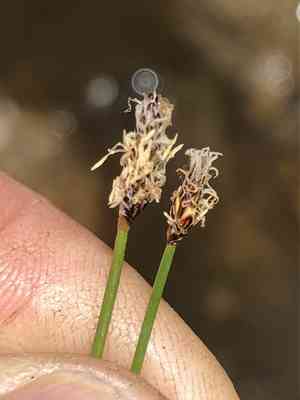
Sand spikerush (Eleocharis montevidensis)
Also known as: Montevidean spikerush
A dense, mat-forming plant native to the southern United States and South America, water hyacinth is frequently used as an ornamental or aquatic plant in pond gardens. This plant thrives in wet soil and water, making it ideal for such settings.
In This Article
Attributes of Sand spikerush
Lifespan
Perennial
Plant Type
Grass
Plant Height
13 cm to 20 cm
Spread
60 cm
Leaf Color
Green
Flower Size
2.5 cm
Flower Color
Brownish
Images of Sand spikerush
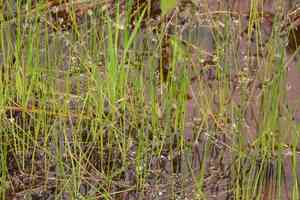
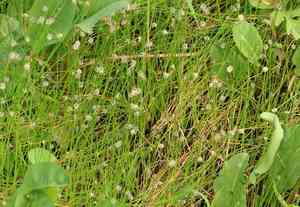
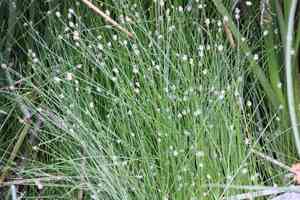
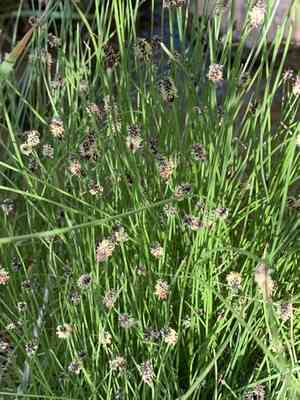
Quickly Identify Sand spikerush
1
Slender, upright growth up to 2 feet (60 cm) in height.
2
Terminal brown flowers blooming in early summer.
3
Distinctive red or purple base on grass-like leaves.
4
Green round stem with reddish base, 2-4 feet (60-120 cm) tall.
5
Small, hard achenes with smooth surface and rich brown color.
Scientific Classification of Sand spikerush
Phylum
Vascular plants
Class
Monocotyledons
Order
Poales
Family
Sedge
Genus
Eleocharis
Species
Sand spikerush
Planting and Growing of Sand spikerush
Care Difficulty
Easy
Watering Schedule
Every 4 days
Sunlight Requirements
Partial sun
Sunshine Duration
4-8 hours
Ideal Temperature
68-77℉
Soil Type
Potting Mix, Peat Mix
Soil pH
6.5-7.5
Fertilizer Type
Balanced
Pruning Season
Spring, Summer
Pruning Area
Branches, Leaves
Pruning Frequency
2 times a year
Repotting Season
Spring
Pot Type
Plastic, Ceramic
 How to Water Sand spikerush?
Eleocharis montevidensis should be watered generously to ensure the soil remains consistently moist but not waterlogged. Aim to provide around 500 milliliters of water per session, allowing it to penetrate deeply into the substrate to reach the roots.
What are the symptoms of an underwatered Sand spikerush?
›
What should I do if my Sand spikerush is not getting enough water?
›
What are the symptoms of an overwatered Sand spikerush?
›
How to save an overwatered Sand spikerush?
›
 What Are the Sunlight Requirements for Sand spikerush?
Eleocharis montevidensis ideally enjoys partial sunlight conditions which help maintain its rich green color and vigorous growth, ensuring it achieves its maximum ornamental potential in your garden or indoors.
More About Sunlight Requirements Techniques→
Optimal Sunlight Duration
›
Solutions for Ideal Lighting
›
Benefits of Ideal Lighting
›
 What Is the Ideal Temperature Range for Sand spikerush?
Eleocharis montevidensis thrives best in warm temperatures ranging from 68°F to 77°F. These conditions mimic its natural habitat, ensuring robust growth and reproduction. Maintaining this range encourages healthy photosynthetic activity and nutrient absorption, resulting in vigorous plant development.
 What Soil is Best for Sand spikerush?
Eleocharis montevidensis thrives best in moist soil where water is retained but not stagnant. The constant moisture provides a conducive environment for its root system to expand and access nutrients efficiently. The plant prefers a nutrient-rich medium which facilitates the vigorous growth needed for its dense, erect foliage. Rich organic content in the soil supports the plant's metabolic processes and enhances its natural resilience. While it loves moisture, Eleocharis montevidensis requires a well-drained substrate to prevent root rot. This ensures the plant maintains healthy, functional roots and avoids water-borne diseases.
 How to Fertilize Sand spikerush?
For Eleocharis montevidensis, use a quarter to half-strength liquid fertilizer solution. Ensure that the amounts are diluted properly, as this plant is sensitive to over-fertilization. As a rough guideline, one tablespoon per gallon of water should suffice during active growing periods.
 How to Prune Sand spikerush?
Begin by preparing your tools; a pair of sharp scissors or pruning shears will be ideal. Inspect your Eleocharis montevidensis to identify any dead, damaged, or discolored stems. Carefully cut these stems back to the base to encourage new growth. If the plant is too dense, thin it out by selectively cutting back healthy stems to improve air circulation. Always make clean cuts to prevent disease and decay. Water the plant well after pruning to help it recover.
More About Pruning Techniques→
 How to Propagate Sand spikerush plant?
1
Collect seeds from mature Eleocharis montevidensis plants during late summer. Clean the seeds and dry them for several days. Ensure they are stored in a cool, dry place until planting in spring.
2
Identify mature clumps of Eleocharis montevidensis in either spring or early summer. Use a spade or sharp knife to separate the plant into smaller sections, ensuring each section has roots and shoots for successful replanting.
3
For seed propagation, sow seeds in a sterile potting mix and cover lightly. For divided sections, plant them at the same depth as the original plant. Water generously and maintain moist conditions.
 How to Repot Sand spikerush plant?
1
Repot Eleocharis montevidensis when the roots start to outgrow the current pot, often visible through the drainage holes. Yellowing leaves and slowed growth are also tell-tale signs it's time for a new pot. Spring and summer are ideal, as growth phase favors recovery.
2
Opt for a pot one size larger than the current one, with ample drainage holes to prevent root rot. Material like terracotta helps to wick moisture from the soil, beneficial for controlling fungi and providing ample ventilation for root health.
3
Choose a moist, fertile loamy mix enriched with organic matter. This soil retains necessary moisture yet drains excess water efficiently, promoting a rich environment. It prevents compaction and supports the spread of the roots, encouraging healthier growth.
Learn More About Sand spikerush Diseases
Anthracnose
Bacterial Leaf Spot
Bacterial Soft Rot
Bacterial Wilt
Cyst Nematode
Damping-off
Drought Stress
Fusarium Wilt
Gray Mold
Leaf Spot
Mosaic
Nutrient Deficiency
Nutrient Toxicity
Powdery Mildew
Root Rot
Root-knot Nematode
Rusts
Sooty Mold
Spider Mites
Temperature Stress
Thrips Damage
White Mold



