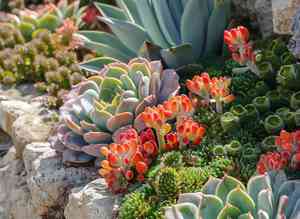
Mexican snow ball (Echeveria elegans)
Also known as: Mexican gem
Echeveria, also known as the Mexican Snow Ball, is an excellent choice for a windowsill plant. This small, rapidly growing succulent flourishes in sunny spots and needs very little water. Its leaves can display a range of colors based on the surrounding environment, making it a visually appealing addition to your home.
In This Article
Attributes of Mexican snow ball
Lifespan
Perennial
Plant Type
Succulent, Herb
Plant Height
5 cm to 10 cm
Spread
50 cm
Leaf Color
Green Silver Gray Blue
Flower Size
1-2 cm
Flower Color
Pink Yellow
Images of Mexican snow ball
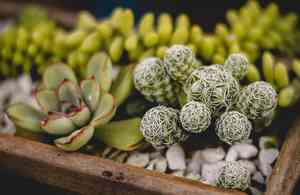
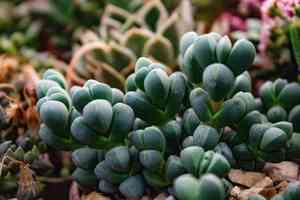
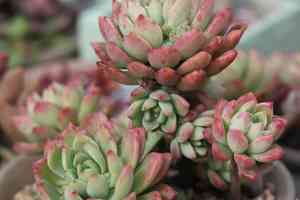
Quickly Identify Mexican snow ball
1
Rosette of silver-gray leaves forms compact groundcover, 8 inches (20 cm) tall, 12 inches (30.5 cm) wide.
2
Pink tubular flowers with yellow tips bloom multiple times from late winter to summer.
3
Dry, dehiscent capsules with minuscule seeds blend in rosette, less than 0.5 inches (1.27 cm) long.
4
Smooth, waxy pale green-blue leaves lack prominent veins, ideal for identification, 2.5 inches (6.4 cm) long.
5
Short, thick stems with grayish-green color and fleshy texture store water for drought resistance, 3 inches (7.5 cm) long.
Scientific Classification of Mexican snow ball
Phylum
Vascular plants
Class
Dicotyledons
Order
Saxifrages, stonecrops and allies
Family
Stonecrop
Genus
Echeveria
Species
Mexican snow ball
Planting and Growing of Mexican snow ball
Care Difficulty
Easy
Watering Schedule
Every 2 days
Sunlight Requirements
Full sun
Sunshine Duration
4-8 hours
Ideal Temperature
65-75℉
Soil Type
Potting Mix, Peat Mix
Soil pH
6.5-7.5
Fertilizer Type
Balanced
Pruning Season
Spring, Summer
Pruning Area
Branches, Leaves
Pruning Frequency
2 times a year
Repotting Season
Spring
Pot Type
Plastic, Ceramic
 How to Water Mexican snow ball?
Echeveria elegans prefers a moderate amount of water, about 100 milliliters per session. It's crucial to ensure the soil is completely dry between watering sessions. Pour water until it slightly drains out of the pot's bottom, ensuring the roots have absorbed enough without standing water remaining.
More About Watering Techniques→
What are the symptoms of an underwatered Mexican snow ball?
›
What should I do if my Mexican snow ball is not getting enough water?
›
What are the symptoms of an overwatered Mexican snow ball?
›
How to save an overwatered Mexican snow ball?
›
 What Are the Sunlight Requirements for Mexican snow ball?
The ideal light range for Echeveria elegans includes partial sun to full sun conditions. This light facilitates balanced growth, enhancing its coloration and preventing the splitting or elongation of leaves.
More About Sunlight Requirements Techniques→
What is the preferred lighting for Echeveria elegans?
›
How can I adjust lighting to suit Echeveria elegans?
›
What benefits arise from perfect lighting for Echeveria elegans?
›
 What Is the Ideal Temperature Range for Mexican snow ball?
For optimal growth of Echeveria elegans, the ideal temperature range is between 65°F (18°C) and 75°F (24°C). This range provides an environment that closely resembles their native habitat in Mexico, where temperatures are warm but not excessively hot. Maintaining this range allows for vigorous growth and healthy leaf coloration.
 What Soil is Best for Mexican snow ball?
Echeveria elegans thrives in well-draining soil to prevent root rot. The quick drainage mimics its natural habitat, preventing stagnant water around its roots. This succulent prefers nutrient-poor conditions, which helps avoid excessive leaf growth and retains its compact form, characteristic of its rosette shape. A loose, aerated soil structure is crucial, ensuring sufficient air circulation around the roots. This prevents root suffocation and promotes healthy growth.
More About Soil→
 How to Fertilize Mexican snow ball?
For Echeveria elegans, the amount of fertilizer applied should be moderate. Use a balanced liquid fertilizer diluted to half strength to avoid overwhelming the plant. Too much fertilizer can harm the roots, so aim for about 1/4 teaspoon per gallon of water.
 How to Prune Mexican snow ball?
Start by gently pulling off the dead leaves at the base of the plant. These can be carefully removed by hand to avoid damaging healthy leaves. If your Echeveria elegans has stems that are becoming excessively long or leggy, use a sharp knife or scissors to cut them back to the desired length, just above a healthy leaf node.
 How to Propagate Mexican snow ball plant?
1
Choose a healthy, mature leaf or offset from the Echeveria elegans plant. Ensure it's firm and free from any signs of disease or pests, as this will significantly impact the success of propagation.
2
After cutting, allow the cut end of the leaf or offset to dry and callus over a period of a few days. This step is crucial to prevent rot when the cutting is planted.
3
Once the cut has callused, place the leaf or offset on top of a well-draining potting mix and water sparingly, ensuring the mix is damp but not waterlogged.
 How to Repot Mexican snow ball plant?
1
Echeveria elegans provides clear signals when it's time for repotting. Watch out for roots peeking out from the pot's drainage holes or the soil drying out faster than usual. These signs indicate the plant needs more space or fresh soil to thrive.
2
Choose a pot that is slightly larger than the current one, with ample drainage holes. A terracotta pot is often ideal due to its porous nature, which helps prevent root rot by allowing excess moisture to escape more readily.
3
The key to successful repotting is using a well-draining succulent mix. This type of soil minimizes the risk of overwatering, ensuring the Echeveria elegans roots stay healthy by retaining enough moisture without becoming waterlogged.



