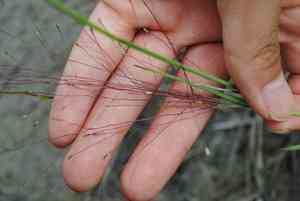
Fall witchgrass (Digitaria cognata)
Also known as: Fall Witchgrass, Narrow Crabgrass
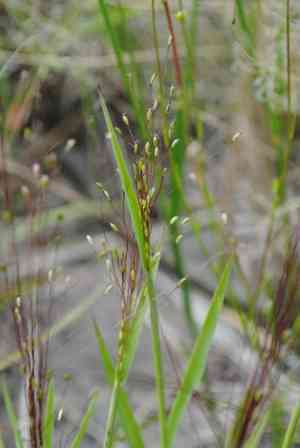
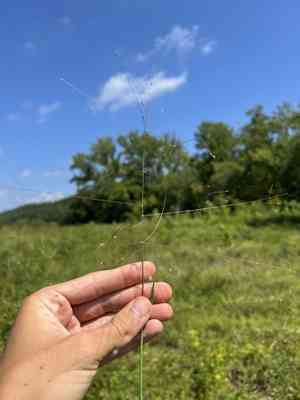
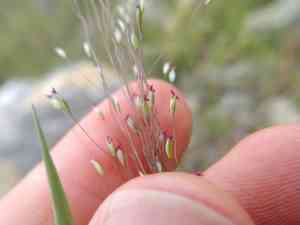
This grass is a perennial species that lacks rhizomes and has shallow roots. Its erect stems can reach up to 56 centimeters in height, with the bases being tough and covered in hair. The leaves are narrow, measuring up to 12.6 centimeters in length, and feature a unique texture with one side wavy and the other smooth. Its inflorescence is a purple-tinged panicle containing single-flowered spikelets.
In This Article
Attributes of Fall witchgrass
Lifespan
Perennial
Plant Type
Grass
Plant Height
30 cm to 61 cm
Spread
Not applicable, as it is a grass species.
Leaf Color
Green, often with a reddish tinge in late season
Flower Size
Small, generally less than 1 cm
Flower Color
Mostly green or slight purple tint depending on maturity
Images of Fall witchgrass
Quickly Identify Fall witchgrass
1
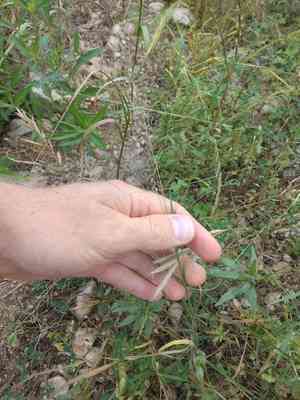
Digitaria cognata can be identified by its fine, thread-like leaves and distinctive panicle branches that have a delicate, airy appearance. The plant often has a reddish hue towards the end of the growing season.
Scientific Classification of Fall witchgrass
Phylum
Vascular plants
Class
Monocotyledons
Order
Poales
Family
Grass
Genus
Crabgrasses
Species
Fall witchgrass
Planting and Growing of Fall witchgrass
Care Difficulty
Easy
Watering Schedule
Every 2 days
Sunlight Requirements
Full sun
Sunshine Duration
6-10 hours
Ideal Temperature
60-75℉
Soil Type
Potting Mix, Peat Mix
Soil pH
6.5-7.5
Fertilizer Type
Balanced
Pruning Season
Spring, Summer
Pruning Area
Branches, Leaves
Pruning Frequency
2 times a year
Repotting Season
Spring
Pot Type
Plastic, Ceramic
 How to Water Fall witchgrass?
The watering amount for Digitaria cognata should be around 400 ml per session. This grass prefers well-draining soil, so aim to water until the soil is moist but not soggy. Over-watering can lead to root problems, so maintaining the right level of moisture is essential.
What are the symptoms of an underwatered Fall witchgrass?
›
What should I do if my Fall witchgrass is not getting enough water?
›
What are the symptoms of an overwatered Fall witchgrass?
›
How to save an overwatered Fall witchgrass?
›
 What Are the Sunlight Requirements for Fall witchgrass?
Digitaria cognata flourishes under conditions offering full to partial sun, providing it with 6 to 8 hours of light. This promotes vigorous growth, enhances photosynthesis, and results in a more robust and aesthetically pleasing appearance.
Optimal Sun Exposure
›
Shading Strategies
›
Lighting Adjustment
›
 What Is the Ideal Temperature Range for Fall witchgrass?
The ideal temperature range for growing Digitaria cognata is between 60°F and 75°F. Within this range, the plant can efficiently carry out photosynthesis, water uptake, and other metabolic processes, fostering healthy growth and vigor. Temperatures outside this range may stress the plant, leading to suboptimal growth and potentially reduced resilience against diseases and pests.
 What Soil is Best for Fall witchgrass?
The soil should be well-drained to prevent waterlogging which can lead to root rot. Digitaria cognata thrives in soils that do not retain water excessively, allowing for healthy root development. While not overly demanding, moderate fertility in soil enriches nutrient availability. It supports robust growth and coloration in Digitaria cognata, enhancing its ornamental appeal. Proper aeration ensures oxygen reaches the roots, promoting efficient nutrient uptake and overall vigor. Well-aerated soil supports the grass’s spreading habit and resilience.
 How to Fertilize Fall witchgrass?
The recommended amount of fertilizer for Digitaria cognata is modest due to its native grassland origins. Use half the standard quantity recommended for general-purpose turf grass on the packaging, typically around 1 pound per 1,000 square feet of area. Over-fertilizing can lead to excessive growth and stress on the plant, so err on the side of caution.
 How to Prune Fall witchgrass?
Start by identifying the overgrown or dead parts of the grass. Use sharp and clean shears to trim these sections down to a healthy tuft. Aim to remove around one-third of the height to stimulate growth without stressing the plant. Always cut at an angle to promote water runoff and prevent disease. After basic pruning, shape the grass by trimming it into natural, flowing contours. This not only enhances its aesthetic appeal but also ensures better airflow through the foliage, reducing the potential for fungal infections. Take care not to scalpthe grass, as it might cause growth hindrances.
More About Pruning Techniques→
 How to Propagate Fall witchgrass plant?
1
Collect mature seeds from the Digitaria cognata plant towards the end of the growing season. Clean and dry the seeds thoroughly. Store them in a cool, dry place until you're ready to plant.
2
Fill seedling trays with a well-draining seed starting mix. Sow the seeds on the surface and cover them slightly with soil. Water gently to ensure the seeds have good contact with the soil.
3
Dig up a mature plant using a garden fork, carefully remove excess soil from the roots, and divide the clump into smaller sections. Ensure each section has a healthy root system before replanting.
 How to Repot Fall witchgrass plant?
1
Repot Digitaria cognata when you notice it becoming root-bound, with roots emerging from the drainage holes. Another sign is reduced growth rate, indicating the plant needs more space to expand. Ideally, repot in spring or early summer when the plant is in its active growing phase, allowing it to recover quickly from the process.
2
Choose a pot that is slightly larger than the current one, with about 2 inches more in diameter. Ensure it has good drainage holes to prevent waterlogging. A terracotta pot is often recommended as it allows excess moisture to evaporate, which is beneficial for preventing root rot.
3
Opt for a well-draining sandy loam soil mix. This type of soil is nutrient-rich and supports good drainage while maintaining enough moisture for root absorption. It mimics the plant's natural habitat and helps in avoiding overwatering issues that can harm the plant.



