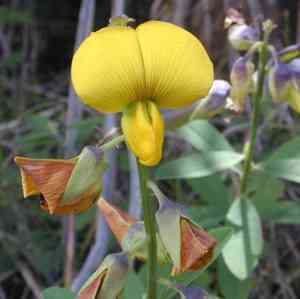
Large-bract tick-trefoil (Desmodium cuspidatum)
Also known as: Beggar’s lice, Tick-trefoil
Desmodium cuspidatum, known as large-bracted tick-trefoil, belongs to the legume family, Fabaceae, and is indigenous to North America.
In This Article
Attributes of Large-bract tick-trefoil
Lifespan
Perennial
Plant Type
Herb
Plant Height
30 cm to 91 cm
Spread
Approximately 1 meter
Leaf Color
Green
Flower Size
Less than 1 cm
Flower Color
Purple
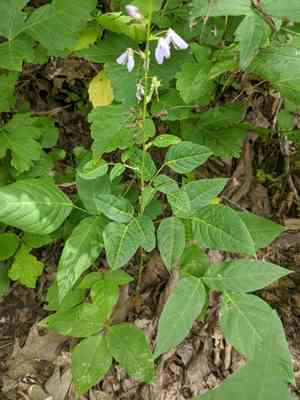
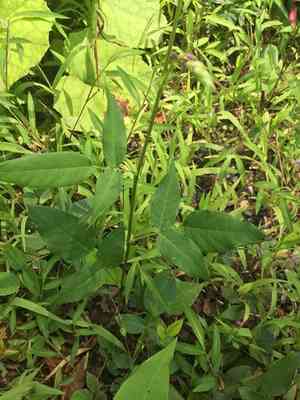
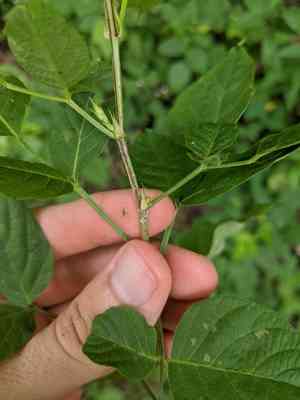
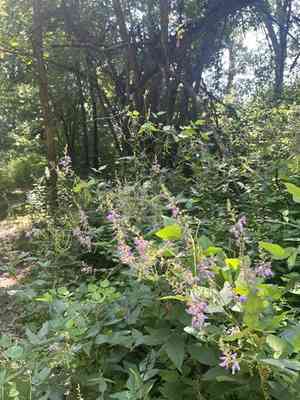
Images of Large-bract tick-trefoil
Quickly Identify Large-bract tick-trefoil
1
Desmodium cuspidatum can be identified by its trifoliate leaves, small pink to purple flowers, and the distinctive seed pods that stick to fur and clothing. The pods are segmented and break into single-seeded units.
Scientific Classification of Large-bract tick-trefoil
Phylum
Vascular plants
Class
Dicotyledons
Order
Fabales
Family
Legume
Genus
Tick clover
Species
Large-bract tick-trefoil
Planting and Growing of Large-bract tick-trefoil
Care Difficulty
Moderate
Watering Schedule
Every 6 days
Sunlight Requirements
Partial sun
Sunshine Duration
4-8 hours
Ideal Temperature
60-75℉
Soil Type
Potting Mix, Peat Mix
Soil pH
6.5-7.5
Fertilizer Type
Balanced
Pruning Season
Spring, Summer
Pruning Area
Branches, Leaves
Pruning Frequency
2 times a year
Repotting Season
Spring
Pot Type
Plastic, Terracotta
 How to Water Large-bract tick-trefoil?
When watering Desmodium cuspidatum, aim to soak the soil thoroughly until water drains out from the base. The plant appreciates about 500 ml per session, ensuring that the entire root system receives moisture without causing waterlogging or stagnant conditions.
What are the symptoms of an underwatered Large-bract tick-trefoil?
›
What should I do if my Large-bract tick-trefoil is not getting enough water?
›
What are the symptoms of an overwatered Large-bract tick-trefoil?
›
How to save an overwatered Large-bract tick-trefoil?
›
 What Are the Sunlight Requirements for Large-bract tick-trefoil?
Partial sun to full shade conditions are optimal for Desmodium cuspidatum. Ideal lighting supports photosynthesis efficiently, leading to lush foliage, stronger stems, and better overall plant health, minimizing susceptibility to diseases and pests.
What are the ideal light conditions for Desmodium cuspidatum?
›
How can you ensure Desmodium cuspidatum gets the right light?
›
What benefits does Desmodium cuspidatum gain from ideal lighting?
›
 What Is the Ideal Temperature Range for Large-bract tick-trefoil?
Desmodium cuspidatum thrives best in temperatures ranging from 60 to 75 degrees Fahrenheit, as this range provides an ideal environment for photosynthesis and metabolic processes. At these temperatures, the plant is able to maintain its cellular function, nutrient uptake, and overall growth rate efficiently.
 What Soil is Best for Large-bract tick-trefoil?
Desmodium cuspidatum thrives best in well-drained soil that prevents waterlogging, which can lead to root diseases and poor growth. Ensuring drainage is pivotal for maintaining this plant's health. This plant prefers soil with moderate fertility, providing enough nutrients without being excessively rich, which could lead to overly lush foliage at the expense of flowering. While drainage is important, the soil should also retain enough moisture to support sustained growth during dry spells, balancing the dual needs for aeration and hydration.
 How to Fertilize Large-bract tick-trefoil?
Desmodium cuspidatum, commonly known as pointed tick-trefoil, typically requires a modest application of fertilizer. For liquid fertilizers, dilute it to half the recommended strength. Apply around 100-150 ml per plant, depending on plant size. For slow-release fertilizers, apply approximately 20-30 grams per plant annually, ensuring even distribution.
 How to Prune Large-bract tick-trefoil?
Start by identifying and removing any dead or diseased stems. This not only improves the appearance of the plant but also prevents the spread of disease to healthier parts of the plant. Trim back the outer growth to create a more desirable shape. This often involves cutting at a node or just above a leaf to encourage denser foliage and a compact shape. Remove any inward-growing branches to allow more light and air into the center of the plant. This helps to prevent fungal infections and improve overall plant health.
More About Pruning Techniques→
 How to Propagate Large-bract tick-trefoil plant?
1
Start by soaking the seeds overnight in warm water to soften the hard seed coat, enhancing germination rates. After soaking, place the seeds in a damp paper towel to allow them to sprout before planting.
2
Once sprouted, sow the seeds in a seed tray filled with a suitable potting mix. Cover them lightly with soil, ensuring they are not planted too deep. Maintain moisture without over-watering.
3
Select healthy and disease-free stems from the parent plant. Use pruning shears to cut a 4-6 inch section below a leaf node, removing any leaves on the lower half to reduce moisture loss.
 How to Repot Large-bract tick-trefoil plant?
1
Desmodium cuspidatum should be repotted when you notice its roots start to peek through the drainage holes or when the plant appears stunted despite regular watering and feeding. Early spring or autumn is ideal for repotting, as it allows the plant to recover quickly from any root disturbance.
2
Select a pot that is one size larger than the current one, ideally with ample drainage holes. A slightly larger pot provides room for growth without overwhelming the plant with excess soil that retains too much moisture, which is crucial in preventing root rot.
3
Use a well-draining potting mix enriched with organic matter. The mix ensures that the roots have access to both moisture and air, minimizing the chance of waterlogging. This setup supports healthy root development and overall plant vigor.
Learn More About Large-bract tick-trefoil Diseases
Anthracnose
Bacterial Leaf Spot
Bacterial Wilt
Damping-off
Downy Mildew
Drought Stress
Fusarium Wilt
Gray Mold
Leaf Curl
Leaf Spot
Mosaic
Nutrient Deficiency
Nutrient Toxicity
Powdery Mildew
Root Rot
Root-knot Nematode
Rusts
Sooty Mold
Spider Mites
Temperature Stress
Thrips Damage
White Mold
Chemical Injury



