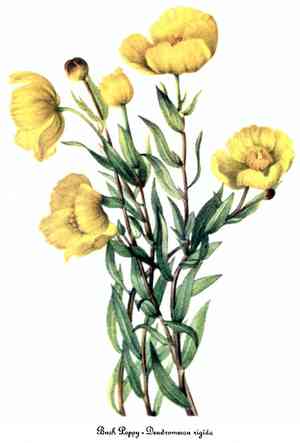
Bush poppy (Dendromecon rigida)
Also known as: California bush poppy
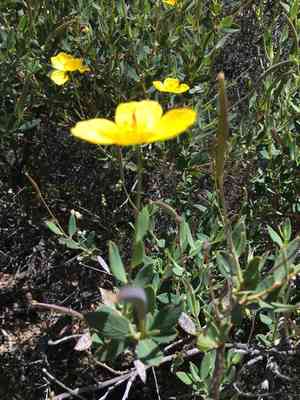
A great match for your description is the Bush Poppy (Dendromecon rigida). This beautiful evergreen shrub features soft green leaves and vibrant yellow flowers. It thrives in well-draining soil and requires plenty of sunlight. Naturally found in rocky terrains, it particularly flourishes in soils that have experienced recent fires.
In This Article
Attributes of Bush poppy
Lifespan
Perennial
Plant Type
Tree, Shrub
Plant Height
3 m
Spread
3 m
Leaf Color
Green Blue
Flower Size
2 cm to 7 cm
Flower Color
Yellow
Images of Bush poppy
Quickly Identify Bush poppy
1
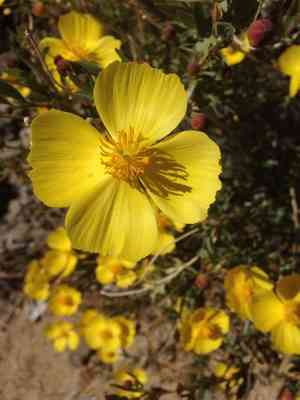
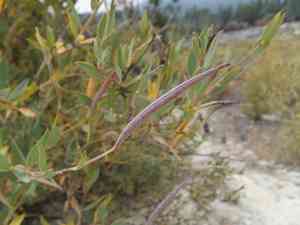
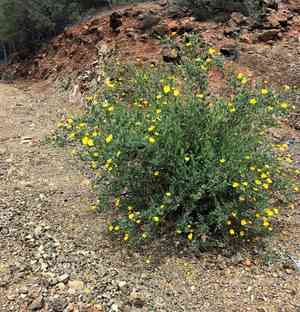
This plant can be identified by its bright yellow, poppy-like flowers, narrow and rigid leaves, and bushy or tree-like appearance.
Scientific Classification of Bush poppy
Phylum
Vascular plants
Class
Dicotyledons
Order
Ranunculales
Family
Poppy
Genus
Dendromecon
Species
Bush poppy
Planting and Growing of Bush poppy
Care Difficulty
Easy
Watering Schedule
Every 2 days
Sunlight Requirements
Full sun
Sunshine Duration
6-10 hours
Ideal Temperature
60-75℉
Soil Type
Potting Mix, Peat Mix
Soil pH
6.5-7.5
Fertilizer Type
Balanced
Pruning Season
Spring, Summer
Pruning Area
Branches, Leaves
Pruning Frequency
2 times a year
Repotting Season
Spring
Pot Type
Ceramic, Plastic
 How to Water Bush poppy?
Dendromecon rigida requires moderate watering. Make sure the soil is thoroughly soaked but not waterlogged; this typically means about 500 ml per watering session, ensuring the soil surface is moist without standing water.
What are the symptoms of an underwatered Bush poppy?
›
What should I do if my Bush poppy is not getting enough water?
›
What are the symptoms of an overwatered Bush poppy?
›
How to save an overwatered Bush poppy?
›
 What Are the Sunlight Requirements for Bush poppy?
Full sun exposure for at least 6 to 8 hours per day is recommended. Ideal lighting encourages vibrant, prolific flowering and ensures strong, healthy foliage.
More About Sunlight Requirements Techniques→
What is the ideal light for Dendromecon rigida?
›
How can I achieve this ideal light condition?
›
What benefits does the ideal light bring?
›
 What Is the Ideal Temperature Range for Bush poppy?
Dendromecon rigida thrives best in environments where the temperature is maintained between 60°F and 75°F. This range provides the most favorable conditions for photosynthesis and other metabolic processes crucial for the plant's growth. Consistent temperatures within this range ensure optimal transpiration rates and energy balance, promoting healthy development and vibrant foliage.
 What Soil is Best for Bush poppy?
Dendromecon rigida thrives best in well-drained soils, as it prevents root rot by ensuring excess water is efficiently removed. This drainage capability is crucial for the plant's robust growth, providing an aerated environment conducive to healthy root systems. This plant requires moderately fertile soils that supply essential nutrients without overwhelming the roots. Such balanced nutrient levels support sustainable growth and vibrant flowering, contributing to the overall vigor and lush appearance of the plant. Dendromecon rigida can tolerate slightly acidic to neutral soils, with a pH ranging from 6.5 to 7.5. This flexibility in pH range ensures that the plant has access to essential nutrients while minimizing the risk of nutrient lockout.
 How to Fertilize Bush poppy?
For Dendromecon rigida, it's crucial to apply fertilizer judiciously to avoid causing nutrient imbalances. When using liquid fertilizer, aim for a concentration of about 1/4 strength of a balanced, all-purpose solution. Avoid over-fertilizing as this plant is adapted to nutrient-poor conditions.
 How to Prune Bush poppy?
Begin by observing the natural shape of Dendromecon rigida. Identify any branches that disrupt its graceful form and plan to prune those first for a neat appearance. Start by cutting away any dead, damaged, or diseased branches. This not only improves the plant's health but also prevents the spread of disease. Cut back branches that are crossing or rubbing against each other. This will promote an open structure, allowing air and light to penetrate the plant, reducing the risk of fungal diseases. If the shrub has outgrown its space, selectively prune the longest branches, cutting just above a bud that faces the direction you wish for new growth. This promotes bushier development.
More About Pruning Techniques→
 How to Propagate Bush poppy plant?
1
Collect seeds from a mature Dendromecon rigida plant once the seed pods are dry. Clean the seeds by removing any debris and let them dry completely before storing them until spring.
2
Use pruning shears to take 4-6 inch long cuttings from healthy stems of the parent plant. Ensure each cutting has at least two nodes, which will encourage better root development once planted.
3
Dip the cut ends of each cutting in rooting hormone and plant them in a well-draining growing medium. Provide consistent moisture and cover with plastic to create a humid environment.
 How to Repot Bush poppy plant?
1
Repot Dendromecon rigida when you notice roots poking through the drainage holes or when the growth appears stunted despite good care. Spring or early summer is ideal, as the plant is actively growing and can recover quickly from the stress of repotting.
2
Select a pot that is one size larger than the current one, ideally with good drainage holes. A terracotta pot is preferred as it allows excess moisture to evaporate, preventing root rot. This promotes healthier root development and prevents overwatering issues.
3
Opt for a well-draining sandy soil mix that mimics the plant’s natural habitat. This ensures that excess water drains away quickly, preventing root rot and providing the necessary aeration that helps the roots to thrive.
Toxicity
Ingestion of any part of the plant
WARNING
The judgment on toxicity and danger is for reference only. We DO NOT GUARANTEE any accuracy of such judgment. Therefore, you SHALL NOT rely on such judgment. It is IMPORTANT TO SEEK PROFESSIONAL ADVICE in advance when necessary.
Learn More About Bush poppy Diseases
Anthracnose
Bacterial Leaf Spot
Bacterial Wilt
Chemical Injury
Crown Gall
Cyst Nematode
Damping-off
Downy Mildew
Drought Stress
Fusarium Wilt
Gray Mold
Leaf Curl
Leaf Spot
Mosaic
Nutrient Deficiency
Nutrient Toxicity
Powdery Mildew
Root Rot
Root-knot Nematode
Rusts
Sooty Mold
Spider Mites
Temperature Stress
Thrips Damage
White Mold



