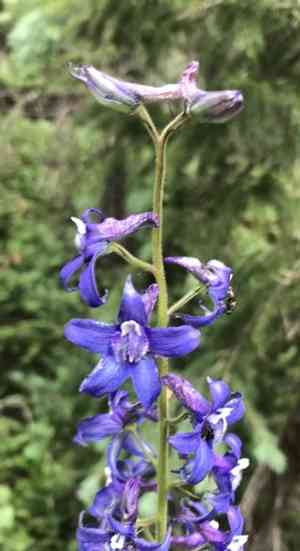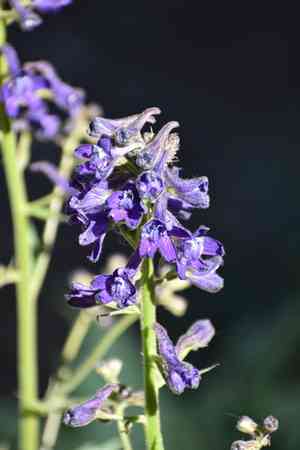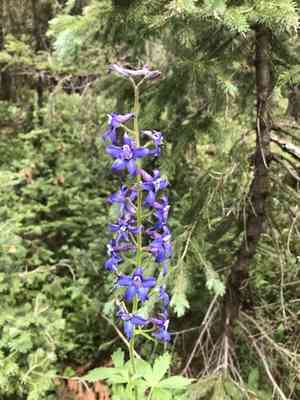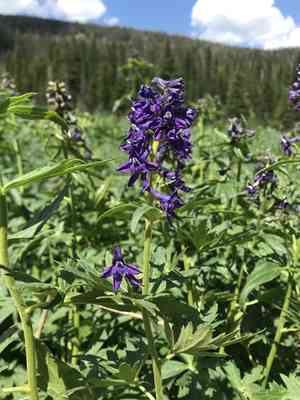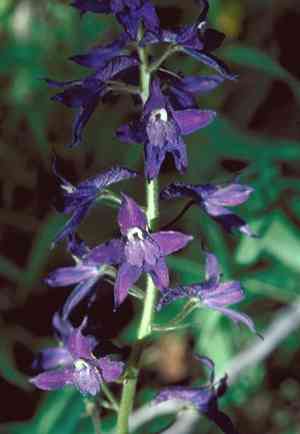
Subalpine larkspur(Delphinium barbeyi)

Subalpine larkspur (Delphinium barbeyi)

Also known as: Barbey's larkspur

Subalpine larkspur (Delphinium barbeyi) is a notable perennial recognized for its tall, vibrant blue to purple flower spikes. Typically, it grows between 3 to 6 feet tall, showcasing deeply divided leaves and unique palmately lobed leaflets. The blooms, featuring a characteristic spur at the back, appear from mid-summer to late summer.

Ideal growing conditions for subalpine larkspur include:
- **Elevation**: Prefers elevations ranging from 7,000 to 12,000 feet.
- **Soil**: Needs well-drained, moist soils for optimal growth.
- **Sunlight**: Flourishes in full sun to partial shade environments.
- **Climate**: Suited to cool, mountainous regions with short growing seasons.
- **Habitat**: Commonly found in meadows, open forests, and near streams in subalpine and alpine zones.

It's important to note that subalpine larkspur is toxic to livestock, particularly cattle, due to its alkaloid content.

Attributes of Subalpine larkspur

Lifespan
Perennial
Plant Type
Herb
Plant Height
91 cm to 1.8 m
Spread
Not widely documented
Leaf Color
Green
Flower Size
2 to 4 centimeters
Flower Color
Blue, Purple

ForwardPlant - Identify plants with a snap

Identify and diagnose plants, get toxicity alerts, and explore safety guides for all types of fungi.

Try for Free

Images of Subalpine larkspur

Subalpine larkspur(Delphinium barbeyi)

Quickly Identify Subalpine larkspur

1
To identify Delphinium barbeyi, look for its tall, erect spikes of flowers that can reach heights of 1 to 2.5 meters. The flowers are usually blue to purple and arranged in a dense raceme. The leaves are palmate and deeply lobed, with a distinctive, glossy appearance.

Scientific Classification of Subalpine larkspur

Phylum
Vascular plants
Class
Dicotyledons
Order
Ranunculales
Family
Buttercup
Genus
Larkspurs
Species
Subalpine larkspur

Planting and Growing of Subalpine larkspur

Care Difficulty
Moderate
Watering Schedule
Every 8 days
Sunlight Requirements
Full sun
Sunshine Duration
6-10 hours
Ideal Temperature
65-75℉
Soil Type
Potting Mix, Peat Mix
Soil pH
6.5-7.5
Fertilizer Type
Balanced
Pruning Season
Spring, Summer
Pruning Area
Branches, Leaves
Pruning Frequency
Once a year
Repotting Season
Spring
Pot Type
Plastic, Ceramic

water icon How to Water Subalpine larkspur?

Delphinium barbeyi thrives with consistent moisture, so it's crucial to provide about 500 milliliters of water each session. Aim to thoroughly soak the soil until water drains from the pot's bottom to ensure all roots receive ample hydration. The soil should remain moist between watering sessions without becoming waterlogged.
What are the symptoms of an underwatered Subalpine larkspur?
What should I do if my Subalpine larkspur is not getting enough water?
What are the symptoms of an overwatered Subalpine larkspur?
How to save an overwatered Subalpine larkspur?

sunlight icon What Are the Sunlight Requirements for Subalpine larkspur?

Sunlight Requirements: Full sun, Partial sun
Duration of light: 6 to 8 hours
Delphinium barbeyi prefers 6 to 8 hours of full to partial sun. This range ensures strong stem growth and prevents etiolation, promoting lush foliage and profuse flowering.
How much sunlight does Delphinium barbeyi need?
What solutions ensure ideal lighting?
What are the benefits of ideal lighting for this plant?

temperature icon What Is the Ideal Temperature Range for Subalpine larkspur?

Ideal Temperature: 65 ~ 75℉
Delphinium barbeyi thrives best in temperatures ranging from 65°F to 75°F. This range provides the warmth needed for optimal growth while avoiding stress. Temperatures in this band are considered perfect for photosynthesis, nutrient uptake, and metabolic processes.

soil icon What Soil is Best for Subalpine larkspur?

Soil type: Loam, Sandy loam
Soil PH: 6.5 ~ 7.5
Delphinium barbeyi thrives in soil that allows excess water to drain easily. This prevents root rot and provides a healthy environment for root growth, ensuring the plant is strong and vibrant. The plant prefers soil rich in organic matter, such as compost or well-rotted manure. This enriches the soil with nutrients, promoting better growth and more robust flower production. While it's important for the soil to drain well, it should also retain some moisture. This ensures the plant has a consistent water supply without the risk of drying out, particularly necessary in hotter climates.

fertilize icon How to Fertilize Subalpine larkspur?

Fertilizer type: Balanced
For Delphinium barbeyi, the recommended amount of liquid fertilizer is approximately 200 milliliters diluted in a 1:10 ratio with water per plant per application. Solid or granular fertilizers should be applied as directed, typically at a rate of one tablespoon per square foot around the base of the plant.

prune icon How to Prune Subalpine larkspur?

Pruning Time: Spring, Summer, Autumn
Begin by removing any spent flowers and deadheading. This encourages the plant to focus its energy on new blooms and prevents seed production. Identify any stems that are damaged or diseased. Cut these back to the nearest healthy bud to prevent the spread of disease and promote new growth. Trim the plant to maintain a balanced shape, removing any overly long stems that disrupt its appearance. This helps in managing size and improving airflow through the plant. More About Pruning Techniques

propagate icon How to Propagate Subalpine larkspur plant?

Propagate Time: Late spring, Early summer
1
The first step involves filling seed trays with a sterile, well-draining soil mix. Slightly moisten the mix before sowing seeds to create an ideal initial growing environment.
2
Scatter the Delphinium barbeyi seeds over the surface of the prepared trays. Cover them lightly with a thin layer of soil mix or vermiculite to ensure they remain moist but do not sow too deeply.
3
Place the seed trays in a location with indirect sunlight and maintain a consistent temperature of around 20°C (68°F). Soil moisture should be kept steady without over-watering, which may inhibit germination.
More About Propagating Techniques

repot icon How to Repot Subalpine larkspur plant?

Repotting frequency: Every two to three years
1
Delphinium barbeyi should be repotted when you notice the roots crowding out of the drainage holes. This can indicate that the roots have taken over the pot and need more space. Repotting in early spring or autumn allows the plant to establish in its new environment during the growing season.
2
Opt for a pot that is about 2 inches larger in diameter than the current one. Ensure it has good drainage holes to prevent waterlogging. A slightly larger pot gives the roots more space to grow, encouraging healthier development and better nutrient uptake.
3
Use a rich, well-draining potting mix. The soil should retain some moisture but drain efficiently to prevent root rot. This type of soil provides essential nutrients and maintains the right balance of moisture, crucial for the plant's health and growth.

ForwardPlant - Identify plants with a snap

Find the best spots for them to optimize their health, simply using your phone.

Try for Free

Toxicity

Ingestion

Identify toxic plants for your safety

Learn which plants are harmful to you and your pets, and make informed choices for a safer home!

Try for Free
WARNING
The judgment on toxicity and danger is for reference only. We DO NOT GUARANTEE any accuracy of such judgment. Therefore, you SHALL NOT rely on such judgment. It is IMPORTANT TO SEEK PROFESSIONAL ADVICE in advance when necessary.