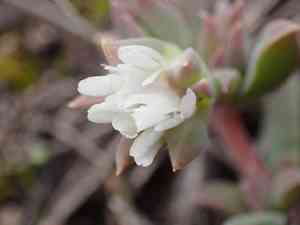
Seaside delosperma (Delosperma litorale)
Also known as: Calcrete sheepfig
The ice plant, often flourishing along coastal areas, is a succulent that lives up to its seaside reputation. Its thick, shiny leaves create a dense ground cover, adept at conserving moisture in salty conditions. During the warmer months, it produces striking daisy-like flowers, bringing vibrant hues to its rugged, maritime surroundings.
In This Article
Attributes of Seaside delosperma
Lifespan
Perennial
Plant Type
Succulent, Herb
Plant Height
5-15 cm
Spread
15-30 cm
Leaf Color
Green
Flower Size
2-4 cm
Flower Color
Pink, Yellow, Orange
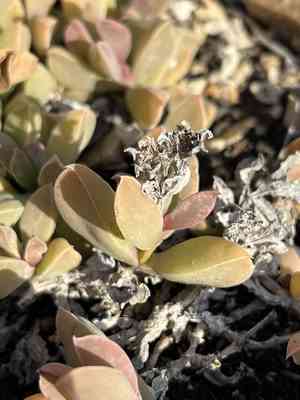
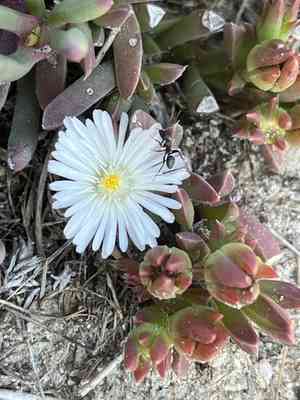
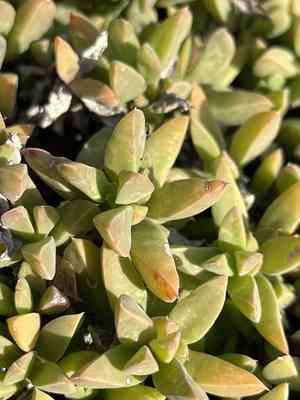
Images of Seaside delosperma
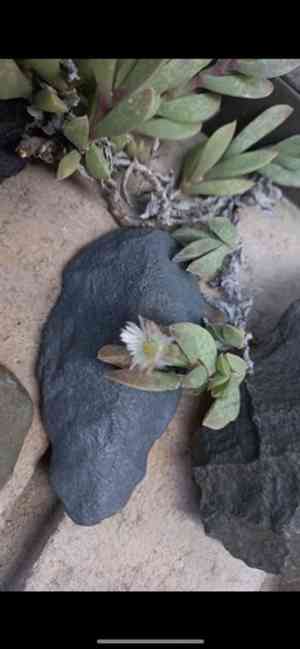
Quickly Identify Seaside delosperma
1
Recognize Delosperma litorale by its fleshy, smooth, and cylindrical leaves, and bright, daisy-like flowers which typically bloom in shades of pink, yellow, or orange.
Scientific Classification of Seaside delosperma
Phylum
Vascular plants
Class
Dicotyledons
Order
Caryophyllales
Family
Fig-marigold
Genus
Sheepfigs
Species
Seaside delosperma
Planting and Growing of Seaside delosperma
Care Difficulty
Easy
Watering Schedule
Every 2 days
Sunlight Requirements
Full sun
Sunshine Duration
4-8 hours
Ideal Temperature
65-75℉
Soil Type
Potting Mix, Peat Mix
Soil pH
6.5-7.5
Fertilizer Type
Balanced
Pruning Season
Spring, Summer
Pruning Area
Branches, Leaves
Pruning Frequency
2 times a year
Repotting Season
Spring
Pot Type
Plastic, Terracotta
 How to Water Seaside delosperma?
For Delosperma litorale, watering should ensure that the soil is moist but not soaking wet. Typically, about 200ml per watering session suffices, allowing the soil to dry out between watering sessions to prevent over-saturation and root rot.
What are the symptoms of an underwatered Seaside delosperma?
›
What should I do if my Seaside delosperma is not getting enough water?
›
What are the symptoms of an overwatered Seaside delosperma?
›
How to save an overwatered Seaside delosperma?
›
 What Are the Sunlight Requirements for Seaside delosperma?
Delosperma litorale ideally needs full sun exposure, translating to 6-8 hours of direct daily sunlight. This lighting range ensures maximum growth potential, fostering vibrant flowering and overall plant health.
What type of sunlight does Delosperma litorale prefer?
›
How can I provide ideal lighting for Delosperma litorale?
›
What benefits come from ideal lighting conditions for Delosperma litorale?
›
 What Is the Ideal Temperature Range for Seaside delosperma?
The ideal temperature range for Delosperma litorale is between 65°F and 75°F. Within this range, the plant can efficiently perform photosynthesis and maintain optimal growth. During these temperatures, metabolic processes operate smoothly, ensuring the health and vibrancy of the plant.
 What Soil is Best for Seaside delosperma?
Delosperma litorale thrives in well-drained soils that prevent water from pooling around the roots. This helps in avoiding root rot and maintains the plant's health by ensuring it gets the right balance of moisture and aeration. A nutrient-rich soil is essential for Delosperma litorale to ensure vigorous growth and vibrant blooms. Incorporating organic matter can boost the soil’s fertility, providing the necessary nutrients required for robust plant development. While Delosperma litorale doesn’t demand overly fertile soil, moderate fertility helps maintain its lush appearance and flowering. Over-fertilizing should be avoided to prevent excessive foliage with minimal flowers.
 How to Fertilize Seaside delosperma?
When fertilizing Delosperma litorale, it is crucial not to overdo it. Use a balanced, water-soluble fertilizer diluted to half the recommended strength for succulents. A teaspoon per gallon of water should suffice during the growing season.
 How to Prune Seaside delosperma?
Start by examining your Delosperma litorale for any dead or damaged growth. These should be the first to be removed to enhance the plant's health and appearance. Look for areas where growth is dense and overlapping. These sections can benefit from thinning to improve air circulation and allow sunlight to penetrate, promoting healthier growth. Gently shape the plant by cutting back any excessively long or unruly stems. This will help maintain its attractive appearance and encourage a more uniform growth habit.
More About Pruning Techniques→
 How to Propagate Seaside delosperma plant?
1
Soak the seeds in water for 24 hours before planting to enhance germination rates. Use a seed tray filled with well-draining soil and lightly cover the seeds, maintaining adequate moisture.
2
Select healthy, non-flowering stems and cut them at a 45-degree angle. Remove the lower leaves and dip the cut ends in rooting hormone to stimulate root growth.
3
Carefully dig out the plant from the soil, using your hands to gently separate the roots into sections. Ensure each segment has a healthy root system, and replant immediately.
 How to Repot Seaside delosperma plant?
1
Delosperma litorale should be repotted when its roots start circling the pot or emerge through the drainage holes. If the plant's growth slows or stops despite good care, it's a sign to consider repotting. Best results are achieved if done during its active growing seasons.
2
Choose a pot that is just one size larger than the current one and has ample drainage holes. Terracotta pots are great as they allow excess moisture to evaporate, preventing root rot. Ensuring proper drainage will enhance the plant's health and growth.
3
Opt for a well-draining cactus mix to mimic Delosperma litorale's natural sandy environment. A mix with perlite or sand is preferable. This type of soil prevents water retention, which could otherwise lead to root rot, ensuring a healthy root system.



