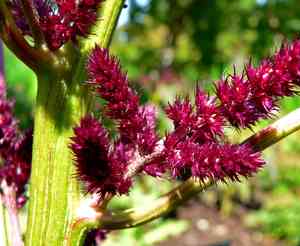
Shrubby deeringia (Deeringia amaranthoides)
Also known as: Spiny Deeringia, Deering Amaranth
The Virginia Creeper is a versatile plant that thrives in dense forest environments with dry conditions. It has the ability to grow as a climbing vine, reaching up to 4 meters in height.
In This Article
Attributes of Shrubby deeringia
Lifespan
Perennial
Plant Type
Vine, Shrub
Plant Height
2 m to 6 m
Spread
2 m to 4 m
Leaf Color
Dark green
Flower Size
2 mm to 3 mm
Flower Color
White Yellow Green
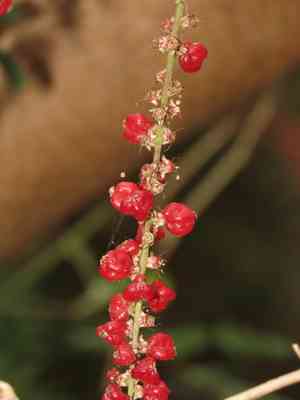
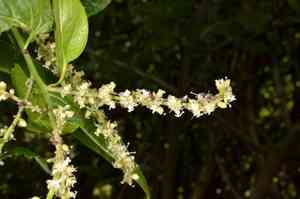
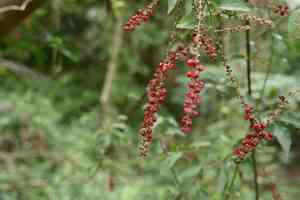
Images of Shrubby deeringia
Quickly Identify Shrubby deeringia
1
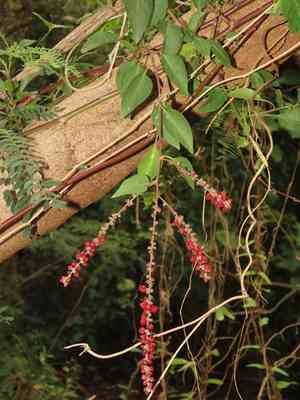
To identify Deeringia amaranthoides, look for a shrub with glossy, ovate leaves that are usually alternately arranged. The stems can be slightly woody at the base. It produces small, greenish-white flowers in clusters, followed by bright red berries.
Scientific Classification of Shrubby deeringia
Phylum
Vascular plants
Class
Dicotyledons
Order
Caryophyllales
Family
Amaranth
Genus
Deeringia
Species
Shrubby deeringia
Planting and Growing of Shrubby deeringia
Care Difficulty
Easy
Watering Schedule
Every 3 days
Sunlight Requirements
Partial sun
Sunshine Duration
4-6 hours
Ideal Temperature
65-75℉
Soil Type
Potting Mix
Soil pH
6.5-7.5
Fertilizer Type
Balanced
Pruning Season
Spring, Summer
Pruning Area
Branches, Leaves
Pruning Frequency
2 times a year
Repotting Season
Spring
Pot Type
Plastic, Ceramic
 How to Water Shrubby deeringia?
Deeringia amaranthoides requires a moderate amount of watering. It's best to ensure that the soil is evenly moist but not waterlogged. This plant thrives when the top few inches of soil are allowed to dry out between watering sessions. It's important to avoid letting the water stand in the pot or around the roots as it could lead to root rot.
What are the symptoms of an underwatered Shrubby deeringia?
›
What should I do if my Shrubby deeringia is not getting enough water?
›
What are the symptoms of an overwatered Shrubby deeringia?
›
How to save an overwatered Shrubby deeringia?
›
 What Are the Sunlight Requirements for Shrubby deeringia?
Deeringia amaranthoides prefers partial sun, thriving in conditions where it can receive about 4 to 6 hours of dappled sunlight daily. Ideal lighting supports healthy growth, vibrant foliage, and overall plant vitality.
What is the ideal lighting condition for Deeringia amaranthoides?
›
How to adjust positioning for optimal light exposure?
›
What benefits does proper lighting bring to the plant?
›
 What Is the Ideal Temperature Range for Shrubby deeringia?
The ideal temperature range for Deeringia amaranthoides is between 65°F and 75°F. This range provides the optimal conditions for growth. Within this range, the plant can efficiently perform photosynthesis, absorb nutrients, and grow healthily. Maintaining consistent temperatures within this range also helps in avoiding stress that could lead to diseases or stunted growth.
 What Soil is Best for Shrubby deeringia?
Deeringia amaranthoides thrives in well-draining soil that prevents waterlogging. This ensures the roots are not suffocated by excess water, allowing for healthy oxygen exchange and nutrient absorption. A nutrient-rich substrate is essential, providing the necessary minerals and nutrients for optimal growth and vibrant foliage. This can be achieved with organic matter or compost. The soil should ideally retain moderate moisture, creating a consistent environment that supports the plant's growth without the risk of dehydration or root rot.
 How to Fertilize Shrubby deeringia?
Deeringia amaranthoides benefits from a balanced fertilizer mix. For liquid fertilizers, use a solution diluted to half strength. For solid fertilizers, apply about 100 grams per plant per application to avoid overfeeding.
 How to Prune Shrubby deeringia?
Begin by identifying weak or crossing branches, as well as those that hinder the plant's aesthetic or health. Focus on removing any dead, damaged, or diseased wood to promote overall vitality. Prune about a quarter inch above a leaf node to encourage new growth. The angle of your cut should be slightly sloped away from the node to prevent water from accumulating on the cut surface, which can lead to rotting.
More About Pruning Techniques→
 How to Propagate Shrubby deeringia plant?
1
Collect ripe seeds from mature Deeringia amaranthoides plants. Clean the seeds under running water to remove any pulp residues. Let them dry thoroughly before sowing to prevent mold growth.
2
Mix equal parts of peat moss and perlite to create a well-draining medium. This ensures that the seeds or cuttings have access to necessary nutrients while avoiding water retention that might cause root rot.
3
Sow the seeds on the surface of the prepared medium and gently cover them with a thin layer of soil. For cuttings, immerse the cut end in rooting hormone before planting them into the medium to enhance root development.
 How to Repot Shrubby deeringia plant?
1
The best time to repot Deeringia amaranthoides is when the plant has outgrown its current container, evident by roots emerging from drainage holes or slowed growth. Spring and summer are ideal as the plant enters its active growth period, ensuring it adapts quickly to the new pot. Repotting in these seasons allows the roots to recover swiftly from any disturbance.
2
Select a pot that is one size larger than the current one, with ample drainage holes to prevent water accumulation. Choosing a spacious pot encourages healthy root expansion, allowing the plant to grow robustly. A pot that's too large may lead to water retention issues, so opt for the one just the next size up for a perfect balance.
3
Opt for a well-draining loamy mix that mimics the plant's natural habitat, providing the necessary nutrients and aeration. A good soil mix aids in moisture retention while ensuring excess water drains away, preventing root rot. Incorporating organic matter in the soil boosts nutrient content and encourages vigorous growth.
Learn More About Shrubby deeringia Diseases
Anthracnose
Bacterial Leaf Spot
Bacterial Soft Rot
Bacterial Wilt
Black Spot
Chemical Injury
Crown Gall
Cyst Nematode
Damping-off
Downy Mildew
Drought Stress
Fusarium Wilt
Gray Mold
Leaf Curl
Leaf Spot
Mosaic
Nutrient Deficiency
Nutrient Toxicity
Powdery Mildew
Root Rot
Root-knot Nematode
Rusts
Sooty Mold
Spider Mites
Temperature Stress
Thrips Damage
White Mold



