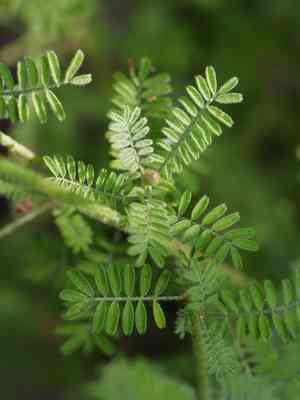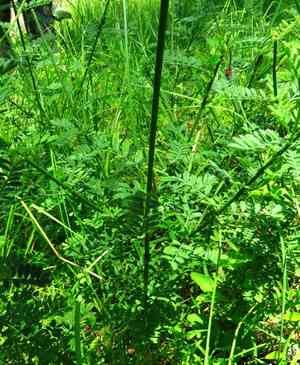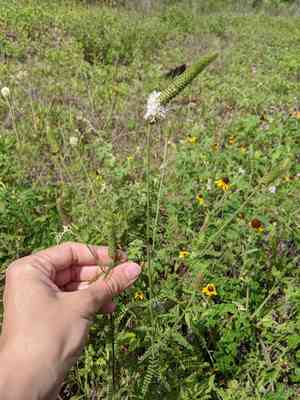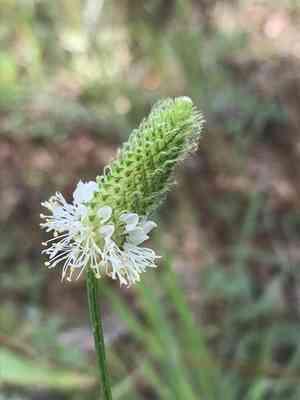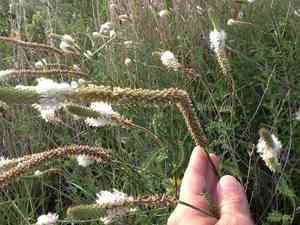
Slimspike prairie clover(Dalea phleoides)

Slimspike prairie clover (Dalea phleoides)

Also known as: Threadleaf Prairie Clover

The slimspike prairie clover (Dalea tenuifolia) is a hardy plant well-suited to arid environments. Key adaptations include:

1. **Deep Root System**: Its extensive roots penetrate deep into the soil, accessing underground water reserves crucial for enduring drought periods.
2. **Small, Compound Leaves**: These leaves minimize water loss through reduced surface area, aiding in moisture conservation.
3. **Drought-Resilient Seeds**: The seeds can remain dormant during unfavorable conditions, germinating only when adequate moisture is available.
4. **Nitrogen Fixation**: It forms a symbiotic relationship with nitrogen-fixing bacteria, allowing it to thrive in nutrient-poor soils typical of arid regions.
5. **Efficient Water Usage**: The plant's physiological traits enable it to maximize water use efficiency.

These adaptations enable the slimspike prairie clover to survive and flourish in dry, challenging landscapes.

Attributes of Slimspike prairie clover

Lifespan
Perennial
Plant Type
Herb
Plant Height
20-50 cm
Spread
Approximately 20-30 cm
Leaf Color
Green
Flower Size
0.5-1 cm
Flower Color
Purple

ForwardPlant - Identify plants with a snap

Identify and diagnose plants, get toxicity alerts, and explore safety guides for all types of fungi.

Try for Free

Images of Slimspike prairie clover

Slimspike prairie clover(Dalea phleoides)

Quickly Identify Slimspike prairie clover

1
To identify Dalea phleoides, look for its slender, thread-like leaves and purple, cylindrical flower spikes. The plant typically blooms in late spring to early summer. It is also characterized by its woody base.

Scientific Classification of Slimspike prairie clover

Phylum
Vascular plants
Class
Dicotyledons
Order
Fabales
Family
Legume
Genus
Prairie clover
Species
Slimspike prairie clover

Planting and Growing of Slimspike prairie clover

Care Difficulty
Moderate
Watering Schedule
Every 2 days
Sunlight Requirements
Full sun
Sunshine Duration
6-10 hours
Ideal Temperature
60-75℉
Soil Type
Potting Mix, Peat Mix
Soil pH
6.5-7.5
Fertilizer Type
Balanced
Pruning Season
Spring, Summer
Pruning Area
Branches, Leaves
Pruning Frequency
2 times a year
Repotting Season
Spring
Pot Type
Plastic, Ceramic

water icon How to Water Slimspike prairie clover?

The plant Dalea phleoides prefers a moderate watering approach. You should aim to provide around 250 ml of water per session, ensuring the soil is moist but not waterlogged. Always allow the top inch of soil to dry out between waterings to prevent root rot.
What are the symptoms of an underwatered Slimspike prairie clover?
What should I do if my Slimspike prairie clover is not getting enough water?
What are the symptoms of an overwatered Slimspike prairie clover?
How to save an overwatered Slimspike prairie clover?

sunlight icon What Are the Sunlight Requirements for Slimspike prairie clover?

Sunlight Requirements: Full sun, Partial sun
Duration of light: 6-8 hours
Dalea phleoides thrives well within a light range that includes full sun to partial sun conditions. Ideally, consistent exposure to sunlight, especially morning to early afternoon, promotes vigorous growth, aiding in optimal flowering and overall health vitality.
How much sunlight does Dalea phleoides require?
What are some solutions to ensure ideal sunlight exposure?
What benefits does adequate sunlight provide to this plant?

temperature icon What Is the Ideal Temperature Range for Slimspike prairie clover?

Ideal Temperature: 60 ~ 75℉
Dalea phleoides thrives best in temperatures ranging between 60°F to 75°F. This temperature range closely mimics its native habitat conditions, ensuring optimal growth and resilience. When maintained within this range, the plant performs its biological functions effectively, supporting both growth and flowering.

soil icon What Soil is Best for Slimspike prairie clover?

Soil type: Sandy soil, Loam, Calcareous soil
Soil PH: 6.5 ~ 7.5
Dalea phleoides thrives in well-drained soil to prevent root rot. Proper drainage ensures that excess water doesn't remain around the roots, promoting healthier plant growth and preventing the onset of fungal diseases. This plant favors soils that are rich in nutrients but not overly fertile. An ideal balance of nutrients supports the plant's flowering while avoiding excessive growth, which can weaken the plant structure. Maintaining a soil pH between 6.5 and 7.5 is crucial. This range allows for optimal nutrient uptake, ensuring that Dalea phleoides receives all necessary nutrients for its development and vibrant blooms.

fertilize icon How to Fertilize Slimspike prairie clover?

Fertilizer type: Balanced
Dalea phleoides, often fondly referred to as purple prairie clover, thrives in nutritionally mild soil. Thus, it requires moderate fertilization. For liquid fertilizers, aim for a nutrient solution concentration of half-strength to avoid overwhelming the plant's root system. When applying granular or slow-release fertilizers, use approximately 1/4 cup per plant to gently enrich the soil without causing nutrient overload.

prune icon How to Prune Slimspike prairie clover?

Pruning Time: Spring, Summer
Begin by examining the plant for any dead or damaged stems, which should be removed first. Thin out older branches to encourage new growth, focusing on maintaining the plant's natural shape. Aim to cut back the stems by about a third during each pruning session to promote bushiness. More About Pruning Techniques

propagate icon How to Propagate Slimspike prairie clover plant?

Propagate Time: Spring, Late spring
1
Collect mature seeds from the plant and soak them in water overnight to promote better germination. After soaking, dry the seeds lightly before planting them in the prepared seed tray with a general-purpose potting mix.
2
Choose healthy, non-flowering stems from the parent plant, preferably 4-6 inches long. Cut just below a node with sterilized pruning shears, ensuring each cutting has at least two leaves and remove any flowers or flower buds.
3
Insert the cuttings into a mixture of soil and sand for better drainage. Keep the cuttings in a bright, indirect light area and maintain consistent moisture levels in the soil while avoiding waterlogged conditions.
More About Propagating Techniques

repot icon How to Repot Slimspike prairie clover plant?

Repotting frequency: Every 1-2 years
1
Look for signs like roots protruding from the drainage holes or soil compacting significantly. These are clear signals that Dalea phleoides needs more space and fresh soil to thrive. Ideally, repot in spring or summer to give it an optimal growing period.
2
Select a pot that is slightly larger than the current one, with good drainage holes. This ensures the roots have space to grow and prevents waterlogging, which is crucial for avoiding root rot in Dalea phleoides.
3
Opt for a well-draining sandy soil to mimic its natural habitat, promoting healthy root aeration and drainage. This soil type prevents overwatering, allowing the plant to thrive without the risk of root diseases.

ForwardPlant - Identify plants with a snap

Find the best spots for them to optimize their health, simply using your phone.

Try for Free