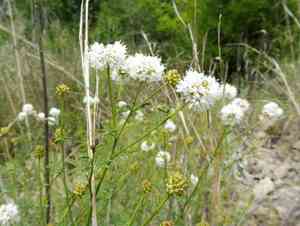
Roundhead prairie clover (Dalea multiflora)
Also known as: Roundhead Prairie Clover, White Prairie Clover
The Allium, a hardy perennial, thrives in sunny locations with well-drained soil. This plant is known for its vibrant purple flowers that bloom in spherical clusters, standing out above its foliage. These eye-catching blooms typically appear in late spring to early summer, attracting various pollinators and adding a burst of color to gardens and landscapes.
In This Article
Attributes of Roundhead prairie clover
Lifespan
Perennial
Plant Type
Shrub
Plant Height
30 cm to 91 cm
Spread
Not commonly measured but generally forms dense clumps
Leaf Color
Green
Flower Size
1 to 2 centimeters
Flower Color
White
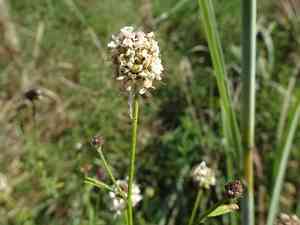
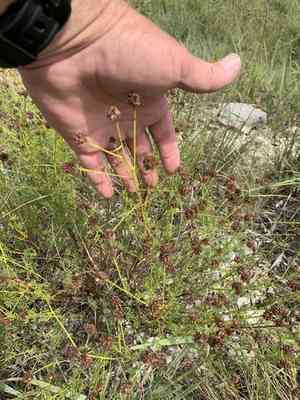
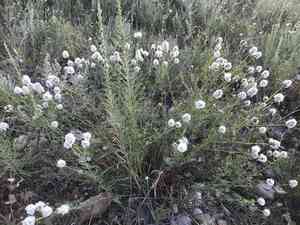
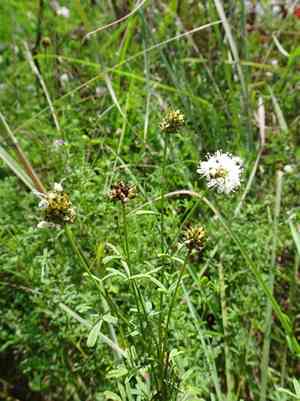
Images of Roundhead prairie clover
Quickly Identify Roundhead prairie clover
1
Dalea multiflora can be identified by its finely divided leaflets arranged in a pinnate fashion, and its characteristic white, spherical flower clusters. The stems are typically slender and can be slightly hairy.
Scientific Classification of Roundhead prairie clover
Phylum
Vascular plants
Class
Dicotyledons
Order
Fabales
Family
Legume
Genus
Prairie clover
Species
Roundhead prairie clover
Planting and Growing of Roundhead prairie clover
Care Difficulty
Moderate
Watering Schedule
Every 2 days
Sunlight Requirements
Full sun
Sunshine Duration
4-8 hours
Ideal Temperature
60-75℉
Soil Type
Potting Mix, Peat Mix
Soil pH
6.5-7.5
Fertilizer Type
Balanced
Pruning Season
Spring, Summer
Pruning Area
Branches, Leaves
Pruning Frequency
2 times a year
Repotting Season
Spring
Pot Type
Plastic, Ceramic
 How to Water Roundhead prairie clover?
When watering Dalea multiflora, aim to provide around 250 milliliters each time. The key is to ensure the soil is moist but not soggy, allowing the water to penetrate deeply to reach the roots but without pooling at the base of the pot.
What are the symptoms of an underwatered Roundhead prairie clover?
›
What should I do if my Roundhead prairie clover is not getting enough water?
›
What are the symptoms of an overwatered Roundhead prairie clover?
›
How to save an overwatered Roundhead prairie clover?
›
 What Are the Sunlight Requirements for Roundhead prairie clover?
Dalea multiflora flourishes in environments with either all-day sun or only morning or afternoon sun, maximizing its decorative and health benefits.
What type of light does Dalea multiflora prefer?
›
How do I adjust lighting if my Dalea multiflora isn't doing well?
›
What benefits does ideal sunlight bring to Dalea multiflora?
›
 What Is the Ideal Temperature Range for Roundhead prairie clover?
The ideal temperature range for Dalea multiflora growth lies between 60°F and 75°F. Within this range, the plant can thrive, allowing for optimal physiological processes such as photosynthesis and respiration. Such a temperate environment ensures efficient nutrient uptake and overall healthy development.
 What Soil is Best for Roundhead prairie clover?
Dalea multiflora thrives in well-drained soils that prevent water logging which can lead to root rot. This is advantageous for maintaining healthy root systems. A moderately fertile soil offers sufficient nutrients without overwhelming the plant, supporting optimal growth and vibrant flowering. An aerated soil texture ensures that oxygen reaches the roots, bolstering plant health and improving nutrient absorption.
 How to Fertilize Roundhead prairie clover?
For Dalea multiflora, it is essential to maintain a balanced approach to fertilization. Apply a light dose of liquid fertilizer—specifically a well-balanced, diluted formula—ensuring not to overload the plant’s nutritional environment. Approximately 1/4 of the recommended concentration per gallon of water is sufficient.
 How to Prune Roundhead prairie clover?
Start by identifying and cutting away any dead, damaged, or diseased branches. Make clean cuts close to the main stem to encourage quick healing. Removing these areas not only tidies up the appearance but also prevents the spread of disease throughout the plant. To maintain a desired shape or size, selectively trim branches that disrupt the intended form. Focus on maintaining a balanced structure, allowing sunlight to penetrate and promoting even growth. This is especially important for plants in tight spaces where size control is beneficial. Dalea multiflora can benefit from a light trim to stimulate more blooms. After the initial flowering, cutting back spent blooms encourages the plant to produce a new flush of flowers. Be gentle and avoid cutting too deep into the healthy branches to ensure continuous growth.
More About Pruning Techniques→
 How to Propagate Roundhead prairie clover plant?
1
Before planting, soak the seeds in warm water for 24 hours. This process helps to soften the seed coat, increasing the chances of germination.
2
Fill the seed tray with potting mix and plant the seeds 1/4 inch deep. Ensure they are spaced appropriately to allow for light and air circulation.
3
Place the seed tray in a warm and bright location. Maintaining a consistent temperature of around 20°C (68°F) is key for successful germination.
 How to Repot Roundhead prairie clover plant?
1
You know it's time to repot Dalea multiflora when roots are visibly outgrowing the pot, visible through drainage holes, or encircling the surface. When growth stalls or becomes stunted despite ideal care conditions, it's a signal. Also, repot if the soil becomes compacted, hindering proper drainage and aeration.
2
Choose a pot that's just one size larger than the current one, allowing for gradual growth. It should have ample drainage holes to prevent waterlogging, a critical factor for healthy roots. The material should be well-suited for outdoor elements, ensuring durability and stability. This helps in preventing root rot and ensuring longevity.
3
Opt for a well-draining sandy soil mix which mimics its natural environment, providing excellent drainage. This type of soil prevents water from pooling, which could lead to root rot. Adding perlite or coarse sand improves soil aeration, ensuring that roots have access to necessary oxygen while maintaining an ideal moisture balance.
Learn More About Roundhead prairie clover Diseases
Anthracnose
Bacterial Leaf Spot
Bacterial Wilt
Chemical Injury
Crown Gall
Cyst Nematode
Damping-off
Downy Mildew
Drought Stress
Fusarium Wilt
Gray Mold
Leaf Spot
Mosaic
Nutrient Deficiency
Nutrient Toxicity
Powdery Mildew
Root Rot
Root-knot Nematode
Rusts
Sooty Mold
Spider Mites
Temperature Stress
Thrips Damage
White Mold



