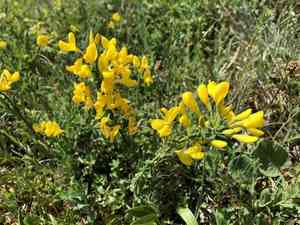
Cytisus decumbens (Cytisus decumbens)
Also known as: Prostrate Broom
Cytisus decumbens, a low-lying, spreading shrub, features slender green stems and trifoliate leaves. Blooming from late spring to early summer, it produces bright yellow, pea-like flowers that attract pollinators. This plant flourishes in sunny, well-drained soils, commonly found in rocky terrains. It plays a crucial role in stabilizing slopes and embankments, helping to prevent soil erosion.
In This Article
Attributes of Cytisus decumbens
Lifespan
Perennial
Plant Type
Shrub
Plant Height
0.2 to 0.5 meters
Spread
1 to 2 meters
Leaf Color
Green
Flower Size
1 to 2 centimeters
Flower Color
Bright Yellow
Images of Cytisus decumbens
Quickly Identify Cytisus decumbens
1
To identify Cytisus decumbens, look for a low, sprawling shrub with small, trifoliate leaves and bright yellow, pea-like flowers that bloom in late spring to early summer. The plant\'s branches tend to spread horizontally along the ground.
Scientific Classification of Cytisus decumbens
Phylum
Vascular plants
Class
Dicotyledons
Order
Fabales
Family
Legume
Genus
Brooms
Species
Cytisus decumbens
Planting and Growing of Cytisus decumbens
Care Difficulty
Easy
Watering Schedule
Every 2 days
Sunlight Requirements
Full sun
Sunshine Duration
4-8 hours
Ideal Temperature
60-75℉
Soil Type
Potting Mix, Peat Mix
Soil pH
5.5-7.5
Fertilizer Type
Balanced
Pruning Season
Spring, Summer
Pruning Area
Branches, Leaves
Pruning Frequency
2 times a year
Repotting Season
Spring
Pot Type
Plastic, Ceramic
 How to Water Cytisus decumbens?
Cytisus decumbens, owing to its Mediterranean origins, thrives in well-drained soil conditions. When watering, aim to provide around 250 milliliters per session. Ensure the water thoroughly saturates the soil, reaching the deeper roots, while still allowing for good drainage to emulate its native environment.
What are the symptoms of an underwatered Cytisus decumbens?
›
What should I do if my Cytisus decumbens is not getting enough water?
›
What are the symptoms of an overwatered Cytisus decumbens?
›
How to save an overwatered Cytisus decumbens?
›
 What Are the Sunlight Requirements for Cytisus decumbens?
Ideal exposure spans from full sun to partial sun, with benefits like improved flowering, vibrant foliage, and better growth rates under optimal sunlight conditions.
What is the best type of sunlight for Cytisus decumbens?
›
How can I ensure Cytisus decumbens receives ideal lighting?
›
What are the benefits of providing ideal lighting for Cytisus decumbens?
›
 What Is the Ideal Temperature Range for Cytisus decumbens?
For optimal growth, Cytisus decumbens prefers temperatures ranging from 60°F to 75°F. This range allows the plant to perform photosynthesis efficiently and ensures proper nutrient absorption and cellular functions. Staying within this range maximizes growth rate and flowering potential.
 What Soil is Best for Cytisus decumbens?
Cytisus decumbens thrives in well-drained soil. This ensures the roots do not become waterlogged, which can lead to root rot, allowing the plant to grow vigorously and healthily. This plant prefers soil that is not overly rich in nutrients. The low nutrient content mimics its natural habitat, promoting stronger root development and reducing excessive, weak growth. While it prefers well-drained soils, moderate moisture retention is beneficial to sustain its growth during arid conditions, preventing wilting and ensuring continuous growth.
 How to Fertilize Cytisus decumbens?
For Cytisus decumbens, it's important to maintain a balanced approach to fertilization. Use a diluted liquid fertilizer at half the usual concentration to avoid root burn. Each application should consist of approximately 500 ml of this diluted solution per plant.
 How to Prune Cytisus decumbens?
Start by identifying and cutting away any dead or diseased branches. Use sharp shears and make clean cuts close to the main stem to promote new growth. Trim back any overgrown branches that disrupt the desired shape of the plant. Maintain a balanced, symmetrical form, encouraging an open structure for better light penetration. Once the flowering period is over in late summer, prune lightly to tidy the bush and remove any spent flowers. This helps the plant prepare for the next blooming cycle.
More About Pruning Techniques→
 How to Propagate Cytisus decumbens plant?
1
Choose healthy, non-flowering stems for cutting propagation. The chosen stems should be flexible and free of any disease or signs of stress. Selecting healthy material significantly increases the likelihood of successful root development.
2
Trim the lower leaves of the cutting to leave a bare stem. This reduces water loss and allows the plant to focus its energy on root development. If the plant has large leaves, cutting them in half can also help to reduce transpiration.
3
After applying rooting hormone, plant the cuttings into a well-draining potting medium such as a mix of sand, peat, and perlite. Ensure that the cuttings are inserted deep enough to stand upright but not so deep that they are buried.
 How to Repot Cytisus decumbens plant?
1
Cytisus decumbens should be repotted when you observe visible root bound conditions, such as roots growing out from the bottom of the pot. Also, if the plant's growth has noticeably slowed despite good care, it could be a signal that it's time for a larger pot. Repotting is ideally done in the growing seasons, spring or early summer, to minimize stress.
2
Opt for a pot that is one size larger than the current one to promote healthy growth. A pot with drainage holes is crucial to prevent water retention, which could lead to root rot. The material is also important; terracotta pots allow for more airflow, which suits Cytisus decumbens, preferring drier soil conditions.
3
A well-draining sandy soil mix is essential to mimic the plant's natural environment. This type of soil prevents water buildup around the roots, reducing the risk of diseases. Adding perlite or grit will enhance drainage, keeping the roots aerated and healthy.
Learn More About Cytisus decumbens Diseases
Anthracnose
Bacterial Leaf Spot
Crown Gall
Damping-off
Downy Mildew
Drought Stress
Fusarium Wilt
Gray Mold
Leaf Curl
Leaf Spot
Mosaic
Nutrient Deficiency
Nutrient Toxicity
Powdery Mildew
Root Rot
Root-knot Nematode
Rusts
Sooty Mold
Spider Mites
Temperature Stress
Thrips Damage
White Mold
Chemical Injury



