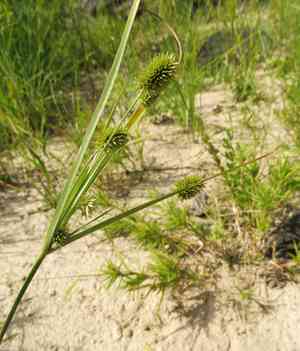
Pine barren flatsedge (Cyperus retrorsus)
Also known as: N/A
Cyperus retrorsus is a tufted perennial that typically reaches about 50 cm in height and produces mature fruits in the summer. While it shares similarities with Cyperus echinatus, there are notable differences:
1. **Inflorescence**:
- **Cyperus retrorsus**: Features a cylindrical inflorescence.
- **Cyperus echinatus**: Characterized by a denser, spikier inflorescence.
2. **Size**:
- **Cyperus retrorsus**: Generally shorter in stature.
- **Cyperus echinatus**: Typically grows taller.
These differences help in distinguishing between the two species.
In This Article
Attributes of Pine barren flatsedge
Lifespan
Perennial
Plant Type
Grass
Plant Height
40-100 cm
Spread
N/A
Leaf Color
Green
Flower Size
N/A
Flower Color
Green to brownish
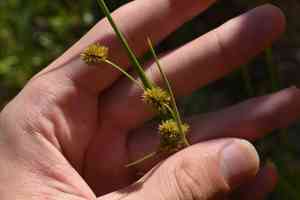
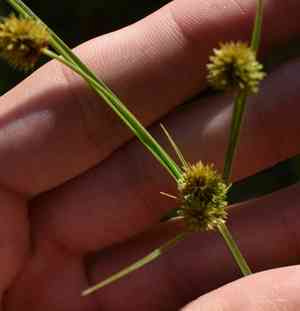
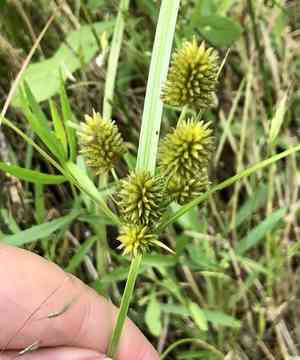
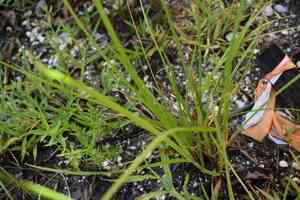
Images of Pine barren flatsedge
Quickly Identify Pine barren flatsedge
1
To identify Cyperus retrorsus, look for the following characteristics: grass-like leaves with a triangular stem, inconspicuous flowers that form in clusters, and usually found in wet or moist environments.
Scientific Classification of Pine barren flatsedge
Phylum
Vascular plants
Class
Monocotyledons
Order
Poales
Family
Sedge
Genus
Nutgrasses
Species
Pine barren flatsedge
Planting and Growing of Pine barren flatsedge
Care Difficulty
Easy
Watering Schedule
Every 2 days
Sunlight Requirements
Full sun
Sunshine Duration
6-10 hours
Ideal Temperature
60-75℉
Soil Type
Potting Mix, Peat Mix
Soil pH
5.5-7.5
Fertilizer Type
Balanced
Pruning Season
Spring, Summer
Pruning Area
Branches, Leaves
Pruning Frequency
2 times a year
Repotting Season
Spring
Pot Type
Plastic, Ceramic
 How to Water Pine barren flatsedge?
When watering Cyperus retrorsus, aim to keep the soil evenly moist but not waterlogged. It is generally recommended to pour around 500 ml of water each time, ensuring the water drains well and does not accumulate at the bottom of the pot.
What are the symptoms of an underwatered Pine barren flatsedge?
›
What should I do if my Pine barren flatsedge is not getting enough water?
›
What are the symptoms of an overwatered Pine barren flatsedge?
›
How to save an overwatered Pine barren flatsedge?
›
 What Are the Sunlight Requirements for Pine barren flatsedge?
Cyperus retrorsus thrives in environments with a light range of full sun to partial sun. Ideal lighting facilitates optimal photosynthesis, leading to strong growth and vibrant foliage, ensuring the plant remains healthy and visually appealing.
What is the ideal lighting solution?
›
How to achieve these lighting conditions?
›
What benefits does ideal lighting provide?
›
 What Is the Ideal Temperature Range for Pine barren flatsedge?
For optimal growth of Cyperus retrorsus, maintaining a consistent temperature between 60°F and 75°F is essential. This range provides the plant with warmth without stress, promoting healthy foliage and root development.
 What Soil is Best for Pine barren flatsedge?
Cyperus retrorsus thrives in well-drained soil conditions. This prevents waterlogging and root rot, ensuring healthy plant growth. The plant prefers soil with moderate nutrient availability, supporting balanced growth without excess foliage at the expense of flowers. Incorporating organic matter such as compost improves soil structure and fertility, enhancing the plant's resilience and growth potential.
 How to Fertilize Pine barren flatsedge?
Cyperus retrorsus thrives in well-nourished soils; however, it has modest fertilization needs. Apply a balanced liquid fertilizer diluted to half strength, around 250 ml per plant, ensuring not to saturate the soil excessively. For slow-release granular fertilizers, use approximately 15-20 grams per plant, distributed evenly across the soil surface.
 How to Prune Pine barren flatsedge?
Begin by identifying any dead, brown, or damaged stems. Use your fingers to gently pull on these stems; if they come away easily, remove them completely to allow the plant to focus its energy on healthy growth. Cyperus retrorsus naturally grows in a lush, tuft-forming manner. Trim back any excessively long stems to maintain a uniform and appealing shape. Use sharp pruning shears to cut at a 45-degree angle just above the leaf joint. Ensure that the center of the plant does not become too dense as this can limit air circulation and light penetration, both crucial for optimal plant health. Thin out the inner stems selectively to foster better air and light flow.
More About Pruning Techniques→
 How to Propagate Pine barren flatsedge plant?
1
First, water the plant thoroughly a day before dividing to ensure the roots are hydrated and less prone to shock. Carefully dig up the plant with a shovel, maintaining as much of the root mass as possible.
2
Use your hands or a clean, sharp tool to separate the plant into smaller sections. Each section should have several healthy shoots and a substantial root mass to ensure successful replanting.
3
Plant each section in well-prepared soil, maintaining the same planting depth as the original plant. Water thoroughly after planting to help the roots settle in.
 How to Repot Pine barren flatsedge plant?
1
Cyperus retrorsus signals its need for repotting when its roots start to emerge through the drainage holes at the pot's bottom. Additionally, if you notice a decline in vigor—yellowing leaves or reduced growth—it might be time to consider repotting. Generally, target repotting during its active growing periods.
2
Select a pot that is only slightly larger than the current one. This prevents waterlogging by not overwhelming the plant with excess soil, which can retain too much moisture. A pot with ample drainage ensures that excess water can easily escape, promoting healthier root systems and reducing the risk of rot.
3
Opt for a loamy, well-draining soil blend to ensure proper moisture retention and aeration. Such a soil structure prevents root suffocation and ensures that water doesn’t stagnate, reducing the risk of root rot. This type of soil mimics its natural habitat, aiding in optimal growth conditions.
Learn More About Pine barren flatsedge Diseases
Anthracnose
Bacterial Leaf Spot
Bacterial Soft Rot
Bacterial Wilt
Damping-off
Downy Mildew
Drought Stress
Fusarium Wilt
Gray Mold
Leaf Spot
Mosaic
Nutrient Deficiency
Nutrient Toxicity
Powdery Mildew
Root Rot
Root-knot Nematode
Rusts
Sooty Mold
Spider Mites
Temperature Stress
Thrips Damage
White Mold



