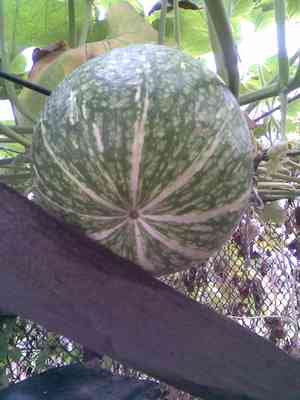
Malabar gourd (Cucurbita ficifolia)
Also known as: Pie melon, Seven year melon, Shark fin melon
The plant you've described has a stem that can extend between 5 and 15 meters and utilizes tendrils to climb nearby structures. Its flowers range in color from yellow to orange. The fruit it bears is oblong, typically reaching up to 20 cm in diameter, weighing approximately 11 to 13 pounds, and containing around 500 seeds.
In This Article
Attributes of Malabar gourd
Lifespan
Perennial, Annual
Plant Type
Herb, Vine
Plant Height
5 m to 15 m
Spread
Not applicable as it is a vine
Leaf Color
Green
Flower Size
8 cm to 15 cm
Flower Color
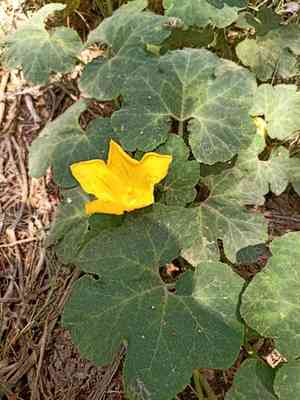
Yellow Gold
Images of Malabar gourd
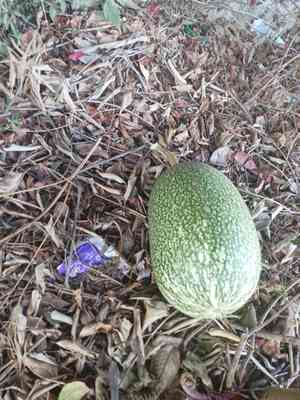
Quickly Identify Malabar gourd
1
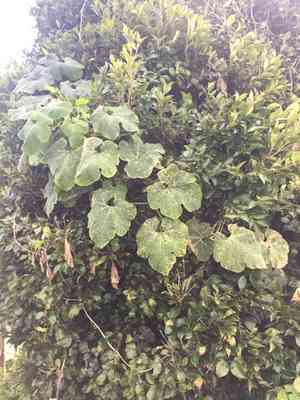
Vine-like growth habit with broad, palmate leaves up to 12 inches (30 cm) long.
2
Fruit is round to oblong, with a variegated green to off-white rind, and dark seeds.
3
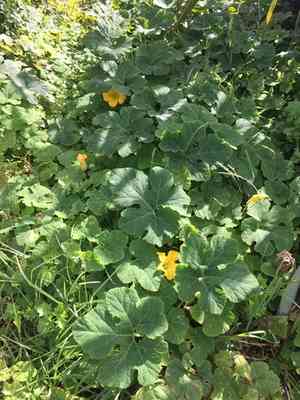
Bright yellow bell-shaped flowers in early to mid-summer, with star-shaped male flowers.
4
Fruit is a pepo with a mottled white and green exterior, lasting when stored.
5
Leaves are large, alternate, dark green, palmately lobed with rough, slightly hairy texture.
Scientific Classification of Malabar gourd
Phylum
Vascular plants
Class
Dicotyledons
Order
Cucurbitales
Family
Gourd
Genus
Squashes
Species
Malabar gourd
Planting and Growing of Malabar gourd
Care Difficulty
Easy
Watering Schedule
Every 4 days
Sunlight Requirements
Full sun
Sunshine Duration
6-10 hours
Ideal Temperature
64-77℉
Soil Type
Potting Mix, Peat Mix
Soil pH
6.5-7.5
Fertilizer Type
Balanced
Pruning Season
Spring, Summer
Pruning Area
Branches, Leaves
Pruning Frequency
2 times a year
Repotting Season
Spring
Pot Type
Plastic, Ceramic
 How to Water Malabar gourd?
When watering Cucurbita ficifolia, pour around 500 ml each time, ensuring that the water penetrates the soil deeply without making it waterlogged. The goal is to maintain consistent soil moisture while allowing the top layer to dry out slightly between waterings.
What are the symptoms of an underwatered Malabar gourd?
›
What should I do if my Malabar gourd is not getting enough water?
›
What are the symptoms of an overwatered Malabar gourd?
›
How to save an overwatered Malabar gourd?
›
 What Are the Sunlight Requirements for Malabar gourd?
Cucurbita ficifolia benefits most from full to partial sun, ideally receiving 6 to 12 hours of sunlight daily. Proper light exposure facilitates optimal growth, enhances photosynthetic activity, and maximizes fruit production, resulting in a healthy and productive plant.
More About Sunlight Requirements Techniques→
What is the ideal lighting condition for Cucurbita ficifolia?
›
How can we provide ideal lighting for Cucurbita ficifolia?
›
What benefits does ideal lighting provide to Cucurbita ficifolia?
›
 What Is the Ideal Temperature Range for Malabar gourd?
For optimal growth, Cucurbita ficifolia should be maintained in temperatures ranging from 64 to 77 degrees Fahrenheit. This range supports active growth and ensures fruit development without stressing the plant. It allows the plant to photosynthesize efficiently and maintain its vigor.
 What Soil is Best for Malabar gourd?
Cucurbita ficifolia thrives in soil that has excellent drainage. Well-drained soil prevents water stagnation and root rot, ensuring that the plant receives ample oxygen to its roots, which in turn promotes healthy growth and a robust yield of fruits. This plant requires nutrient-dense soil to support its rapid growth. Rich soils provide essential micronutrients and macronutrients necessary for the plant's development, resulting in lush foliage and prolific flowering. Moderate amounts of organic material in the soil improve its structure and water retention capacity while facilitating the activity of beneficial microorganisms. This enhances nutrient uptake by the plant and improves resistance to pests and diseases.
 How to Fertilize Malabar gourd?
For Cucurbita ficifolia, ensure the fertilizer contains a balanced mix of nitrogen, phosphorus, and potassium (often labeled as NPK). Use approximately 50 grams of granular fertilizer per square meter for solid, while liquid fertilizers should be mixed at half the recommended strength, roughly about 10-15 ml per liter of water for mature plants.
 How to Prune Malabar gourd?
Focus on trimming back the longer vines and those that are not contributing to the structural growth of the plant. Look for stems that are weak or too crowded and trim them to ensure proper sunlight and airflow. Make your cuts at a 45-degree angle, right above a leaf node. This encourages healthy new growth and prevents water from settling on the cut surface, which can lead to rot.
More About Pruning Techniques→
 How to Propagate Malabar gourd plant?
1
Soak the seeds overnight in water to facilitate quicker germination. This softens the seed coat, allowing the embryo to break through more easily.
2
Use a sharp knife to take a healthy cutting of about 4-6 inches from a non-flowering shoot. Make sure the cutting has at least two leaves and is taken early in the morning when the plant is most turgid.
3
Select compatible rootstock and scion. Make a slanting cut in both and join them tightly, securing with grafting tape. Ensure that the cambium layers are closely aligned for successful growth.
 How to Repot Malabar gourd plant?
1
Watch for overcrowded roots escaping through drainage holes or a significant decline in growth, indicating it's time for a more spacious pot. Ideally, strive to repot during early growth seasons like spring or summer for optimal root expansion.
2
Select a pot that's 2-3 inches larger in diameter than the current one. This allows sufficient room for growth without overwhelmingly excessive space that might retain unwanted moisture. Additionally, ensure the pot has adequate drainage holes to prevent waterlogging.
3
Opt for a soil mixture that is well-draining yet retains nutrients efficiently. Incorporating organic matter like compost can significantly improve this balance, ensuring the roots have consistent access to both air and nourishment, promoting vigorous growth.



