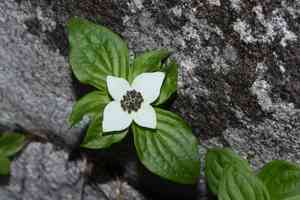
Western cordilleran bunchberry (Cornus unalaschkensis)
Also known as: Western Bunchberry
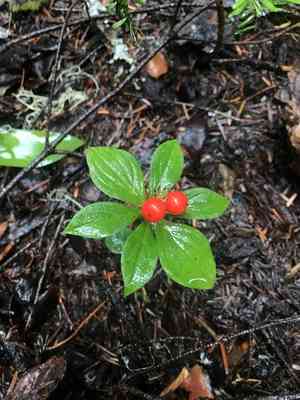
You can tell apart Cornus unalaschkensis from Cornus canadensis by looking at their petal colors. Cornus unalaschkensis often has petals that include some purple, whereas Cornus canadensis typically has white or greenish-white petals.
In This Article
Attributes of Western cordilleran bunchberry
Lifespan
Perennial
Plant Type
Herb
Plant Height
10 cm to 20 cm
Spread
30 cm to 60 cm
Leaf Color
Green
Flower Size
2.5 cm to 5 cm
Flower Color
White
Images of Western cordilleran bunchberry
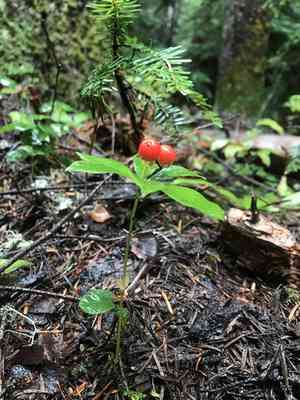
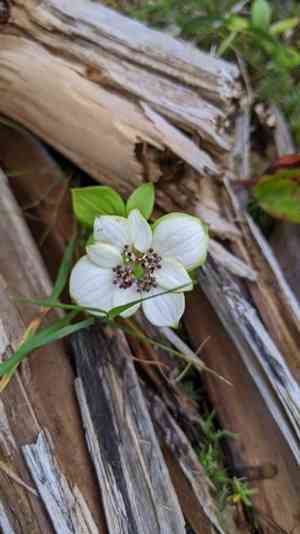
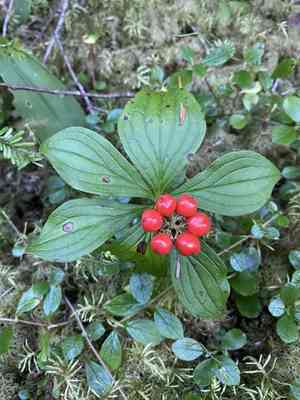
Quickly Identify Western cordilleran bunchberry
1
Western Bunchberries can be identified by their small, white or greenish flowers grouped together in a cluster, surrounded by six large, white bracts. The leaves are oval and arranged in a whorled pattern with several veins running longitudinally.
Scientific Classification of Western cordilleran bunchberry
Phylum
Vascular plants
Class
Dicotyledons
Order
Cornales
Family
Dogwood
Genus
Dogwoods
Species
Western cordilleran bunchberry
Planting and Growing of Western cordilleran bunchberry
Care Difficulty
Moderate
Watering Schedule
Every 2 days
Sunlight Requirements
Partial sun
Sunshine Duration
6-10 hours
Ideal Temperature
55-65℉
Soil Type
Potting Mix, Peat Mix
Soil pH
6.5-7.5
Fertilizer Type
Balanced
Pruning Season
Spring, Summer
Pruning Area
Branches, Leaves
Pruning Frequency
2 times a year
Repotting Season
Spring
Pot Type
Plastic, Ceramic
 How to Water Western cordilleran bunchberry?
Cornus unalaschkensis prefers a consistent moisture level, so aim for around 500ml of water each time. Pour water evenly into the soil until it's fully saturated but not oversaturated, ensuring the soil stays moist without becoming waterlogged.
What are the symptoms of an underwatered Western cordilleran bunchberry?
›
What should I do if my Western cordilleran bunchberry is not getting enough water?
›
What are the symptoms of an overwatered Western cordilleran bunchberry?
›
How to save an overwatered Western cordilleran bunchberry?
›
 What Are the Sunlight Requirements for Western cordilleran bunchberry?
Partial sun to full shade allows Cornus unalaschkensis to develop robust foliage and vibrant color, optimizing its growth while minimizing heat stress.
More About Sunlight Requirements Techniques→
What is the best light condition for Cornus unalaschkensis?
›
How can one ensure this plant gets ideal lighting conditions?
›
What benefits does Cornus unalaschkensis gain from ideal lighting?
›
 What Is the Ideal Temperature Range for Western cordilleran bunchberry?
Cornus unalaschkensis thrives in an ideal temperature range of 55°F to 65°F. This range ensures optimal physiological processes, including photosynthesis and nutrient uptake. Within this band, the plant maintains robust growth and a healthy appearance, making it more resilient to other environmental stresses.
 What Soil is Best for Western cordilleran bunchberry?
Cornus unalaschkensis thrives in well-drained soil, preventing root rot and promoting healthy root aeration, which is crucial for optimal growth and nutrient uptake. The soil should retain moisture without becoming waterlogged. This helps the plant maintain its hydration needs, especially during dry spells, supporting robust growth and vigor. A nutrient-rich soil helps ensure that Cornus unalaschkensis receives the necessary minerals and nutrients for healthy development and resistance to disease.
 How to Fertilize Western cordilleran bunchberry?
When fertilizing Cornus unalaschkensis, use a balanced 10-10-10 fertilizer, applying approximately 1/4 to 1/2 cup around the base of the plant. Ensure the fertilizer is distributed evenly to avoid concentration in one spot, which could lead to root burn.
 How to Prune Western cordilleran bunchberry?
Before you start pruning Cornus unalaschkensis, ensure you have clean, sharp pruning shears. Disinfect them with rubbing alcohol to prevent the spread of diseases. This ensures a clean cut and helps maintain plant health. Focus on cutting back any overgrown branches to maintain the desired size and shape of the plant. Trim the branches back to a lateral bud or to the main branch, which will stimulate new, healthy growth. Inspect the plant carefully and remove any dead, damaged, or diseased branches. This not only improves the plant's appearance but also prevents the spread of diseases and pests.
More About Pruning Techniques→
 How to Propagate Western cordilleran bunchberry plant?
1
Collect seeds from mature Cornus unalaschkensis plants. Clean them by removing any pulpy material, and dry them thoroughly. While some seeds may require stratification, refer to specific guidelines to determine if this step is necessary for germination.
2
Select healthy, non-flowering shoots from the parent plant. Cut below a node using sterilized pruning shears. Each cutting should be 10-15 cm in length. Remove the leaves from the lower half and dip the cut end in a rooting hormone.
3
Division involves separating a parent plant into smaller sections, each with its own roots and shoots. Use a sharp spade to split the plant. This method is best performed in early spring or late autumn when the plant is dormant.
 How to Repot Western cordilleran bunchberry plant?
1
The ideal time to repot Cornus unalaschkensis is during early spring, before new growth starts. Look for signals such as roots poking out from the drainage holes or the plant becomes root-bound. A decrease in growth vigor can also indicate the need for a larger space.
2
Select a pot that is one size larger than the current one to give room for root growth without overwhelming the plant. The pot should have adequate drainage holes to prevent waterlogging. Choosing a breathable, unglazed terracotta pot can enhance aeration to the roots, benefitting the plant's health.
3
Cornus unalaschkensis thrives in a well-draining, slightly acidic soil mix, rich in organic matter. This type of soil emulates its native forest floor conditions, providing essential nutrients while preventing excess moisture retention, which may lead to root rot.



