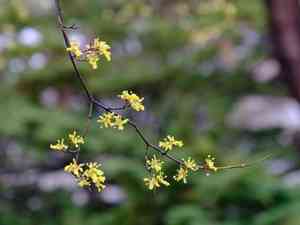
Japanese cornel(Cornus officinalis)

Japanese cornel (Cornus officinalis)

Also known as: Japanese Cornel Dogwood, Asiatic dogwood, Japanese cornelian cherry

The Japanese cornel (Cornus officinalis) is a deciduous shrub or small tree, typically reaching heights of 4.5 to 8 meters. Key characteristics and seasonal changes include:

- **Early Spring**: It features bright yellow flowers that bloom before the leaves emerge, creating an eye-catching display.
- **Summer**: The plant's leaves are dark green and ovate, providing a dense canopy.
- **Autumn**: The foliage transitions through vibrant shades of red, purple, and orange. The shrub also bears red, oval fruits that are edible but have a sour taste.
- **Winter**: The bark, which peels in patches and ranges in color from gray to brown, becomes more prominent, adding visual interest during the dormant season.

The Japanese cornel is admired for its dynamic seasonal transformations, from early blooms to colorful autumn leaves and distinctive winter bark.

Attributes of Japanese cornel

Lifespan
Perennial
Plant Type
Tree, Shrub
Plant Height
4.5 m to 8 m
Spread
3 m to 4.5 m
Leaf Color
Green Red Purple
Flower Size
0.5-1 cm
Flower Color
Yellow

ForwardPlant - Identify plants with a snap

Identify and diagnose plants, get toxicity alerts, and explore safety guides for all types of fungi.

Try for Free

Images of Japanese cornel

Japanese cornel(Cornus officinalis)

Quickly Identify Japanese cornel

1
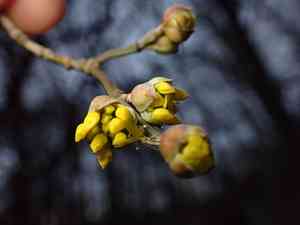
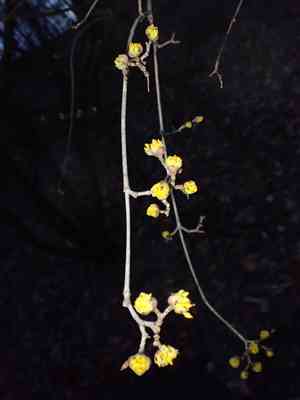
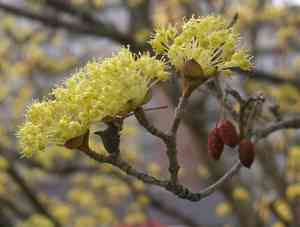
Clusters of yellow blossoms precede foliage in late winter to early spring.
2
Distinctive exfoliating grayish-brown bark enhances winter landscape aesthetics.
3
Small, red to purplish-red ellipsoid fruits with a single stone inside.
4
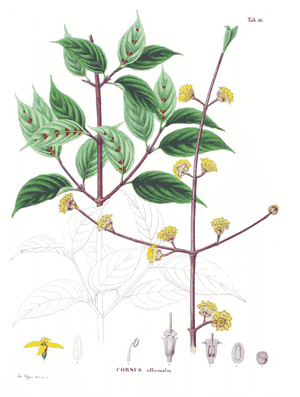
Opposite, ovate to lanceolate leaves with reddish-brown hairs underneath.
5
Flowers are small, yellow, symmetrical, and bloom on naked stems before leaves emerge.

Scientific Classification of Japanese cornel

Phylum
Vascular plants
Class
Dicotyledons
Order
Dogwoods, hydrangeas, and allies
Family
Dogwood
Genus
Dogwoods
Species
Japanese cornel

Planting and Growing of Japanese cornel

Care Difficulty
Easy
Watering Schedule
Every 2 days
Sunlight Requirements
Full sun
Sunshine Duration
6-10 hours
Ideal Temperature
60-75℉
Soil Type
Potting Mix, Peat Mix
Soil pH
6.5-7.5
Fertilizer Type
Balanced
Pruning Season
Spring, Summer
Pruning Area
Branches, Leaves
Pruning Frequency
2 times a year
Repotting Season
Spring
Pot Type
Plastic, Ceramic

water icon How to Water Japanese cornel?

For Cornus officinalis, watering should ensure the soil is evenly moist but not waterlogged. Check the top inch of the soil, and if it's dry, it's time to water. Aim for enough water to see it draining from the pot bottom.
What are the symptoms of an underwatered Japanese cornel? ›
What should I do if my Japanese cornel is not getting enough water? ›
What are the symptoms of an overwatered Japanese cornel? ›
How to save an overwatered Japanese cornel? ›

sunlight icon What Are the Sunlight Requirements for Japanese cornel?

Sunlight Requirements: Full sun, Partial sun
Duration of light: 6 to 8 hours
Cornus officinalis benefits from full sun to partial sun conditions. Ideal lighting promotes lush growth and maximizes the flowering potential, crucial for maintaining aesthetic appeal and plant health.
What type of sunlight does Cornus officinalis prefer? ›
How can Cornus officinalis achieve its ideal sunlight needs? ›
What are the benefits of providing Cornus officinalis with ideal sunlight? ›
More About Sunlight Requirements Techniques→

temperature icon What Is the Ideal Temperature Range for Japanese cornel?

Ideal Temperature: 60 ~ 75℉
Cornus officinalis thrives best in temperatures ranging from 60°F to 75°F. These temperatures provide an optimal environment that supports the plant’s growth, metabolism, and overall health. Consistent temperatures within this range ensure that the plant can photosynthesize efficiently, develop robust structural tissues, and manage water uptake effectively. Providing these ideal conditions helps the Cornus officinalis to flourish, displaying lush foliage and healthy blossoms.

soil icon What Soil is Best for Japanese cornel?

Soil type: Loam, Sandy loam, Acidic soil
Soil PH: 6.5 ~ 7.5
Cornus officinalis thrives in well-drained soil as waterlogged conditions can lead to root rot. Well-draining soil ensures proper aeration and moisture levels, supporting healthy root growth and vibrant foliage. A nutrient-rich soil is essential for Cornus officinalis to flourish. This dogwood species benefits from a fertile soil that provides essential macro and micronutrients necessary for flowering and fruiting. While good drainage is crucial, the soil should also retain enough moisture to sustain the plant during dry spells. This balance helps in maintaining plant hydration and prevents undue stress during hot weather.

fertilize icon How to Fertilize Japanese cornel?

Fertilizer type: Balanced
Cornus officinalis generally depends on moderate amounts of fertilizer for robust growth. For liquid fertilizers, dilute them to half their recommended strength to avoid root burn. Use approximately 1-2 gallons of this diluted solution per plant per application, ensuring even distribution over the root zone.

prune icon How to Prune Japanese cornel?

Pruning Time: Spring, Summer, Autumn
Begin by identifying branches that are crossing, dead, or diseased. These should be the first to go, as they can inhibit healthy growth and contribute to disease spread. Look for branches that disturb the main structure or natural shape of the plant, and mark them for removal. Make your cuts just above a leaf node or a bud that is pointing in the direction you want new growth to appear. This encourages the plant to produce branches that contribute to a more aesthetically pleasing and structurally sound shape. Be sure to make cuts at a slight angle to facilitate water runoff. After removing targeted branches, take a step back and evaluate the overall shape and balance of the plant. This can help ensure symmetry and proportion, which are important for both aesthetic reasons and the health of Cornus officinalis. It's better to make small cuts gradually than to cut too aggressively and potentially damage the plant. More About Pruning Techniques→

propagate icon How to Propagate Japanese cornel plant?

Propagate Time: Spring, Early spring
1
Begin by soaking Cornus officinalis seeds in warm water for 24 hours to soften the seed coat and encourage germination. This process helps in ensuring a higher germination rate when planted.
2
Select healthy stems from a mature Cornus officinalis plant, ensuring that each cutting is about 10-15 cm long. Remove the lower leaves and dip the cut end in rooting hormone to promote root development before placing it in a moist growing medium.
3
For grafting, select a healthy rootstock and a compatible scion. Both should be of similar diameter. Make a clean cut on both parts, align them, and securely tape them together. Keep the grafted plant in a humid and protected area to promote initial healing and fusion.
More About Propagating Techniques→

repot icon How to Repot Japanese cornel plant?

Repotting frequency: Every 2-3 years
1
You can tell that Cornus officinalis needs repotting when you notice roots coming out of the drainage holes or the soil drying out more quickly than usual. A lack of new growth in the active growing seasons can also be a sign. Ideally, repot when the plant is in its dormancy stage at the end of winter or early spring, or during early autumn when the weather isn't too harsh.
2
Choose a pot that is just one size larger than the current one, which helps to prevent waterlogging by ensuring the soil doesn’t stay too wet. The pot should have ample drainage holes to allow excess water to escape. The material of the pot, whether clay, ceramic, or plastic, should be chosen based on personal preference and environmental conditions. The right pot enhances root health and reduces the risks of root rot.
3
Selecting well-draining loamy soil enriched with organic matter is essential. It provides adequate drainage while retaining essential moisture, preventing both extremities of drought and waterlogging. The nutrient-rich composition boosts plant growth, ensuring a healthy environment for Cornus officinalis to thrive and flourish.

ForwardPlant - Identify plants with a snap

Find the best spots for them to optimize their health, simply using your phone.

Try for Free