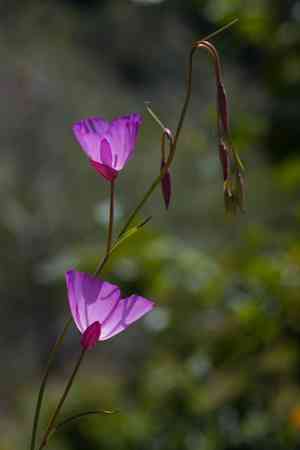
Beaked clarkia(Clarkia rostrata)

Beaked clarkia (Clarkia rostrata)

Also known as: Speckled Clarkia, Beaked Clarkia

Beaked clarkia (Clarkia rostrata) thrives in its native settings due to several specialized traits:

1. **Flower Structure:** Its distinctive, elongated flowers in vivid pink and lavender shades grow in clusters, attracting pollinators.
2. **Habitat Preference:** It prefers open, sunny areas, which are typical of its native California environment.
3. **Adaptation to Dryness:** The plant's slender stems and narrow leaves are well-suited to withstand arid conditions.
4. **Unique Floral Spur:** The rostrum-like spur of its flowers sets it apart from other species, aiding in species identification.

These features collectively help beaked clarkia flourish in its natural, often dry habitats.

Attributes of Beaked clarkia

Lifespan
Annual
Plant Type
Herb
Plant Height
30-90 cm
Spread
10-30 cm
Leaf Color
Green
Flower Size
2-5 cm
Flower Color
Purple, Pink

ForwardPlant - Identify plants with a snap

Identify and diagnose plants, get toxicity alerts, and explore safety guides for all types of fungi.

Try for Free

Images of Beaked clarkia

Beaked clarkia(Clarkia rostrata)

Quickly Identify Beaked clarkia

1
Clarkia rostrata can be identified by its tall, slender stems and distinctive beaked seed pods. Its flowers are usually purple or pink with speckled petals, making them stand out in wildflower meadows.

Scientific Classification of Beaked clarkia

Phylum
Vascular plants
Class
Dicotyledons
Order
Myrtales
Family
Evening primrose
Genus
Clarkia
Species
Beaked clarkia

Planting and Growing of Beaked clarkia

Care Difficulty
Moderate
Watering Schedule
Every 2 days
Sunlight Requirements
Full sun
Sunshine Duration
4-8 hours
Ideal Temperature
60-75℉
Soil Type
Potting Mix, Peat Mix
Soil pH
6.5-7.5
Fertilizer Type
Balanced
Pruning Season
Spring, Summer
Pruning Area
Branches, Leaves
Pruning Frequency
2 times a year
Repotting Season
Spring
Pot Type
Plastic, Ceramic

water icon How to Water Beaked clarkia?

Clarkia rostrata appreciates moderate watering, where each session involves approximately 150 milliliters per plant. Ensure that the soil is evenly moist, but not waterlogged. It's essential to let the top layer of soil dry out between waterings to avoid root rot.
What are the symptoms of an underwatered Beaked clarkia?
What should I do if my Beaked clarkia is not getting enough water?
What are the symptoms of an overwatered Beaked clarkia?
How to save an overwatered Beaked clarkia?

sunlight icon What Are the Sunlight Requirements for Beaked clarkia?

Sunlight Requirements: Full sun, Partial sun
Duration of light: 6 to 8 hours daily
Clarkia rostrata ideally benefits from full sun to partial sun. Such light conditions foster lush growth and optimal flowering. Ensuring adequate sunlight helps maintain its health, supports energy processes, and enhances its visual and flowering characteristics.
How much sunlight does Clarkia rostrata need?
What happens if light conditions are not ideal?
How to adjust light conditions for best growth?

temperature icon What Is the Ideal Temperature Range for Beaked clarkia?

Ideal Temperature: 60 ~ 75℉
Clarkia rostrata thrives best in a temperature range of 60°F to 75°F. This range allows the plant to photosynthesize efficiently and maintain healthy growth rates. Within this bracket, metabolic processes function optimally, facilitating robust flowering cycles.

soil icon What Soil is Best for Beaked clarkia?

Soil type: Loam, Sandy loam, Sand soil
Soil PH: 6.5 ~ 7.5
Clarkia rostrata thrives in well-draining soil which prevents waterlogging and root rot, ensuring the roots receive adequate oxygen. Optimal drainage supports the plant's vigorous health and abundant blooming. A soil with moderate fertility is ideal for Clarkia rostrata as it ensures balanced nutrient availability. This balance promotes steady growth and enhances the plant's blooming potential without overwhelming its natural growth patterns. Loose-textured soil is preferable as it allows easy root penetration and expansion. This not only supports healthy root systems but also improves nutrient uptake efficiency, contributing to the overall robustness of the plant.

fertilize icon How to Fertilize Beaked clarkia?

Fertilizer type: Balanced
For Clarkia rostrata, it's advisable to use a balanced fertilizer diluted to half the recommended strength. When using liquid fertilizer, aim for about one tablespoon mixed in one gallon of water for each feeding. For slow-release fertilizers, follow the manufacturer's instructions but generally use a teaspoon per square foot of soil.

prune icon How to Prune Beaked clarkia?

Pruning Time: Spring, Summer
Start by inspecting the plant for any dead or diseased stems. Use clean, sharp pruning shears to make clean cuts just above a node where fresh leaves are sprouting. This encourages the plant to produce more lush foliage. Next, trim back any overly long stems that might disrupt the plant’s overall shape, and cut back faded flowers to encourage new bloom spikes. Aim to maintain a balanced shape to allow for good air circulation. More About Pruning Techniques

propagate icon How to Propagate Beaked clarkia plant?

Propagate Time: Spring, Early summer
1
Fill the seed trays with a sterilized potting mix suitable for seed starting. Ensure that the soil is evenly distributed and lightly compacted to eliminate air gaps. Moisten the soil slightly before sowing the seeds to provide an ideal environment for germination.
2
Sprinkle Clarkia rostrata seeds evenly on the surface of the prepared soil. Cover them lightly with a thin layer of potting mix, ensuring they remain close to the surface, as they require light to germinate. Keep the seeds at a temperature between 18-22°C for optimal germination.
3
After sowing, maintain consistent moisture by misting the soil surface with a spray bottle. Avoid overwatering, which can cause the seeds or seedlings to rot. Monitor the seeds regularly and provide additional water if the soil begins to dry out.
More About Propagating Techniques

repot icon How to Repot Beaked clarkia plant?

Repotting frequency: Annually or when needed
1
Clarkia rostrata usually signals the need for repotting when you notice that its roots are poking out of the drainage holes, or when its growth appears stunted despite proper care. These are clear signs that the plant has outgrown its current pot and requires more space to thrive.
2
Opt for a pot that is slightly larger than the current one, about 1-2 inches wider in diameter. This allows for adequate growth space while preventing overwatering issues that can arise in much larger pots. A pot with drainage holes is crucial for preventing waterlogged soil, which can damage roots.
3
Choose a well-draining soil mix with a mix of sand, peat, and perlite. This combination ensures moisture retention without waterlogging, allowing the roots to breathe and absorb nutrients efficiently. This type of soil supports healthy growth and prevents root rot issues.

ForwardPlant - Identify plants with a snap

Find the best spots for them to optimize their health, simply using your phone.

Try for Free
