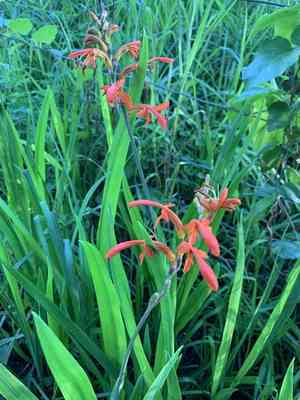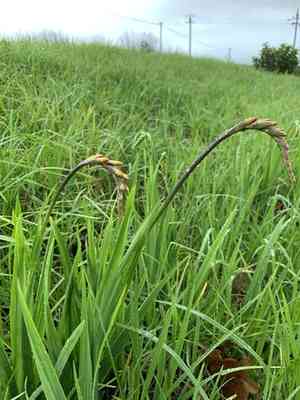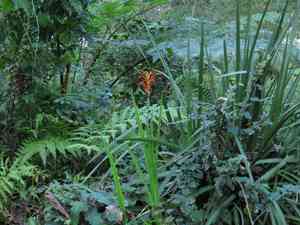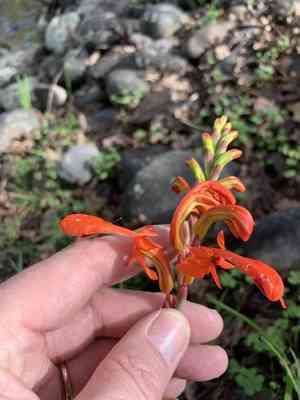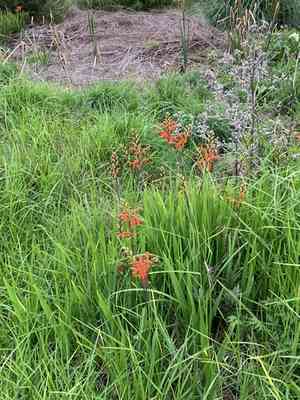
African corn flag(Chasmanthe aethiopica)

African corn flag (Chasmanthe aethiopica)

Also known as: African Cornflag, Cobra Lily

The African corn flag (Chasmanthe floribunda) is a perennial native to South Africa, celebrated for its tall, sword-shaped leaves and vibrant tubular flowers that bloom on impressive spikes. These flowers, usually in shades of bright orange or red, make a striking appearance from late winter to early spring. The plant thrives in well-drained soil and utilizes its corms to store nutrients, making it well-suited to its Mediterranean-like environment.

**Growing Conditions:**
- **Light:** Prefers full sun to partial shade.
- **Soil:** Needs well-drained, fertile soil.
- **Water:** Requires regular watering during the growing season but is drought-tolerant once established.
- **Climate:** Best suited for mild, frost-free climates.
- **USDA Zones:** Ideal for zones 9-11.

Care involves removing spent flowers and mulching to retain moisture and suppress weeds.

Attributes of African corn flag

Lifespan
Perennial
Plant Type
Herb
Plant Height
100 cm - 150 cm
Spread
Not applicable
Leaf Color
Green
Flower Size
2 cm - 4 cm
Flower Color
Orange, Red

ForwardPlant - Identify plants with a snap

Identify and diagnose plants, get toxicity alerts, and explore safety guides for all types of fungi.

Try for Free

Images of African corn flag

African corn flag(Chasmanthe aethiopica)

Quickly Identify African corn flag

1
Identifying Chasmanthe aethiopica can be achieved by observing its tall, sword-shaped leaves and bright tubular flowers arranged on one side of an erect spike. The flowers are typically orange or red with a curved shape reminiscent of a cobra\'s hood.

Scientific Classification of African corn flag

Phylum
Vascular plants
Class
Monocotyledons
Order
Asparagales
Family
Iris
Genus
African cornflags
Species
African corn flag

Planting and Growing of African corn flag

Care Difficulty
Moderate
Watering Schedule
Every 2 days
Sunlight Requirements
Full sun
Sunshine Duration
6-12 hours
Ideal Temperature
60-75℉
Soil Type
Potting Mix, Peat Mix
Soil pH
6.5-7.5
Fertilizer Type
Balanced
Pruning Season
Spring, Summer
Pruning Area
Leaves, Branches
Pruning Frequency
2 times a year
Repotting Season
Spring
Pot Type
Plastic, Ceramic

water icon How to Water African corn flag?

Chasmanthe aethiopica requires a moderate watering regime, you should aim to deliver approximately 500 ml of water per session. The goal is to moisten the soil evenly without making it soggy, ensuring the roots receive ample hydration without becoming waterlogged.
What are the symptoms of an underwatered African corn flag?
What should I do if my African corn flag is not getting enough water?
What are the symptoms of an overwatered African corn flag?
How to save an overwatered African corn flag?

sunlight icon What Are the Sunlight Requirements for African corn flag?

Sunlight Requirements: Full sun, Partial sun
Duration of light: 4-6 hours daily
Chasmanthe aethiopica prefers a light range of full sun to partial sun. Ideal lighting will enable vigorous growth, enhanced foliage, and vibrant flowering.
What is the ideal sunlight exposure for Chasmanthe aethiopica?
How can I ensure my Chasmanthe aethiopica gets enough sunlight?
What are the benefits of proper sunlight for Chasmanthe aethiopica?

temperature icon What Is the Ideal Temperature Range for African corn flag?

Ideal Temperature: 60 ~ 75℉
Chasmanthe aethiopica thrives best in conditions where temperatures range between 60°F to 75°F. This range mimics its natural habitat, promoting healthy foliage and vibrant flowering. Maintaining these temperatures ensures the plant absorbs nutrients efficiently and photosynthesizes effectively.

soil icon What Soil is Best for African corn flag?

Soil type: Sandy soil, Loam, Sandy loam
Soil PH: 6.5 ~ 7.5
Chasmanthe aethiopica thrives in well-drained soils that prevent waterlogging and root rot. Well-drained conditions allow the roots to receive adequate oxygen and promote healthy growth. This plant benefits from soils enriched with organic matter, such as compost. Nutrient-rich soil supports robust flowering and vibrant foliage, enhancing the visual appeal of the plant. While demanding drainage, Chasmanthe aethiopica also needs soil that retains some moisture to provide consistent hydration. This balance aids in sustaining the plant during dry spells.

fertilize icon How to Fertilize African corn flag?

Fertilizer type: Balanced
For Chasmanthe aethiopica, a balanced application of fertilizer ensures robust flowering. When using liquid fertilizer, a concentration of 20-20-20 NPK is recommended at half the standard label rate to prevent over-fertilization. This gentler approach suits the plant's moderate nutritional needs.

prune icon How to Prune African corn flag?

Pruning Time: Spring, Summer
Start by inspecting the plant for any dead or diseased stems or leaves. Use sterilized pruning shears to remove these parts close to the base, promoting overall plant health. After removing unhealthy growth, shape the plant to encourage a compact and full form. Cut back long, sprawling stems to a bud or node, making sure to create a balanced shape for optimal aesthetic appeal. More About Pruning Techniques

propagate icon How to Propagate African corn flag plant?

Propagate Time: Early spring, Spring, Late spring
1
Loosen the soil in well-drained seed trays or pots, ensuring it's moist but not waterlogged. This creates an ideal environment for the seeds to germinate and develop strong root systems.
2
Plant the Chasmanthe aethiopica seeds about 0.5 cm deep in the soil mix. Cover them lightly with soil, ensuring they are shielded from light but still retain enough warmth to germinate.
3
Regularly check the moisture levels in the seed trays, watering gently when necessary. Avoid overwatering as it can lead to root rot, which is detrimental to seedling growth.
More About Propagating Techniques

repot icon How to Repot African corn flag plant?

Repotting frequency: Every 2-3 years
1
Chasmanthe aethiopica should be repotted when you observe roots growing out of the drainage holes or if its growth slows considerably. Spring is the ideal time, as it aligns with the plant's natural growth cycle, ensuring it has ample support for new growth and root development.
2
Select a pot that is only a few inches larger than the current one. It must have drainage holes; this prevents waterlogging, which can cause root rot. A slightly larger pot balances the need for root space while avoiding excessive unused soil, which stays wet too long.
3
Choose a well-draining sandy loam as it provides the right balance of nutrients while preventing water retention. This mix allows air to circulate around the roots, promoting healthy development and minimizing the risk of diseases caused by excess moisture.

ForwardPlant - Identify plants with a snap

Find the best spots for them to optimize their health, simply using your phone.

Try for Free

Toxicity

Ingestion

Identify toxic plants for your safety

Learn which plants are harmful to you and your pets, and make informed choices for a safer home!

Try for Free
WARNING
The judgment on toxicity and danger is for reference only. We DO NOT GUARANTEE any accuracy of such judgment. Therefore, you SHALL NOT rely on such judgment. It is IMPORTANT TO SEEK PROFESSIONAL ADVICE in advance when necessary.