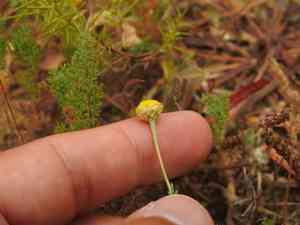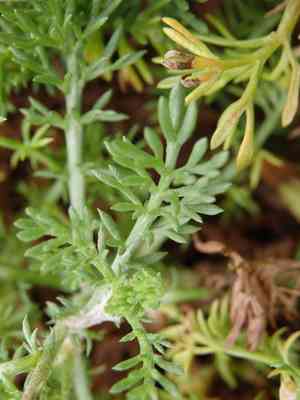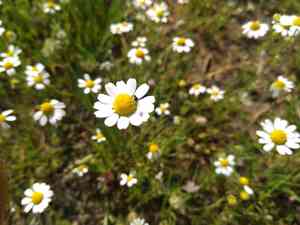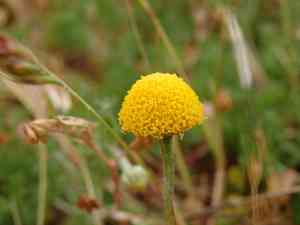
Roman chamomile(Chamaemelum nobile)

Roman chamomile (Chamaemelum nobile)

Also known as: Sweet chamomile, English chamomile, Perennial chamomile, Low chamomile, Whig plant

Roman Chamomile (*Chamaemelum nobile*) is a perennial evergreen that stays low to the ground, typically reaching heights of 20 to 30 cm. It produces blooms from summer through fall, featuring daisy-like flowers with white petals and yellow centers. This plant is also edible and commonly used in teas and culinary dishes.

Attributes of Roman chamomile

Lifespan
Perennial, Annual
Plant Type
Herb
Plant Height
30 cm
Spread
45 cm
Leaf Color
Green
Flower Size
2.5 cm
Flower Color
White Yellow

ForwardPlant - Identify plants with a snap

Identify and diagnose plants, get toxicity alerts, and explore safety guides for all types of fungi.

Try for Free

Images of Roman chamomile

Roman chamomile(Chamaemelum nobile)

Quickly Identify Roman chamomile

1
Low-to-ground growth rarely exceeding 12 inches (30 cm) in height.
2
Finely divided feather-like leaves with a fragrant and delicate nature.
3
White petal flowers surrounding a yellow central disc, resembling daisies.
4
Creeping roots forming dense mats for stability and lush appearance.
5
Petals arranged in a single row, radiating symmetrically from the center.

Scientific Classification of Roman chamomile

Phylum
Vascular plants
Class
Dicotyledons
Order
Asterales
Family
Daisy
Genus
Chamomiles
Species
Roman chamomile

Planting and Growing of Roman chamomile

Care Difficulty
Easy
Watering Schedule
Every 3 days
Sunlight Requirements
Full sun
Sunshine Duration
6-10 hours
Ideal Temperature
60-70℉
Soil Type
Potting Mix, Peat Mix
Soil pH
6.5-7.5
Fertilizer Type
Balanced
Pruning Season
Spring, Summer
Pruning Area
Branches, Leaves
Pruning Frequency
2 times a year
Repotting Season
Spring
Pot Type
Plastic, Ceramic

water icon How to Water Roman chamomile?

Chamaemelum nobile, commonly known as Roman Chamomile, appreciates regular watering. Ensure the soil is moist but not soggy. Use approximately 250 ml of water each time, aiming to let the moisture penetrate to a depth of several inches.
What are the symptoms of an underwatered Roman chamomile?
What should I do if my Roman chamomile is not getting enough water?
What are the symptoms of an overwatered Roman chamomile?
How to save an overwatered Roman chamomile?

sunlight icon What Are the Sunlight Requirements for Roman chamomile?

Sunlight Requirements: Full sun, Partial sun
Duration of light: 5-8 hours daily
Chamaemelum nobile prefers partial to full sun, requiring around five to eight hours of light every day. This helps the plant maintain vigorous growth and produces abundant, fragrant blooms during its flowering season.
How much sunlight does it need?
What if full sun is unavailable?
How to optimize sunlight exposure?
More About Sunlight Requirements Techniques

temperature icon What Is the Ideal Temperature Range for Roman chamomile?

Ideal Temperature: 60 ~ 70℉
The ideal temperature range for growing Chamaemelum nobile, commonly known as Roman chamomile, is between 60°F to 70°F. This range provides optimal conditions for growth and flowering, ensuring that the plant has sufficient warmth while not being exposed to excessive heat, which can negatively impact its development.

soil icon What Soil is Best for Roman chamomile?

Soil type: Sandy loam, Loam
Soil PH: 6.5 ~ 7.5
Chamaemelum nobile thrives in well-draining soil, essential for preventing root rot. Sandy loam is ideal as it provides good aeration and drainage, ensuring the roots remain healthy and robust. A nutrient-rich substrate is crucial to support the growth and flowering of Chamaemelum nobile. Mixing in organic matter like compost can enhance the soil's fertility, leading to more vibrant and aromatic blooms. While drainage is important, the soil should also retain a moderate amount of moisture to keep the plant hydrated. Loam soils offer a balance that retains moisture without becoming waterlogged, necessary for sustained growth.

fertilize icon How to Fertilize Roman chamomile?

Fertilizer type: Balanced
For Chamaemelum nobile, a balanced 10-10-10 NPK fertilizer should be used. In the case of liquid fertilizers, mix them at half the recommended strength to avoid over-fertilizing. For solid fertilizers, an annual application of about 50 grams per square meter is adequate.

prune icon How to Prune Roman chamomile?

Pruning Time: Spring, Summer, Autumn
To begin pruning Chamaemelum nobile, first remove any spent or wilted flowers to encourage further blooming. Follow by trimming back stems that appear overcrowded or are infringing on the shape you desire. Pruning back to healthy leaf nodes promotes bushier growth. Focus on maintaining an even shape by cutting at angles that follow the plant's natural form. This not only keeps the plant attractive but also ensures sunlight reaches all parts evenly, promoting uniform growth. More About Pruning Techniques

propagate icon How to Propagate Roman chamomile plant?

Propagate Time: Spring, Early summer
1
Fill a seed tray with a quality seed-starting mix, sow the seeds thinly, and lightly cover them with the mix. Keep moisture consistent to ensure even germination.
2
Select a healthy stem from the parent plant, use pruning shears to make a clean cut just below a node, and remove the lower leaves before planting the cutting in potting mix.
3
Gently lift the plant from its container, carefully separate the roots of Chamaemelum nobile into sections, ensuring each has ample roots and shoots, and replant each division.
More About Propagating Techniques

repot icon How to Repot Roman chamomile plant?

Repotting frequency: Every 1-2 years
1
Repot when Chamaemelum nobile shows signs it's outgrown its pot, like roots emerging from drainage holes, soil drying out quickly after watering, or slowed growth. These are clear signals it's time for new space to flourish.
2
Select a pot about 1-2 inches larger in diameter than the current one. Ensure it has adequate drainage holes to prevent water-logging and root rot. Using a slightly bigger pot encourages healthy root growth without overly large spaces that can lead to water retention issues.
3
Opt for a well-draining soil mix, ideally with a blend of sand, loam, and organic matter. This mix mimics natural conditions, provides excellent drainage, and retains enough moisture for nutrient absorption, ensuring healthy plant growth.

ForwardPlant - Identify plants with a snap

Find the best spots for them to optimize their health, simply using your phone.

Try for Free

Toxicity of Roman chamomile

Is Roman chamomile toxic to cat?

Roman chamomile has a mild toxicity to cats when ingested in limited quantities. The plant's juices are composed of several toxic substances that may lead to gastrointestinal discomfort and skin irritation in felines. Every part of the plant is toxic. This includes not only the fresh or dried plants, but also tea bags and essential oils which contain these harmful compounds. Nonetheless, most interactions between cats and roman chamomile tend to be non-fatal, as the acidic flavor discourages them from consuming a significant amount.

Is Roman chamomile toxic to dog?

Roman chamomile presents a mild toxicity risk to dogs when consumed in significant quantities. Every part of the plant contains a variety of essential oils along with harmful acids, such as tannic and anthemic acids. When in contact with crushed or damaged sections of the plant, pets may experience contact dermatitis, and excessive consumption can lead to vomiting, diarrhea, and decreased appetite. Fortunately, instances of roman chamomile poisoning are generally mild and tend to resolve naturally without intervention.

Identify toxic plants for your safety

Learn which plants are harmful to you and your pets, and make informed choices for a safer home!

Try for Free
WARNING
The judgment on toxicity and danger is for reference only. We DO NOT GUARANTEE any accuracy of such judgment. Therefore, you SHALL NOT rely on such judgment. It is IMPORTANT TO SEEK PROFESSIONAL ADVICE in advance when necessary.
More About Toxic Techniques