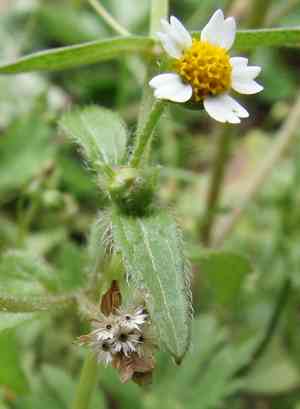
Common tarweed (Centromadia pungens)
Also known as: Smooth tarplant
Grindelia robusta is an herbaceous plant that can grow up to 1.2 meters in height. It features clusters of numerous yellow flower heads containing both ray florets and disc florets.
In This Article
Attributes of Common tarweed
Lifespan
Annual
Plant Type
Herb
Plant Height
Up to 1 meter (3.3 feet)
Spread
Approximately 0.3 to 0.5 meters
Leaf Color
Green
Flower Size
Approximately 1 to 2 centimeters
Flower Color
Yellow
Images of Common tarweed
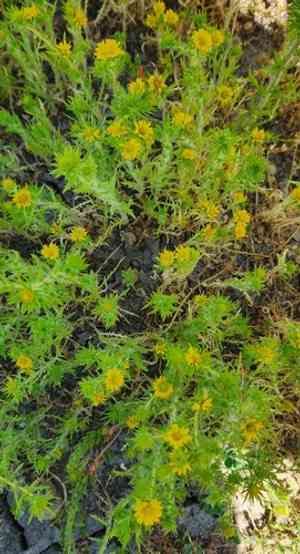
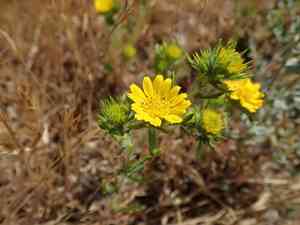
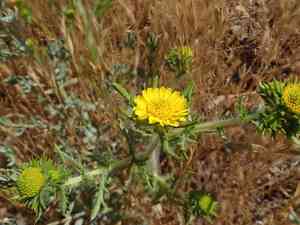
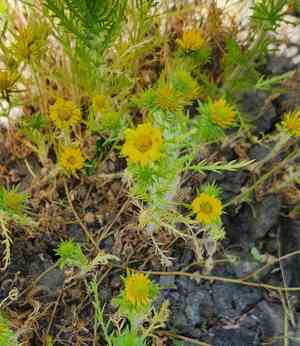
Quickly Identify Common tarweed
1
To identify Centromadia pungens, look for its sticky and spiny leaves along with the presence of yellow flower heads. The leaves often have a pungent, resin-like smell. It typically blooms in summer to early fall.
Scientific Classification of Common tarweed
Phylum
Vascular plants
Class
Dicotyledons
Order
Asterales
Family
Daisy
Genus
Tarweed
Species
Common tarweed
Planting and Growing of Common tarweed
Care Difficulty
Easy
Watering Schedule
Every 3 days
Sunlight Requirements
Full sun
Sunshine Duration
6-8 hours
Ideal Temperature
65-85℉
Soil Type
Potting Mix, Peat Mix
Soil pH
6.5-7.5
Fertilizer Type
Balanced
Pruning Season
Spring, Summer
Pruning Area
Branches, Leaves
Pruning Frequency
2 times a year
Repotting Season
Spring
Pot Type
Plastic, Ceramic
 How to Water Common tarweed?
Centromadia pungens thrives on being moderately watered, meaning the soil should be kept moist but not waterlogged. An amount of approximately 300 ml ensures it's hydrated without risking root rot. It's crucial to water until the top few inches of soil are visibly moist, yet let excess water drain away to prevent pooling.
What are the symptoms of an underwatered Common tarweed?
›
What should I do if my Common tarweed is not getting enough water?
›
What are the symptoms of an overwatered Common tarweed?
›
How to save an overwatered Common tarweed?
›
 What Are the Sunlight Requirements for Common tarweed?
Centromadia pungens prospers in full to partial sun conditions. Proper light exposure ensures strong growth and blooming, enhancing its ecological and ornamental roles in native gardens.
How much sunlight does Centromadia pungens need daily?
›
How can I ensure Centromadia pungens gets ideal lighting?
›
What are the benefits of optimal sunlight for Centromadia pungens?
›
 What Is the Ideal Temperature Range for Common tarweed?
The ideal temperature range for Centromadia pungens cultivation is between 65°F and 85°F. These conditions support optimal growth and flowering. Maintaining temperatures in this range ensures the plant has sufficient warmth for photosynthesis and development without the risk of overheating which might cause stress.
 What Soil is Best for Common tarweed?
Centromadia pungens thrives in well-drained soils that allow excess water to flow away quickly, preventing root rot and promoting healthy growth. Such conditions mimic its natural habitat and ensure optimal nutrient absorption. Having nutrient-rich soil is beneficial for Centromadia pungens as it provides the essential minerals the plant needs to maintain vibrant growth and resilience against environmental stressors. A sandy texture is crucial for Centromadia pungens, as it enhances air circulation around the roots, enabling efficient gas exchange and facilitating robust plant health.
 How to Fertilize Common tarweed?
Centromadia pungens does not require heavy fertilization. Applying liquid fertilizer at a dilution of 1/4th strength ensures that the plant receives enough nutrients without the risk of root burn. For solid fertilizers, a light application of 1-2 tablespoons per plant is sufficient to support its growth.
 How to Prune Common tarweed?
Start by removing any dead, diseased, or damaged stems. Use sharp, clean pruning shears, cutting back to a healthy bud or lateral branch. Focus on thinning overcrowded branches to improve air flow and increase light penetration. To maintain the desired shape of Centromadia pungens, selectively prune excess growth, snipping just above a leaf node. This not only keeps the plant tidy but also promotes additional branching, resulting in a more compact and attractive form.
More About Pruning Techniques→
 How to Propagate Common tarweed plant?
1
Choose mature and healthy seeds of Centromadia pungens for propagation. Inspect seeds for any signs of damage or disease to ensure the best germination results. Start by purchasing seeds from a reputable supplier or collecting them from vigorous, healthy plants.
2
Fill the seed tray with a sterile seed starting mix and evenly spread the seeds over the surface. Cover them lightly with the mix, no more than twice the thickness of the seeds, to allow light penetration for germination.
3
Place the seed trays in a well-lit area, ensuring consistent warmth around 18-24°C. Use a humidity dome or plastic cover to retain moisture and warmth, but ensure there is some ventilation to prevent fungal diseases.
 How to Repot Common tarweed plant?
1
Centromadia pungens generally requires repotting when its roots become too crowded in the pot. This can be indicated by roots growing out of the drainage holes, the soil drying out quickly after watering, or if you notice a decline in plant health. Early spring or autumn are ideal times, as the plant is not in active growth and is less stressed during these periods.
2
Select a pot that is about 2 inches larger in diameter than the current one. This size allows the plant room to grow without overwhelming it with too much soil, which can lead to water retention and root rot. Pots made of breathable materials like terracotta help keep the soil from becoming waterlogged and are generally a good choice.
3
Opt for a well-draining, sandy soil mix suited to Centromadia pungens' needs. Such soil allows for adequate drainage while retaining essential nutrients, helping to prevent root rot and promoting a healthy root system. A mixture containing part perlite or coarse sand tends to work well, mimicking the plant’s natural growing conditions.
Learn More About Common tarweed Diseases
Anthracnose
Bacterial Leaf Spot
Bacterial Soft Rot
Bacterial Wilt
Black Spot
Chemical Injury
Crown Gall
Cyst Nematode
Damping-off
Downy Mildew
Drought Stress
Fusarium Wilt
Gray Mold
Leaf Curl
Leaf Spot
Mosaic
Nutrient Deficiency
Nutrient Toxicity
Powdery Mildew
Root Rot
Root-knot Nematode
Rusts
Sooty Mold
Spider Mites
Temperature Stress
Thrips Damage
White Mold



