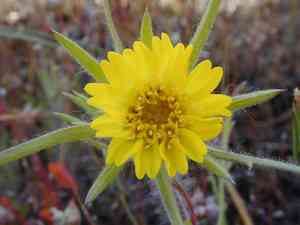
Fitch's tarweed (Centromadia fitchii)
Also known as: Fitch's tarweed
Fitch's tarweed is a hardy plant known for its slender, pointed leaves with a gray-green color. One of its most notable characteristics is the clusters of vibrant yellow flowers that bloom in dry, open areas. This resilient species has developed several adaptations to thrive in arid environments, such as deep root systems for accessing water, succulent leaves for water storage, and a waxy coating to minimize water loss. These features collectively enable Fitch's tarweed to conserve water and endure harsh, dry conditions.
In This Article
Attributes of Fitch's tarweed
Lifespan
Annual
Plant Type
Herb
Plant Height
10-50 cm
Spread
Not widely referenced
Leaf Color
Green
Flower Size
1-2 cm
Flower Color
Yellow
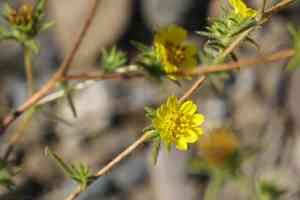
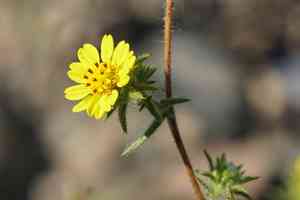
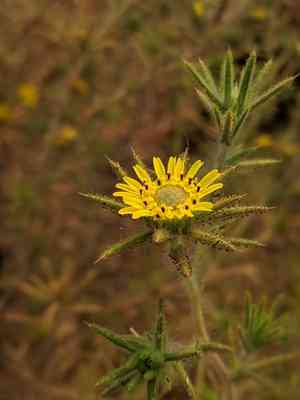
Images of Fitch's tarweed
Quickly Identify Fitch's tarweed
1
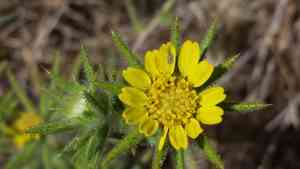
To identify Centromadia fitchii, look for its characteristic yellow flowers with dark centers, bristly stems, and narrow, lanceolate leaves. The plant often produces a sticky, resinous secretion.
Scientific Classification of Fitch's tarweed
Phylum
Vascular plants
Class
Dicotyledons
Order
Asterales
Family
Daisy
Genus
Tarweed
Species
Fitch's tarweed
Planting and Growing of Fitch's tarweed
Care Difficulty
Hard
Watering Schedule
Every 2 days
Sunlight Requirements
Full sun
Sunshine Duration
4-8 hours
Ideal Temperature
60-75℉
Soil Type
Potting Mix, Peat Mix
Soil pH
6.5-7.5
Fertilizer Type
Balanced
Pruning Season
Spring, Summer
Pruning Area
Branches, Leaves
Pruning Frequency
2 times a year
Repotting Season
Spring
Pot Type
Plastic, Ceramic
 How to Water Fitch's tarweed?
Centromadia fitchii thrives well with a consistent watering approach where the soil is allowed to dry out between sessions. The ideal water dosage is about 250 milliliters per session, ensuring the soil is evenly moist but not waterlogged. Always use the finger test: if the top inch of soil feels dry, it's time to water.
What are the symptoms of an underwatered Fitch's tarweed?
›
What should I do if my Fitch's tarweed is not getting enough water?
›
What are the symptoms of an overwatered Fitch's tarweed?
›
How to save an overwatered Fitch's tarweed?
›
 What Are the Sunlight Requirements for Fitch's tarweed?
Centromadia fitchii, when exposed to 6-8 hours of full sun daily, displays optimal growth and vibrant blossoms. This light range supports its life cycle, enhancing its ecological role.
How much light does Centromadia fitchii need?
›
What if direct sunlight is not available?
›
Why is full sun important for Centromadia fitchii?
›
 What Is the Ideal Temperature Range for Fitch's tarweed?
For Centromadia fitchii, an ideal temperature range of 60 to 75°F supports optimal growth and health. Within this range, the plant can maintain proper cellular processes, including photosynthesis and nutrient uptake. This temperature facilitates robust root development and encourages healthy foliage and flowering. It ensures that the plant environment is neither too warm, which can cause stress and dehydration, nor too cold, which can slow down metabolic processes. Maintaining this range helps the plant resist diseases and promotes overall vitality.
 What Soil is Best for Fitch's tarweed?
Centromadia fitchii thrives in well-drained soils, which prevent waterlogging and root rot, ensuring the plant can access the oxygen it needs to flourish. Incorporating organic compost into the soil enhances its fertility, providing Centromadia fitchii with essential nutrients for vibrant growth and robust flowering. While drainage is crucial, the soil should also retain enough moisture to sustain the plant during dry spells, ensuring it remains healthy and resilient.
 How to Fertilize Fitch's tarweed?
Centromadia fitchii prefers a moderate amount of fertilizer. When applying liquid fertilizer, use a diluted solution with a concentration of 50% every month. For slow-release granules, apply about 50 grams per square meter twice a year. Avoid over-fertilization, which may harm the plant's natural growth habits.
 How to Prune Fitch's tarweed?
Begin by identifying any dead or decayed stems, since removing these can prevent disease spread. Prune during the early morning or late afternoon to allow the plant time to heal without excessive water loss.
More About Pruning Techniques→
 How to Propagate Fitch's tarweed plant?
1
Fill the seed tray with a sterile potting mix, ensuring it's evenly distributed. Lightly water the soil to ensure it is moist but not soggy, providing an ideal environment for seed germination.
2
Sprinkle Centromadia fitchii seeds evenly on the soil surface, then gently press them into the soil. Do not bury them too deep, as they require light to germinate. Mist with water to settle the seeds.
3
Place the seed tray in a warm, sunny location or under grow lights. Maintain consistent moisture and a temperature range of 65-75°F (18-24°C) for best germination results, usually within two to four weeks.
 How to Repot Fitch's tarweed plant?
1
Centromadia fitchii shows signs of needing repotting when its roots start to overflow through drainage holes or the plant exhibits stunted growth. These signals indicate the plant's container is too tight, needing more space and nutrients to flourish.
2
Select a pot that is 2 inches larger in diameter than the current one, ensuring it has ample drainage holes. This size allows room for growth without excessive soil holding moisture, which can lead to root rot.
3
Opt for a well-draining sandy loam enriched with organic matter to provide essential nutrients while preventing water logging. This soil mix ensures the roots receive air and stay healthy.



