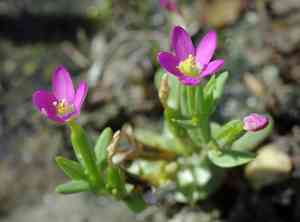
Branched centaury (Centaurium pulchellum)
Also known as: Slender centaury, Pretty centaury, Dwarf-branched centaury
Branched centaury (Centaurium pulchellum) originates from Europe and is commonly found in moist environments such as damp meadows and marshes. It can also grow in disturbed areas and along stream edges. Known for its resilience, it often thrives in calcareous soils and can tolerate challenging conditions, including salty roadsides and regions with severe winters. The plant's small flowers typically close at night for protection.
In This Article
Attributes of Branched centaury
Lifespan
Annual
Plant Type
Herb
Plant Height
3 cm to 15 cm
Spread
Not applicable
Leaf Color
Green
Flower Size
8 mm to 13 cm
Flower Color
Pink Purple Red
Images of Branched centaury
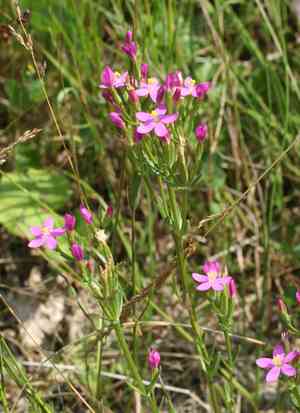
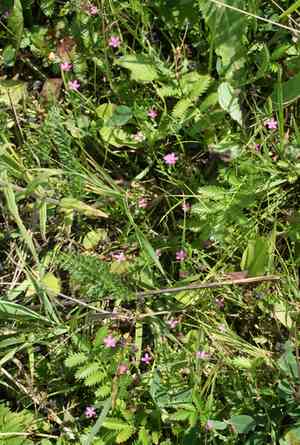
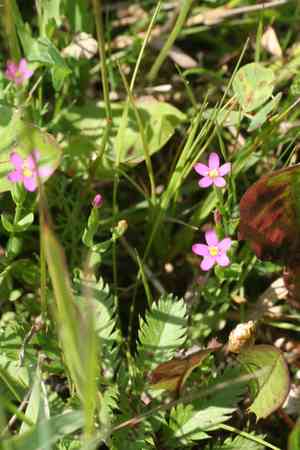
Quickly Identify Branched centaury
1
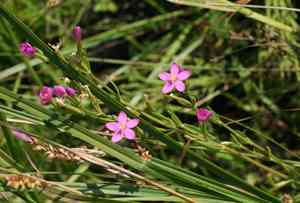
To identify Centaurium pulchellum, look for its small stature, finely branched stems, and clusters of star-shaped pink flowers with 5 petals. The leaves are typically opposite, small, and oval-shaped.
Scientific Classification of Branched centaury
Phylum
Vascular plants
Class
Dicotyledons
Order
Gentianales
Family
Gentian
Genus
Centaury
Species
Branched centaury
Planting and Growing of Branched centaury
Care Difficulty
Easy
Watering Schedule
Every 4 days
Sunlight Requirements
Partial sun
Sunshine Duration
4-8 hours
Ideal Temperature
59-77℉
Soil Type
Potting Mix, Peat Mix
Soil pH
6.5-7.5
Fertilizer Type
Balanced
Pruning Season
Spring, Summer
Pruning Area
Branches, Leaves
Pruning Frequency
2 times a year
Repotting Season
Spring
Pot Type
Plastic, Ceramic
 How to Water Branched centaury?
When watering Centaurium pulchellum, a delicate balance is required. Aim to saturate the soil to about three-quarters of the pot's depth. Ensure the water fully permeates the soil, but avoid having excess water sitting at the drainage holes. This approach helps maintain consistent moisture levels, which is crucial for its shallow root system.
What are the symptoms of an underwatered Branched centaury?
›
What should I do if my Branched centaury is not getting enough water?
›
What are the symptoms of an overwatered Branched centaury?
›
How to save an overwatered Branched centaury?
›
 What Are the Sunlight Requirements for Branched centaury?
Centaurium pulchellum benefits from partial to full sun. Ideal light exposure leads to energy-efficient photosynthesis and a more robust and floriferous plant.
More About Sunlight Requirements Techniques→
How much sunlight does it need?
›
Can it tolerate full sun throughout the day?
›
What are the benefits of ideal sunlight exposure?
›
 What Is the Ideal Temperature Range for Branched centaury?
Centaurium pulchellum thrives best in moderate climates where temperatures range between 59°F and 77°F. This range provides the optimal conditions for photosynthesis, nutrient uptake, and overall plant development.
 What Soil is Best for Branched centaury?
Centaurium pulchellum thrives in well-drained soil, as it prevents waterlogging, which can lead to root rot. Providing such conditions ensures robust root development and improved nutrient uptake. While this species appreciates poor to moderately fertile soils, a balance of essential nutrients can support its growth and flowering. It particularly benefits from a nitrogen-rich environment to boost its lush foliage. Centaurium pulchellum prefers a slightly alkaline environment, given its calcareous soil affinity. Maintaining a pH around 7.0 to 7.5 can optimize nutrient availability and plant health.
 How to Fertilize Branched centaury?
Centaurium pulchellum responds well to a balanced fertilization approach. When using liquid fertilizer, mix it at half the recommended strength to avoid nutrient burning. When applying slow-release fertilizers, use about 20 grams per square meter. This ensures a steady supply of nutrients without overwhelming the plant.
 How to Prune Branched centaury?
Look for stems that appear dead, damaged, or are growing inwards. These stems should be the first to go. Removing them will help redirect the plant’s energy to healthier parts. When cutting, make incisions just above a leaf node. This encourages new growth to sprout from that point, keeping the plant bushy and full. Trim excess growth to maintain a compact shape. This helps in managing the plant size and ensures that light reaches all parts, promoting even and robust foliage.
More About Pruning Techniques→
 How to Propagate Branched centaury plant?
1
Fill the seed tray with a fine potting mix. Ensure the mix is moist but not waterlogged.
2
Sprinkle the Centaurium pulchellum seeds evenly across the surface. Lightly cover them with a thin layer of potting mix.
3
Place the seed tray in a location that receives indirect sunlight. Maintain consistent moisture by misting the surface as needed.
 How to Repot Branched centaury plant?
1
Centaurium pulchellum typically signals its need for repotting when its roots begin to outgrow the current pot, often visible through drainage holes. Additionally, if the soil seems compacted or the plant is toppling over, it's time to consider repotting, ideally during active growth periods in spring or autumn.
2
Select a pot with good drainage, ideally made of porous materials like terracotta that allow the soil to breathe. Ensure the new pot is slightly larger than the previous one, giving roots space to grow while avoiding waterlogging issues. A well-chosen pot will promote healthier root development and reduce the risk of root rot.
3
Opt for well-draining sandy loam that balances moisture retention and drainage. The ideal soil mix should prevent compacting around the roots while providing essential nutrients. This ensures that the plant's roots get enough air circulation, preventing overwatering issues and promoting vigorous growth.
Learn More About Branched centaury Diseases
Bacterial Leaf Spot
Bacterial Soft Rot
Chemical Injury
Damping-off
Downy Mildew
Drought Stress
Fusarium Wilt
Gray Mold
Leaf Curl
Leaf Spot
Mosaic
Nutrient Deficiency
Nutrient Toxicity
Powdery Mildew
Root Rot
Root-knot Nematode
Rusts
Sooty Mold
Spider Mites
Temperature Stress
Thrips Damage
White Mold



