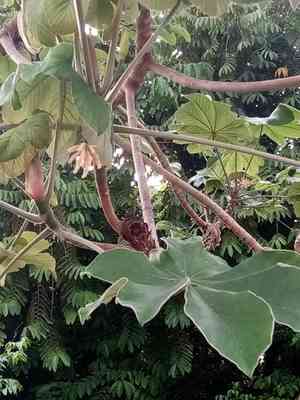
Pumpwood (Cecropia schreberiana)
Also known as: Snakewood
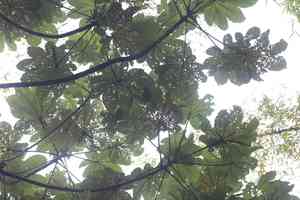
The Pumpwood tree (Cecropia spp.) is a rapidly growing tropical tree notable for its large, lobed leaves and hollow stems that frequently provide a home for ant colonies. This relationship is mutually beneficial, as ants protect the tree from herbivores while receiving shelter and nutrients. As a pioneer species, the Pumpwood tree excels in regenerating disturbed areas, forming an eye-catching, umbrella-like canopy. Additionally, it yields nutrient-rich fruits that support a diverse array of wildlife.
In This Article
Attributes of Pumpwood
Lifespan
Perennial
Plant Type
Tree
Plant Height
6-20 meters
Spread
4-8 meters
Leaf Color
Green
Flower Size
Flowers are inconspicuous
Flower Color
White or cream
Images of Pumpwood
Quickly Identify Pumpwood
1
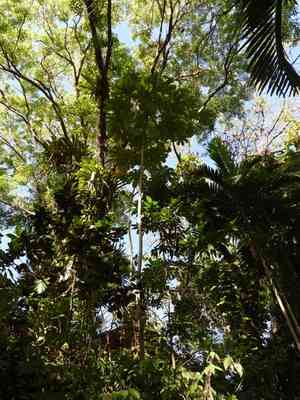
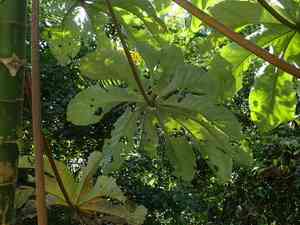
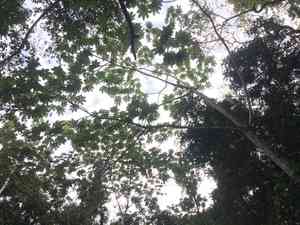
Cecropia schreberiana can be identified by its large, palmate leaves with 7-11 lobes, its smooth, grey bark, and the presence of dots and rings on its hollow stems. The stipules are also large, often sheathing the stem.
Scientific Classification of Pumpwood
Phylum
Vascular plants
Class
Dicotyledons
Order
Rosales
Family
Nettle
Genus
Cecropia
Species
Pumpwood
Planting and Growing of Pumpwood
Care Difficulty
Easy
Watering Schedule
Every 8 days
Sunlight Requirements
Partial sun
Sunshine Duration
4-8 hours
Ideal Temperature
68-77℉
Soil Type
Potting Mix, Peat Mix
Soil pH
6.5-7.5
Fertilizer Type
Balanced
Pruning Season
Spring, Summer
Pruning Area
Branches, Leaves
Pruning Frequency
Once a year
Repotting Season
Spring
Pot Type
Plastic, Ceramic
 How to Water Pumpwood?
Cecropia schreberiana requires a consistent watering approach. The goal is to keep the soil consistently moist but never waterlogged. You should aim to water with approximately 300 milliliters per session, watching closely to ensure the water is absorbed and doesn't sit atop the soil or drain away too quickly.
What are the symptoms of an underwatered Pumpwood?
›
What should I do if my Pumpwood is not getting enough water?
›
What are the symptoms of an overwatered Pumpwood?
›
How to save an overwatered Pumpwood?
›
 What Are the Sunlight Requirements for Pumpwood?
Cecropia schreberiana thrives best in partial sunlight conditions with 3-5 hours of filtered light daily. Such lighting ensures balanced growth, strong foliage, and increased resilience against environmental stress.
What is the ideal lighting condition for Cecropia schreberiana?
›
How can you provide ideal lighting for Cecropia schreberiana?
›
What are the benefits of ideal lighting conditions for Cecropia schreberiana?
›
 What Is the Ideal Temperature Range for Pumpwood?
Cecropia schreberiana thrives in warm and humid environments. The ideal temperature range for cultivating this plant is between 68 and 77 degrees Fahrenheit. Within this range, the plant can effectively carry out photosynthesis and grow optimally. Monitoring temperature closely ensures that it remains in this ideal range, avoiding stress that could impact growth and vitality.
 What Soil is Best for Pumpwood?
Cecropia schreberiana thrives in soils with good moisture-retaining capacity, as it ensures a constant supply of water essential for tropical plants. Proper moisture levels support robust growth and lush foliage. A nutrient-rich composition is vital for Cecropia schreberiana, as it enables sustained growth and healthy development. Good soil fertility promotes vibrant leaves and overall plant vigor. Good drainage is crucial for preventing root rot in Cecropia schreberiana. It helps to avoid waterlogging, ensuring that the plant's roots receive adequate oxygen, which is essential for healthy root development.
 How to Fertilize Pumpwood?
For Cecropia schreberiana, apply a balanced liquid fertilizer at a rate of half strength to avoid over-fertilization. Typically, using a 20-20-20 NPK fertilizer at half the recommended concentration works well to maintain optimal growth and leaf production.
 How to Prune Pumpwood?
Begin by examining the overall structure of the Cecropia schreberiana. Look for any branches that cross or rub against each other, as these can cause damage over time. Cut back to a lateral bud or the branch's point of origin. Make sure cuts are clean and at a slight angle to promote healing. After pruning, monitor the Cecropia for signs of stress such as wilting leaves. Ensure it receives adequate water and is protected from harsh environmental conditions. Mulching around the base can help retain soil moisture and provide some protection from temperature fluctuations.
More About Pruning Techniques→
 How to Propagate Pumpwood plant?
1
Select healthy, non-flowering stems and cut them using sharp shears. Each cutting should be 4-6 inches long. Remove the lower leaves, leaving only a few at the top.
2
Dip the cut end of each cutting in rooting hormone. Plant in a pot filled with well-draining potting mix. Ensure the cutting is inserted about 1-2 inches deep for stability.
3
Cover the pot with a clear plastic bag to maintain humidity. Place the pot in indirect sunlight and ensure the soil remains moist but not waterlogged until roots develop.
 How to Repot Pumpwood plant?
1
Cecropia schreberiana needs repotting when its roots start poking through the drainage holes or the plant seems top-heavy. Spring and summer are ideal times, as the plant is actively growing. If you notice the soil compacted and water drainage is poor, it’s a clear signal to repot. Ensuring timely repotting helps the plant thrive and prevents rootbound conditions.
2
Choose a pot that is at least 2 inches larger in diameter than the current one. The pot should have adequate drainage holes to prevent waterlogging. Opting for a slightly larger pot gives the roots room to grow while ensuring proper aeration. This not only promotes healthy root development but also facilitates better nutrient absorption, vital for the plant's growth.
3
Select a well-draining, rich soil mix to ensure optimal growth conditions. A mix containing perlite and peat moss can work wonders for Cecropia schreberiana. The right soil supports moisture regulation and provides the essential nutrients needed. Good soil structure keeps roots healthy and minimizes the risk of fungal diseases, which are common in poor-draining soils.
Learn More About Pumpwood Diseases
Anthracnose
Bacterial Leaf Spot
Bacterial Soft Rot
Bacterial Wilt
Black Spot
Chemical Injury
Crown Gall
Damping-off
Downy Mildew
Drought Stress
Fusarium Wilt
Gray Mold
Leaf Curl
Leaf Spot
Mosaic
Nutrient Deficiency
Nutrient Toxicity
Powdery Mildew
Root Rot
Root-knot Nematode
Rusts
Sooty Mold
Spider Mites
Temperature Stress
Thrips Damage
White Mold



